
Need Help? Call
MD in Anesthesia Course : Best Colleges, Fees & High-Demand Jobs
What is Anesthesiology?
Anesthesiology is a branch of medicine that focuses on anesthesia, pain management, and critical care. Doctors who specialize in this field are called physician anesthesiologists, and they are the experts who ensure patients are safe, comfortable, and pain-free during surgeries and other medical procedures.
In the United States alone, anesthesiologists are involved in about 90% of the 100+ million procedures done each year. They undergo
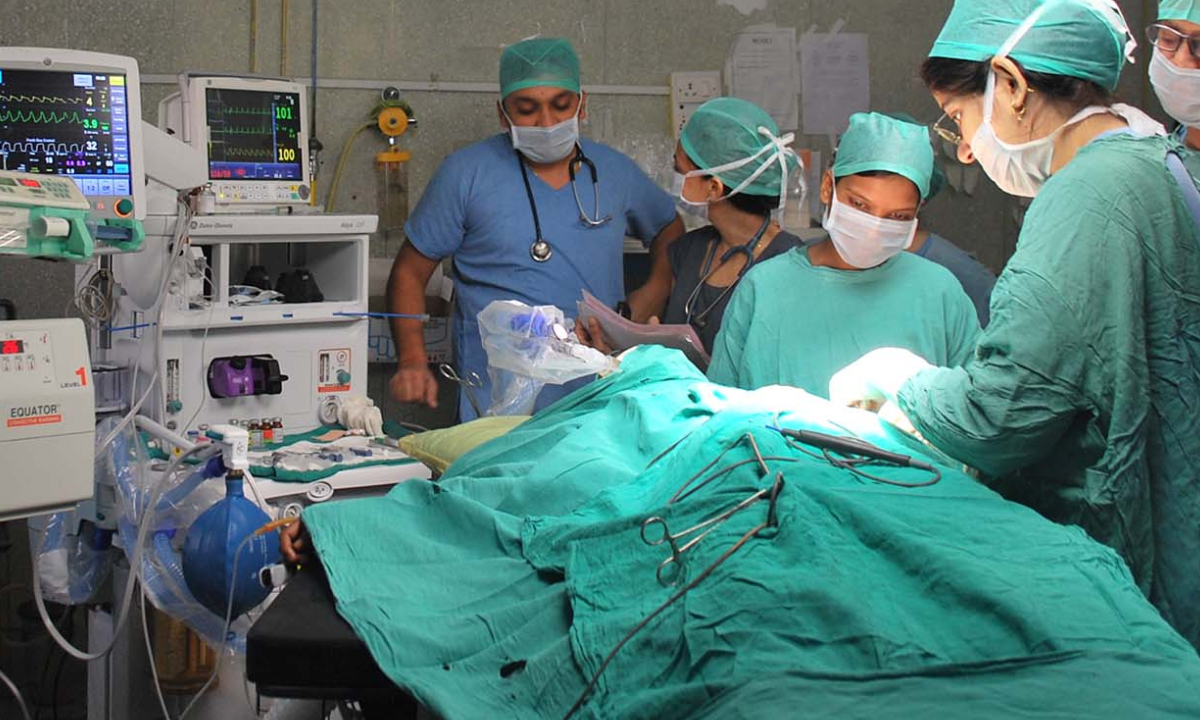
12–14 years of education and 12,000–16,000 hours of hands-on training, making them highly skilled in both anesthesia and patient care.
Anesthesiologists work before, during, and after surgery—monitoring vital signs, adjusting medications, and managing any sudden complications. Their work includes developing anesthesia plans, giving anesthesia, and caring for patients throughout their recovery.
Main Areas of Anesthesiology
- Pediatric Anesthesia
- Pain Management
- Obstetric Anesthesia
- Critical Care Anesthesia
- Neurosurgical Anesthesia
- Cardiovascular Anesthesia
Pediatric anesthesiologists take care of infants and children who need surgery. They create customized anesthesia and pain management plans to keep young patients safe and comfortable. They work closely with parents and the medical team to reduce the child’s fear and ensure a smooth experience before, during, and after the procedure.
Some anesthesiologists specialize in treating different types of pain—acute (short-term), chronic (long-term), or cancer-related pain. They have in-depth knowledge of pain physiology and use medications, procedures like nerve blocks, spinal injections, and even electrical stimulation to help patients manage or eliminate pain.
This focuses on pain relief during childbirth whether it’s a normal delivery or a C-section. Obstetric anesthesiologists may use techniques such as epidurals, spinal blocks, or general anesthesia depending on the situation. They ensure both the mother and baby remain safe throughout labor and delivery.
Critical care anesthesiologists work in ICUs, caring for severely ill or injured patients. They manage breathing, heart function, pain control, and emergency procedures like resuscitation. They also prepare patients for emergency surgeries and monitor them afterward to ensure recovery.
This specialization deals with patients undergoing brain or spine surgery. These anesthesiologists are experts in protecting the nervous system during such delicate operations, ensuring the brain and spinal cord function remain safe.
These specialists handle surgeries involving the heart, lungs, or major blood vessels. They are trained to manage patients with complex conditions like high blood pressure, diabetes, or lung disease, and often work on procedures requiring cardiopulmonary bypass and advanced heart monitoring.
What is Anesthesia?
Anesthesia is a type of medical treatment that prevents you from feeling pain during a procedure or surgery. The medicines used for this are called anesthetics, and they are given by trained specialists like anesthesiologists or other healthcare providers.
There are different types of anesthesia, and each works in its own way. Some types only numb a specific part of your body so you won’t feel pain there, while others make you sleep completely during bigger surgeries—especially those involving your head, chest, or abdomen.
For small and simple procedures, like getting a dental filling, your doctor might use local anesthesia. This type of anesthesia only works in the exact spot where it’s applied, so you stay fully awake but feel no pain in that area.
Anesthesia Course Details
If you’re planning to study Anesthesia, you’ll learn how different types of anesthesia—like general, regional, and local—are used during surgeries, and how to assist doctors in their safe administration. Below is a detailed overview of the course:
| Particulars | Details |
|---|---|
| Course Name | MD Anesthesiology |
| Course Level | Post Graduate |
| Course Type | MD Clinical |
| Course Duration | 3 Years |
| Total Colleges/Hospitals | 467 |
| Total Seats | 4720 |
| Admission Process | Based on entrance exams like NEET PG |
| Eligibility Criteria | Completed a relevant UG medical degree (like MBBS, BSc Anesthesia) |
| Entrance Exams | NEET PG is the major exam for MD Anesthesia |
| Top Colleges Offering Anesthesia Courses |
|
| Job Roles After Course |
|
| Expected Salary Range | ₹2.2 Lakhs – ₹27.5 Lakhs per year (based on qualification and experience) |
| Top Recruiters |
|
MD Anesthesia Eligibility
To apply for MD in Anesthesiology, candidates must fulfill the following MD Anesthesiology eligibility criteria:
- Must have an MBBS degree from a recognized medical college or university.
- Must complete a 1-year compulsory rotational internship.
Note: If you’re still doing your internship, you can still apply — but the internship must be completed before the academic session begins (i.e., before 31st March of the admission year).
MD Anesthesia Admission Process
If you are planning for MD Anesthesiology admission 2025, here’s the MD Anesthesiology admission process step by step explained in simple terms:
Appear for NEET PG Exam : The first step is to appear for the NEET PG Exam, a national-level entrance test conducted by the National Board of Examinations (NBE) every year, usually in January.
Qualify with Required Cutoff : To move forward in the admission process, candidates must secure the minimum required percentile as per their category:
- General Category : 50th percentile
- SC/ST/OBC Category : 40th percentile
Counselling & Seat Allotment :
- Only candidates who clear NEET PG with the required cutoff can participate in the centralized counselling process for MD Anesthesiology admission 2025.
- During counselling, students can choose from government, private, or deemed medical colleges based on their NEET PG rank and seat availability.
MD Anesthesia Seats in Government Colleges
There are around 158 government medical colleges in India that offer the MD Anesthesia course. These colleges together have approximately 2049 PG seats in this specialty across different states.
Among all states, Maharashtra has the highest number of MD Anesthesia seats in government colleges — a total of 225 seats.
The full details of available seats in each state are given in the table below (not included here). These numbers help students plan their admission based on availability and competition.
| Sr. No. | State | No. of Govt. Colleges | Govt. MD Anesthesia Seats |
|---|---|---|---|
| 1 | Andhra Pradesh | 10 | 97 |
| 2 | Assam | 5 | 43 |
| 3 | Bihar | 5 | 34 |
| 4 | Chandigarh | 2 | 57 |
| 5 | Chhattisgarh | 1 | 9 |
| 6 | Delhi | 9 | 224 |
| 7 | Goa | 1 | 6 |
| 8 | Gujarat | 11 | 168 |
| 9 | Haryana | 1 | 36 |
| 10 | Himachal Pradesh | 2 | 30 |
| 11 | Jammu & Kashmir | 3 | 54 |
| 12 | Jharkhand | 1 | 6 |
| 13 | Karnataka | 9 | 99 |
| 14 | Kerala | 6 | 50 |
| 15 | Madhya Pradesh | 5 | 57 |
| 16 | Maharashtra | 21 | 225 |
| 17 | Manipur | 2 | 16 |
| 18 | Meghalaya | 1 | 4 |
| 19 | Odisha (Orissa) | 3 | 40 |
| 20 | Puducherry | 1 | 17 |
| 21 | Punjab | 3 | 28 |
| 22 | Rajasthan | 7 | 174 |
| 23 | Tamil Nadu | 19 | 184 |
| 24 | Telangana | 4 | 87 |
| 25 | Tripura | 1 | 4 |
| 26 | Uttar Pradesh | 13 | 167 |
| 27 | Uttarakhand | 1 | 9 |
| 28 | West Bengal | 11 | 124 |
Total Government Colleges : 158
Total Government MD Anesthesia Seats : Approximately 2049


MD Anaesthesia Seats in Private Colleges – State-wise
There are a total of 153 private medical colleges in India offering the MD Anesthesia course. These colleges together have around 1159 PG seats for this specialty, spread across various states.
Among all states, Karnataka has the highest number of private MD Anesthesia seats with a total of 268 seats.
The complete state-wise details of available seats in private medical colleges are provided in the table below (not included here). This data helps students understand the distribution of seats and choose their options wisely during admission.
| Sr. No. | State | No. of Private Colleges | Private MD Anesthesia Seats |
|---|---|---|---|
| 1 | Andhra Pradesh | 12 | 87 |
| 2 | Assam | 0 | 0 |
| 3 | Bihar | 3 | 18 |
| 4 | Chandigarh | 0 | 0 |
| 5 | Chhattisgarh | 0 | 0 |
| 6 | Delhi | 0 | 0 |
| 7 | Goa | 0 | 0 |
| 8 | Gujarat | 5 | 37 |
| 9 | Haryana | 4 | 24 |
| 10 | Himachal Pradesh | 1 | 10 |
| 11 | Jammu & Kashmir | 1 | 4 |
| 12 | Jharkhand | 0 | 0 |
| 13 | Karnataka | 31 | 268 |
| 14 | Kerala | 11 | 47 |
| 15 | Madhya Pradesh | 6 | 41 |
| 16 | Maharashtra | 22 | 164 |
| 17 | Manipur | 0 | 0 |
| 18 | Meghalaya | 0 | 0 |
| 19 | Odisha (Orissa) | 3 | 24 |
| 20 | Puducherry | 6 | 44 |
| 21 | Punjab | 4 | 17 |
| 22 | Rajasthan | 3 | 29 |
| 23 | Tamil Nadu | 12 | 112 |
| 24 | Telangana | 14 | 139 |
| 25 | Tripura | 0 | 0 |
| 26 | Uttar Pradesh | 11 | 72 |
| 27 | Uttarakhand | 2 | 16 |
| 28 | West Bengal | 2 | 6 |
Total Private Colleges: 153
Total Private MD Anesthesia Seats: Approximately 1159
MD Anesthesia Fees & Salary
MD Anesthesia Fees Structure
Here’s a breakdown of the fees for MD Anesthesia based on the type of medical college:
Private Medical Colleges (State Quota)
Fees range from ₹10 Lakhs to ₹40 Lakhs per year, depending on the state and institution.
Deemed Universities
Fees vary by college and usually start from ₹18 Lakhs to ₹35 Lakhs per year.
Government Colleges (All India & State Quota Seats)
Fees are much more affordable, ranging from ₹50,000 to ₹1.5 Lakhs per year.
Salary of MD Anesthesiologists
After completing MD in Anaesthesia, doctors can expect a monthly salary ranging from ₹1 Lakh to ₹5 Lakhs, depending on their experience, skill level, and work setting.
Freshers start with approx. ₹1–1.5 Lakhs/month.
Experienced anaesthesiologists with years of practice or those working in big hospitals can earn ₹3–5 Lakhs/month or more.
Some even earn higher incomes by setting up pain clinics or working in specialized surgical centers.
The more they work and specialize, the higher they earn. Anaesthesiology is a well-paying and stable medical career with excellent growth opportunities.
Wide Range of Career Opportunities in Anesthesiology
Anesthesiology is not just a single job — it’s a field full of exciting career paths where professionals can work in different areas like surgery, critical care, pain management, teaching, or research. If you’re planning to become an anesthesiologist, here are some rewarding roles you can choose from:
- Clinical Anesthesiologist – The Heart of Surgical Care
- Pre-Surgery Checkup: Study the patient’s health and prepare the right anesthesia plan.
- Giving Anesthesia: Administer the correct type and dose of anesthesia.
- Monitoring During Surgery: Watch the patient’s vital signs like heart rate and breathing to keep them safe.
- Recovery Support: Help the patient wake up safely and manage any post-surgery pain or side effects.
- Critical Care Anesthesiologist – Life-Savers in the ICU
- Handling life-threatening situations in critical patients.
- Using advanced machines to support breathing, heart function, and more.
- Working closely with a team of doctors, surgeons, and nurses for complete patient care.
- Pediatric Anesthesiologist – Special Care for Children
- Create age-appropriate anesthesia plans for children.
- Offer emotional support to both kids and their parents before and after surgery.
- Handle unique medical needs like birth defects or developmental issues.
- Pain Management Specialist – Helping Patients Live Pain-Free
- Understanding the root cause of the pain.
- Using treatments like nerve blocks, injections, or pain-relief therapies.
- Working with other doctors (like neurologists or physiotherapists) for complete care.
- Academic Anesthesiologist – Teaching & Training Future Doctors
- Teaching the latest anesthesia methods.
- Mentoring future doctors and guiding their careers.
- Doing clinical work and sharing real-life experiences with students.
- Anesthesiology Researcher – Innovating for the Future
- Creating new anesthesia techniques and drug protocols.
- Studying ways to reduce risks during surgeries.
- Working with scientists and doctors across different fields to find better solutions.
- Consultant Anesthesiologist – Expert Guidance & Leadership
- Help hospitals set up safe anesthesia practices.
- Advise government departments on healthcare guidelines.
- Work with private companies to improve medical technologies or systems.
Clinical anesthesiologists are the most common professionals in this field. They work in hospitals, clinics, and operation theaters, helping patients feel no pain during surgery.
What they do:
These anesthesiologists work in ICUs (Intensive Care Units) and take care of seriously ill patients who need constant monitoring and advanced medical support.
Their role includes:
Pediatric anesthesiologists are trained to work with infants, children, and teenagers. Kids require special care, and these experts make sure anesthesia is given safely and gently.
Key responsibilities:
Some anesthesiologists focus on treating long-term pain that doesn’t go away easily. These specialists improve the quality of life for patients suffering from pain due to injury, illness, or surgery.
They help by:
These anesthesiologists combine clinical work with education. They teach medical students and train young doctors in anesthesia techniques.
Their contribution includes:
Some anesthesiologists choose to work in medical research, developing better ways to make surgeries safer and more comfortable.
Their work involves:
Consultant anesthesiologists provide their knowledge and advice to hospitals, companies, and even government bodies.
They may:
Anesthesia Course Syllabus
If you’re planning to pursue post-graduation in Anesthesia, whether it’s an MD, you’ll study both theoretical and practical aspects of how anesthesia works in different medical situations. The course is divided across 4 semesters (2 years), and it covers areas like critical care, emergency management, pain relief, and clinical practice including a research dissertation.
Semester 1: Foundation & Core Concepts
In the first semester, you’ll build a strong base in the scientific understanding of anesthesia:
- Advanced Human Physiology : Learn how the human body systems work, especially those affected by anesthesia like the respiratory, nervous, and cardiovascular systems.
- Pharmacology : Study how drugs behave inside the body – including anesthetic agents, sedatives, and muscle relaxants.
- Basics of Anesthesia : Understand the principles of anesthesia – what it is, how it works, types, stages, and basic patient care before and during procedures.
- Monitoring Techniques : Learn how to monitor vital signs like ECG, blood pressure, oxygen saturation, etc., during surgery or critical care situations.
Semester 2: Application & Special Techniques
This semester moves into the more practical application of anesthesia in real-life medical settings:
- Regional and General Anesthesia : Understand the difference between local, spinal, epidural (regional) and full-body unconsciousness (general anesthesia), and how each is used.
- Critical Care Medicine : Learn how to manage seriously ill patients in ICU settings – including ventilator management, sedation, and pain control.
- Pain Management : Discover different methods to manage pain – both acute (like post-surgery) and chronic (like cancer-related pain).
Semester 3: Emergency Handling & Special Patient Cases
Now you focus on handling urgent cases and managing anesthesia in more complex situations:
- Emergency & Trauma Care : Train to act fast during emergency surgeries or trauma cases like road accidents or cardiac arrest.
- Anesthesia in Special Cases : Study how anesthesia is safely given to more sensitive groups like:
- Pediatrics (Children)
- Obstetrics (Pregnant women during delivery)
- Geriatric patients (Elderly) or those with pre-existing conditions
Semester 4: Clinical Practice & Research
In the final semester, the focus shifts to clinical exposure and academic contribution through research:
- Research Methodology : Learn how to design, conduct, and write medical research related to anesthesia.
- Clinical Case Studies : Get hands-on exposure by studying real patient cases, documenting observations, and learning from experienced doctors.
- Dissertation Work : You’ll be required to submit a thesis based on your research a mandatory part of completing your PG course.
Top Anesthesiology Colleges in India Fees & Stipend (2025–26)
If you are aiming for MD Anesthesiology admission through NEET PG, it’s important to compare fees, stipends, and college options before making your choice. Whether you’re applying under government quota, management quota, or even MD Anesthesiology NRI quota admission, knowing the cost and benefits in advance will help you plan better.
Below is the fee structure for MD Anesthesiology in some of the top government colleges, private medical colleges, and deemed universities for the 2025–26 academic session. This also includes stipend details to give you a clear picture of the return on investment during your course.
Top 10 Anesthesiology Colleges Fee Structure
| College Name | Annual Fees |
| Hamdard Institute of Medical Sciences, New Delhi | ₹22,00,000 |
| Kasturba Medical College, Manipal | ₹21,88,000 |
| Kasturba Medical College, Mangalore | ₹21,88,000 |
| JSS Medical College, Mysore | ₹22,00,000 |
| Kalinga Institute of Medical Sciences, Bhubaneswar | ₹21,00,000 |
| SRM Medical College & Research Institute, Chennai | ₹30,00,000 |
| Amrita School of Medical Sciences, Kochi | ₹29,00,000 |
| IMS & SUM Hospital, Bhubaneswar | ₹19,80,000 |
| SBKS Medical Institute, Vadodara | ₹22,55,000 |
| KS Hegde Medical Academy, Mangalore | ₹21,30,000 |
Top 10 Anaesthesiology Colleges Stipend Offered
| College Name | Monthly Stipend |
| Hamdard Institute of Medical Sciences, New Delhi | ₹80,000 |
| Kasturba Medical College, Manipal | ₹45,000 |
| Kasturba Medical College, Mangalore | ₹45,000 |
| JSS Medical College, Mysore | ₹45,000 |
| Kalinga Institute of Medical Sciences, Bhubaneswar | ₹70,000 |
| SRM Medical College & Research Institute, Chennai | ₹35,000 |
| Amrita School of Medical Sciences, Kochi | ₹43,000 |
| IMS & SUM Hospital, Bhubaneswar | ₹60,000 |
| SBKS Medical Institute, Vadodara | ₹84,000 |
| KS Hegde Medical Academy, Mangalore | ₹45,000 |
How to Choose the Right College for MD Anesthesiology
- Government colleges for MD Anesthesiology generally have lower fees but may have higher cut-offs.
- Private medical colleges for MD Anesthesiology offer more flexibility through management and NRI quota seats, though fees vary widely.
- Deemed universities MD Anesthesiology fees are usually higher, but they often provide better infrastructure and more clinical exposure.
- Students with lower NEET PG scores can explore MD Anesthesiology management quota fees and NRI quota admission to secure a confirmed seat.
Why Choose ShikshaMed for MD in Anesthesiology?
Pursuing MD in Anesthesiology is a life-changing decision for every MBBS graduate. It’s a field that demands precision, knowledge, and the right training environment. But getting admission into a reputed medical college isn’t always simple—it requires proper guidance, timely updates, and expert counselling. That’s where ShikshaMed Consultant comes in.
We are trusted as one of the Best PG Consultants in Chandigarh, known for transparent counselling and personalized admission guidance. For students searching online for PG Consultants near me, ShikshaMed has become the first choice because of our result-driven approach and reliable support.
Why Students Prefer ShikshaMed for PG Medical Admissions?
- Expertise in PG Medical Counselling
- Personalized Guidance for MD in Anesthesiology
- Strong Local Presence
- Complete Admission Support
ShikshaMed has years of experience in guiding MBBS graduates through NEET PG admissions. We specialize in MD/MS Consultancy Services in Chandigarh, where our team provides end-to-end guidance—from college shortlisting to admission formalities. If you are looking for the Top MD/MS Consultancy Services in Chandigarh, ShikshaMed ensures accurate, updated, and trustworthy counselling.
Every student has unique goals. Some prefer government institutes, while others look for private or deemed universities. Our counsellors take the time to understand your preferences, NEET PG score, and financial planning. That’s why students recognize us as the Top PG Consultants in Chandigarh and Top PG Consultants in Zirakpur.
ShikshaMed is not just limited to Chandigarh—we are equally trusted as the Best PG Consultants in Zirakpur and one of the leading MD/MS Admission Consultants in Mohali. This makes us accessible to students from Punjab, Haryana, Himachal Pradesh, and nearby regions. Whether you search for MD/MS Consultancy near me or Top MD/MS Consultants in Mohali, you’ll find ShikshaMed at the top of the list.
From choice filling in NEET PG counselling to handling documentation, verification, and even backup planning, we provide complete support. That’s why aspirants often refer to us as the Best MD/MS Consultants in Mohali and Best MD/MS Consultancy Services in Chandigarh—because we don’t just guide, we walk with you through the entire process.
ShikshaMed – Your Trusted Partner for PG Admissions
Choosing the right consultant can shape your future career in anesthesiology. With ShikshaMed, you get more than just admission guidance you get a reliable mentor who helps you secure a seat in a reputed college with peace of mind.
So, if you are planning for MD in Anesthesiology and want to connect with the Top PG Consultants in Chandigarh, Best PG Consultants in Zirakpur, or trusted MD/MS Admission Consultants in Mohali, ShikshaMed is here to guide you every step of the way.
Conclusion
If you are thinking about why choose MD Anesthesiology, the answer is simple it’s a respected, stable, and high-demand medical field. After completing this degree, there are many career options after MD Anesthesiology. You can work in hospitals, operation theatres, ICU, emergency care, or go for specializations like cardiac anesthesia, neuro-anesthesia, or pediatric anesthesia.
Jobs after MD Anesthesiology are available not only in India but also abroad. The future of Anesthesiology in India looks very bright because every surgery needs an anesthesiologist, and the number of surgeries is increasing every year. The MD Anesthesiology demand in India & abroad is strong, and the scope is only growing.
When we compare MD Anesthesiology vs MD Radiology, both are good choices, but anesthesia gives you more hands-on patient care during critical procedures, while radiology is more about diagnosing diseases through scans.
The MD Anesthesiology lifestyle & work profile is active and important — you are directly involved in saving lives, reducing pain, and supporting surgical teams. It’s a career that offers good income, job security, and respect in the medical community.
FAQs
Q1. What is the subject weightage of Anaesthesiology in NEET-PG?
Ans: In NEET-PG, about 45 questions come from Surgery, and out of these, 5 to 8 questions are generally based on Anesthesiology. So, it holds a decent weightage and should not be skipped.
Q2. What is the weightage of Anesthesiology in INI-CET?
Ans: In the INI-CET exam, around 35 questions are asked from General Surgery, and within that, 5 to 7 questions are usually from Anesthesiology topics.
Q3. What are the important topics in Anesthesiology during MBBS?
Ans: Some of the key topics you must study during MBBS include:
- Spinal and epidural anesthesia
- Inhalational and intravenous general anesthesia (GA)
- Local anesthesia and its toxicity
- Muscle relaxants and neuromuscular blockers
- Monitoring during anesthesia (BIS, neuromuscular monitoring, oxygen therapy)
- Breathing circuits and ventilator modes
- Blood transfusion, IV fluids
- Resuscitation protocol, brain death criteria
- Oxygen cylinders, color coding, and pin index system
Q4. How can I prepare for Anesthesiology in NEET-PG?
Ans:
To do well, follow these tips:
- Focus on concept-based learning instead of just memorizing facts.
- Use standard textbooks and MCQ books for preparation.
- Practice previous year questions and solve mock tests regularly.
- Watch clinical videos and attend workshops or webinars.
- Take part in case discussions to understand real-life applications.
- The more you revise and practice, the more confident you’ll become.
Q5. What is the scope of Anesthesiology as a career?
Ans: Anesthesiology has a wide scope in:
- Operation theatres (OTs)
- ICU and critical care units
- Pain management clinics
- Research and teaching
It’s a highly respected and well-paying specialty with strong demand in India and abroad.
Q6. How long does it take to become an Anesthesiologist?
Ans: It usually takes 12 to 14 years in total:
- 4 years for undergraduate (MBBS)
- 3 years for MD in Anesthesia
- Optional fellowship or super-specialty (1–2 years)
Plus, time for entrance preparation and internships.
Q7. What are the key skills needed to succeed in Anesthesiology?
Ans: You need to have:
- Good communication and teamwork
- Ability to work under pressure
- Quick decision-making
- Attention to detail
- Knowledge of patient monitoring and life-support systems
Q8. What are the job prospects after MD in Anesthesiology?
Ans: The job market is excellent. Anesthesiologists are in demand in:
- Government and private hospitals
- Emergency care units
- Surgery centers
- Multispecialty clinics
It’s also one of the highest-paying medical fields.
Q9. Why choose GS Medical College for Anesthesiology?
Ans: GS Medical College in Uttar Pradesh is known for:
- Experienced faculty
- Advanced operation theatres
- Great clinical exposure
- Strong placement support
It offers a solid foundation for those interested in a career in Anesthesiology.
Q10. What are the basic skills needed to become a good Anesthesiologist?
Ans: You should develop:
- Strong problem-solving ability
- Calmness in emergencies
- Clear communication with surgical teams
- Accuracy in monitoring patients
- Interpersonal and time-management skills
Q11. What are the basics of Anesthesiology?
Ans: Anesthesiology focuses on relieving pain and managing patient care before, during, and after surgeries. It involves:
- Pain control
- Sedation and anesthesia administration
- Patient monitoring and resuscitation
- Emergency life support
Q12. Is NEET required for a career in Anesthesiology?
Ans: Yes, NEET is mandatory.
- NEET-UG is required to get admission in MBBS.
- NEET-PG is needed for MD Anesthesiology after MBBS.
Q13. Is MBBS compulsory to become an Anesthesiologist?
Ans: Yes, to become a qualified Anesthesiologist:
- You must first complete MBBS.
- Then pursue MD/DNB in Anesthesiology.
This path takes around 7–8 years after Class 12.
Q14. Why is an Anesthesiologist important during surgeries?
Ans: Anesthesiologists play a crucial role by:
- Monitoring vital signs (heart rate, blood pressure, breathing)
- Keeping the patient pain-free and stable
- Handling emergencies during surgery
They are the silent protectors of patient safety in the OT.
Recent Blogs

Join the Free Counseling Seminar in Ludhiana by ShikshaMed!
Bathinda’s Biggest MBBS Counseling Seminar – Book Your Free Seat Now
Free MBBS Counseling Seminar in Chandigarh | Hosted by ShikshaMed

Sri Aurobindo Medical College and Post Graduate Institute, Indore

Index Medical College Indore : NMC Approved MBBS Seats

Top Reasons to Choose Gautam Buddha Medical College, Dehradun

Top Reasons to Choose SGRRIMHS Dehradun for MBBS in 2025

Best MBBS Consultancy Services in Uttarakhand

Join Free MBBS Seminar by ShikshaMed – Book Your Seat Now

Shiksha Med: Top NEET Experts for MBBS Abroad & India

