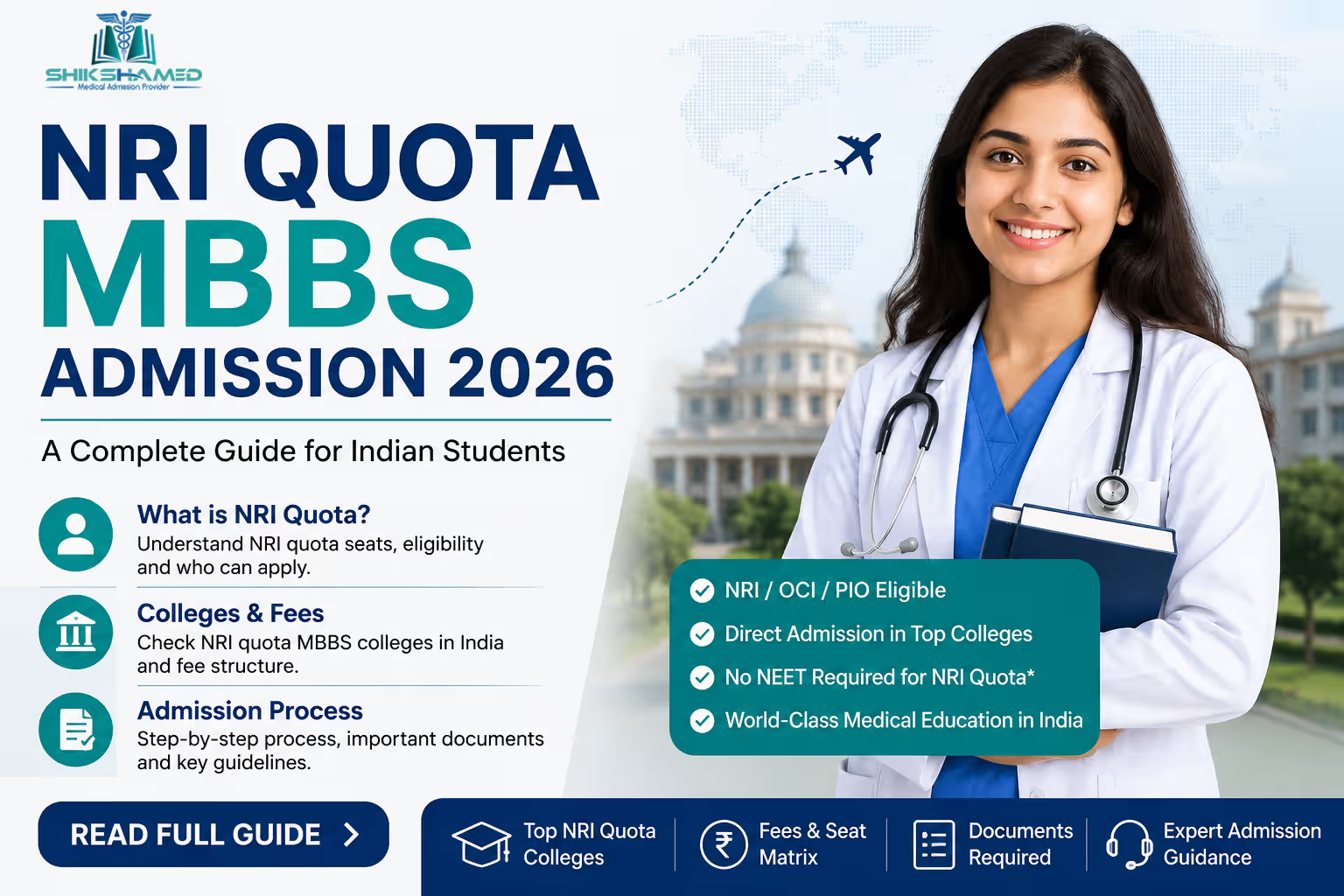
NRI Quota MBBS Admission 2026: Eligibility, Documents & Application Process
For thousands of Indian families settled abroad, bringing their children back to India for a medical degree is more than an academic decision — it’s an emotional one. The NRI Quota exists precisely for this reason: to give Non-Resident Indians, Overseas Citizens of India (OCI), and Persons of Indian Origin (PIO) a structured, merit-based path into India’s medical colleges, without forcing them to compete directly against the general category.
If you’re a parent or student trying to make sense of this process for the 2026 admission cycle, here’s a clear, no-nonsense breakdown of who qualifies, what paperwork you’ll need, and how the admission actually unfolds.
What Exactly Is the NRI Quota?
The NRI Quota is a reserved category of MBBS, BDS, and other medical seats set aside specifically for students with NRI, OCI, or PIO status. It was introduced to give Indian-origin families abroad fair, transparent access to Indian medical education — but “reserved” doesn’t mean “easy.” Every candidate must still clear NEET-UG, and seat allotment is based purely on rank within the NRI category. There’s no donation route and no shortcut around the entrance exam.
What changes under this quota isn’t the entrance requirement — it’s the competition pool and the fee structure. NRI seats typically carry higher tuition (often payable in USD or equivalent), but candidates compete only against other NRI applicants rather than the much larger general merit pool.
Who Can Actually Apply?
This is where most families get confused, because the eligibility net is wider than people assume. You can apply under the NRI Quota if you fall into any of these groups:
- You are an NRI yourself — an Indian citizen currently residing and working abroad.
- Your parent is an NRI — even if you’ve lived in India for schooling, a parent’s overseas residency status can qualify you.
- You hold an OCI or PIO card — issued to people of Indian origin who have taken up citizenship elsewhere.
- You are NRI-sponsored — a close blood relative abroad (parent, sibling, or in some cases an uncle, aunt, or grandparent) agrees to fund your education and provides a formal sponsorship affidavit.
A common misconception is that only the student needs to prove foreign residency. In sponsored cases, it’s the sponsor’s NRI status — backed by proof of relationship — that the college and counselling authority will scrutinize most closely.
Academic and Age Eligibility
Beyond NRI status, the basic NEET-UG eligibility rules still apply:
- Completion of Class 12 (or an equivalent foreign qualification) with Physics, Chemistry, Biology, and English.
- A minimum aggregate in PCB — generally 50% for general category, though this can vary slightly by state and institution.
- Minimum age of 17 years by December 31st of the admission year.
- A valid, non-compartment NEET-UG result — there is no separate “easier” exam for NRI candidates.
If your schooling was completed abroad, your board’s curriculum must be recognized as equivalent to Indian 10+2 standards, so it’s worth getting that verified early rather than discovering an issue mid-counselling.
Documents You Should Start Collecting Now
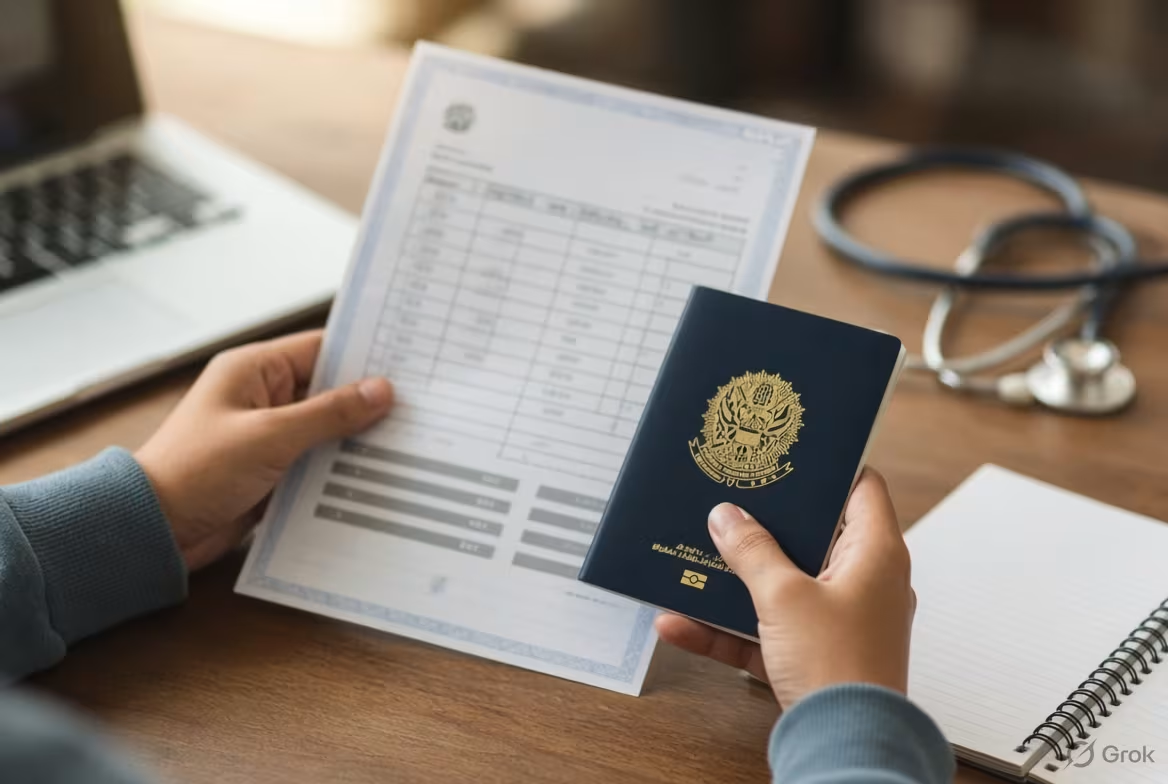
One of the biggest reasons NRI applicants lose time during counselling isn’t NEET performance — it’s incomplete paperwork. Save yourself the stress by preparing these in advance:
Identity & Academic
- Valid passport, Aadhaar/PAN (if applicable)
- Class 10 and 12 mark sheets and certificates
- Transfer and migration certificates
- NEET-UG admit card and scorecard
NRI/Sponsorship Proof
- Sponsor’s passport, visa, or residency permit
- Embassy-issued certificate confirming NRI status
- Notarized sponsorship affidavit committing to bear the course fees
- Relationship certificate proving the blood relation between student and sponsor
Other Supporting Documents
- Medical fitness certificate
- Recent passport-sized photographs
- Bank statement or financial proof of the sponsor
- Category/disability certificates, where applicable
A practical tip: get embassy attestations done well before counselling rounds begin. These take time, and colleges rarely extend deadlines for paperwork that’s “still in process.”
The Application Process, Step by Step
- Appear for and qualify NEET-UG 2026. There’s no separate exam — your rank determines everything.
- Register for counselling through the Medical Counselling Committee (MCC) for All India Quota seats, or the relevant state counselling authority for state-quota and private/deemed college seats — selecting the NRI category where prompted.
- Shortlist colleges that genuinely offer NRI seats. Not every college has this quota, and availability differs sharply between states and between government, private, and deemed institutions.
- Upload and verify documents during registration — incomplete uploads are one of the most common reasons applications stall.
- Fill choices and participate in seat allotment rounds. Some private and deemed universities also conduct a brief interview or document verification call.
- Accept the seat and pay fees within the stipulated window, then complete final document verification at the college.
Each round has firm deadlines, and missing one can mean dropping to the next round or losing the seat entirely — so tracking counselling schedules closely matters as much as your NEET score.
Where Families Commonly Go Wrong
- Assuming any relative can sponsor. Counselling authorities are strict about “close blood relative” — distant relatives or family friends usually won’t qualify as sponsors.
- Underestimating document turnaround time, especially embassy attestations and notarizations done from abroad.
- Not checking state-specific availability. NRI quota seats exist unevenly across India — some states offer them in government colleges, others only in private or deemed universities.
- Ignoring fee structure differences. NRI seat fees vary widely by state, college type, and whether it’s a yearly or one-time full-course payment — this needs early financial planning, not last-minute scrambling.
Getting It Right the First Time
The NRI Quota genuinely is a fair and merit-driven route into Indian medical education — but the process has enough moving parts (embassy documentation, state-wise seat variation, fee structures, counselling deadlines) that even well-prepared families benefit from expert guidance.
This is exactly the gap ShikshaMed fills. As one of India’s most trusted medical admission advisory platforms, with a network of offices across North India and over a decade of experience guiding NRI families, ShikshaMed handles everything from college shortlisting and document verification to counselling strategy and seat confirmation — so families don’t have to navigate embassy paperwork and shifting counselling deadlines alone.
For a detailed, college-wise breakdown of NRI quota fees, state-wise seat availability, and step-by-step counselling support for 2026, check out their dedicated resource: NRI Quota MBBS Admission 2026.
Frequently Asked Questions (FAQs)
Yes. This is known as NRI-sponsored admission. The sponsor must be a close blood relative such as a parent, sibling, uncle, aunt, or grandparent who holds valid NRI status and provides a notarized sponsorship affidavit agreeing to bear the educational expenses.
No. The NEET-UG examination is exactly the same for all candidates. NRI status only affects the counselling category and competition pool, not the examination pattern, syllabus, or difficulty level.
No. NRI Quota seat availability varies by state and institution. Some states provide NRI seats in government medical colleges, while others offer them only in private or deemed universities. Students should verify seat availability before applying.
Incomplete or unverified documents may delay or even cancel your admission process. Embassy attestations, sponsorship affidavits, and relationship certificates should be prepared well before counselling begins to avoid last-minute issues.
Final Thought
Securing an MBBS seat under the NRI Quota isn’t about finding a loophole — it’s about understanding a legitimate, regulated pathway and preparing for it properly. Start your NEET preparation early, get your documentation in order well before counselling opens, and verify every detail against the official college and counselling authority requirements. Done right, this route can put a top Indian medical college well within reach for students who’ve grown up far from home.