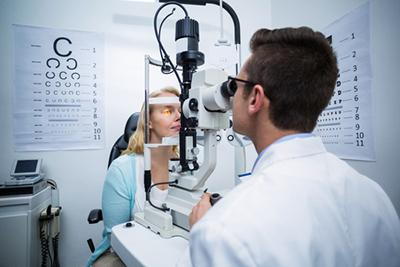
In this course, students learn how to perform eye examinations, prescribe glasses or contact lenses, use advanced diagnostic tools, and carry out different types of eye surgeries. With the rise in digital screen usage, aging populations, and lifestyle changes, eye diseases are becoming more common worldwide. This has increased the demand for trained ophthalmologists in hospitals, clinics, and eye-care centers.
Ophthalmology is a rewarding medical field because it combines clinical knowledge, surgical skills, and the ability to restore one of the most precious senses—vision. Many patients experience life-changing improvements after treatment, which makes this specialization highly satisfying and respected.
Overall, MS in Ophthalmology is a perfect choice for medical graduates who are passionate about eye care, interested in precision-based surgery, and want to build a stable and successful medical career.
MS in Ophthalmology is a 3-year medical degree after MBBS that trains doctors to become eye specialists. During this course, students learn:
This specialization is perfect for doctors who want to help patients improve or restore their vision through both medical treatment and surgery.
The demand for ophthalmologists is increasing all over the world due to several reasons:
Because of all these factors, trained eye specialists are needed not just in India, but everywhere.
The future of ophthalmology is very bright, and it will play an even bigger role in healthcare in the coming years.
Ophthalmology is a meaningful, respected, and fast-growing field that will continue to be important for generations to come.
MS in Ophthalmology is a postgraduate medical course that trains doctors in eye care, eye diseases, and surgical procedures. Students learn to diagnose and treat common and complex eye problems using advanced tools and modern surgical techniques.
| Particulars | Details (Easy Language) |
| Course Name | MS in Ophthalmology |
| Course Level | Postgraduate (PG) |
| Study Stream | Eye care & eye surgery |
| Course Duration | 3 years, full-time |
| Examination Type | Yearly / Annual |
| Eligibility | MBBS degree from a recognized medical college |
| Minimum Marks Required | 50% in MBBS |
| Admission Process | Entrance-based |
| Entrance Exams | NEET PG, INI-CET |
| Course Fees | Varies By College |
| Top Colleges | CMC Vellore, AIIMS Rishikesh, KMC Manipal, etc. |
| Job Roles After Course | Eye Surgeon, Consultant Ophthalmologist, Research Associate, Government Medical Officer |
| Starting Salary Range | ₹3 Lakh to ₹15 Lakh per year |
| Top Recruiters | Fortis, Apollo Hospitals, Max Healthcare, Venu Eye Institute, Eye7, Care Hospitals, Jaypee Hospital |


MS in Ophthalmology is an excellent choice for medical graduates who want a career that combines precise surgical work, advanced technology, and the opportunity to improve a patient’s vision almost instantly. If you are wondering whether this specialization is right for you, here are the groups of students who will benefit the most.
If you have completed MBBS and are now exploring a postgraduate specialty with good work–life balance and great patient outcomes, MS Ophthalmology is one of the best options.
It is ideal for MBBS graduates who:
If your dream is to become a skilled surgeon but you want a field that offers precision rather than long, high-risk surgeries, ophthalmology is perfect for you.
This specialization suits students who:
Most ophthalmic surgeries take only a few minutes, yet they change a person’s life forever — making it one of the most satisfying surgical branches.
If you are fascinated by modern vision correction procedures, advanced lasers, or cutting-edge eye-care technology, MS Ophthalmology gives you the perfect platform.
This branch is best suited for students who want to specialize in:
Ophthalmology is one of the fastest-evolving fields in medicine, making it a great choice for tech-friendly doctors who want to work with innovation and precision.
Yes, ophthalmology is considered one of the best branches in modern medicine — and the demand for eye specialists is rising worldwide. Here’s why:
Whether you want a balanced lifestyle, a successful private setup, or a super-specialized surgical career, ophthalmology gives you all the possibilities.
Choosing MS in Ophthalmology is a major step toward becoming a skilled eye specialist, and understanding the course duration, eligibility, and NEET PG requirements is essential before you begin the journey.
The MS Ophthalmology duration is 3 years, and it is a full-time postgraduate medical program.
During these three years, students undergo:
The duration is designed to transform an MBBS graduate into a confident and independent ophthalmologist who can manage both complex eye diseases and delicate microsurgeries.
The MS Ophthalmology eligibility in India is simple, but it must be followed strictly.
To apply for this course, a student must have:
These requirements ensure that the student has the essential medical foundation before entering a specialized surgical branch.
Admission to MS Ophthalmology is purely entrance-based, and clearing the NEET PG exam is mandatory.
The NEET PG cut-off for Ophthalmology varies every year based on:
Generally, ophthalmology is a high-demand branch, and candidates securing a good rank in the early thousands have higher chances of getting a government seat.
In most states, candidates prefer ophthalmology for its great balance of clinical work, surgical scope, and lifestyle benefits—so the cut-off tends to remain competitive.
The MS Ophthalmology admission process in India is completely entrance-based and begins with the NEET PG examination. Students who wish to become eye specialists or ophthalmic surgeons must qualify NEET PG and participate in national or state-level counselling. The entire process is organized, transparent, and follows a clear sequence from exams to seat allotment.
To get admission into MS Ophthalmology, qualifying NEET PG for Ophthalmology is compulsory. Your NEET PG score and rank directly decide your chances of securing a seat in a government, private, or deemed medical college.
After results, students must register for Ophthalmology NEET PG counselling based on the type of seat they want.
✔ MCC NEET PG Counselling (All India Quota – 50%)
Conducted by the Medical Counselling Committee, MCC handles:
✔ State PG Medical Counselling
Each state runs its own State PG medical counselling process for:
In this step, candidates choose:
Your choices should match your rank for better chances in NEET PG Ophthalmology seat allotment.
Based on rank, category, seat matrix, and preferences, the authorities release the NEET PG seat allotment list. Students can:
Students who accept the seat must complete the final document verification process at the allotted college or verification centre.
Required documents include:
After verification, the final steps include:
At this stage, the candidate is officially admitted to the MS Ophthalmology program in India.
Getting admission into MS in Ophthalmology is not just about qualifying NEET PG – it requires the right guidance, smart choice filling, and proper planning. ShikshaMed helps students achieve this in the most simple, transparent, and professional way.
ShikshaMed is trusted by MBBS graduates all over India because the team provides clear counselling, honest advice, and complete support until you finally join your allotted college. If you are searching for the Best PG Consultants in Chandigarh, Best MD/MS Consultancy Services in Chandigarh, or MD/MS Consultancy near me, ShikshaMed stands out as one of the most reliable choices.
The team evaluates your NEET PG performance to help you understand:
This personal guidance gives you clarity from Day 1.
Every student has different goals—some prefer high surgical numbers, some want advanced LASIK setups, while others want a college near home.
ShikshaMed suggests colleges based on:
Their expertise ensures you choose the best-fit college, not just the available one.
Whether it’s MCC All India Quota or State PG Counselling, ShikshaMed guides you through:
This is extremely helpful for students new to the counselling system.
Choice filling decides the branch you get.
A single wrong choice can make you lose MS Ophthalmology.
ShikshaMed helps you prepare a perfect choice list to:
This expert guidance is one of their biggest strengths.
After seat allotment, ShikshaMed helps you complete:
You get assistance until admission is fully confirmed.
MS in Ophthalmology has become one of the most preferred PG medical branches among MBBS graduates, not only for its advanced surgical exposure but also for its excellent work-life balance and high global demand. As eye problems continue to increase in both young and elderly populations, the need for skilled ophthalmologists is rising faster than ever.
Below are the strongest reasons why MS Ophthalmology is considered a top medical specialty today.
✔ High Demand in India and Worldwide
The scope of MS Ophthalmology in India is expanding rapidly because eye-related diseases are increasing across all age groups. Longer screen time, environmental pollution, diabetes, and an aging population have made regular eye care essential.
Why demand is rising:
This makes ophthalmology a stable and future-proof specialization with strong demand in both government and private sectors.
✔ Exposure to Modern Eye Surgeries
One of the biggest attractions of ophthalmology is the exposure to advanced and highly precise surgeries. These procedures are short, safe, and offer instant results — which makes the field extremely fulfilling for surgeons.
Popular surgeries students learn in MS Ophthalmology:
Ophthalmology offers a perfect mix of high-tech machines, laser-based treatments, microsurgery, and patient satisfaction — something very few branches can match.
✔ Growing Market Due to Digital Screen Exposure
Today’s generation spends long hours on mobiles, laptops, and tablets. This has created a new wave of eye problems like:
Because of this digital lifestyle, eye specialists are needed more than ever. The growth of the digital world directly increases the demand for ophthalmologists, making this one of the fastest-growing medical sectors.
✔ Excellent Career Growth & Job Security
Whether you want to work in a hospital, start your own clinic, or specialize further, ophthalmology offers limitless options.
Career opportunities include:
There is strong long-term job security because eye care is needed throughout a person’s life.
✔ Is Ophthalmology a High Paying Field?
Yes — ophthalmology is considered a high-paying medical field, especially once you gain surgical experience.
Earnings come from OPD consultations, diagnostics, and surgery — making the income potential very strong.
Why it pays well:
In India, skilled ophthalmologists earn excellent salaries, and the income increases significantly with experience, fellowships, and private practice.
The MS Ophthalmology syllabus is designed to train students in both theoretical knowledge and advanced practical skills. From understanding basic eye anatomy to performing complex retinal surgeries, the curriculum covers all major Ophthalmology course subjects needed to become a skilled eye specialist.
Below is the complete year-wise syllabus explained in easy, structured, and student-friendly language.
The first year focuses on building a strong understanding of the eye, its structure, functions, and basic disease mechanisms. Students also learn initial diagnostic and OPD-level skills.
The second year is where students begin hands-on training inside the Operation Theatre (OT) and manage more complex clinical cases.
The final year focuses on advanced surgical skills, full patient management, and preparation for independent practice.
If you are planning to study MS Ophthalmology, choosing the right college is very important. India has some of the top colleges for MS Ophthalmology, known for excellent teaching, high surgery numbers, and modern eye-care facilities. Many students compare government vs private Ophthalmology PG seats before deciding, because government colleges offer high patient flow at a low fee, while private colleges provide advanced technology and a modern learning environment.
This simple guide gives you the best colleges in India for Ophthalmology along with an easy comparison to help you decide what is best for your career.
AIIMS is the most preferred choice for Ophthalmology PG in India.
Why choose AIIMS?
2. PGIMER, Chandigarh
A top government institute with strong practical training.
Why choose PGIMER?
3. JIPMER, Puducherry
A highly respected institute with modern facilities.
Why choose JIPMER?
4. KMC Manipal (Kasturba Medical College)
One of the best private medical colleges for MS Ophthalmology.
Why choose KMC Manipal?
Other Good Colleges
Why students choose them:
Why students choose them:
Best for : Students who want advanced technology and modern OT setups.
| Feature | Government Colleges | Private Colleges |
| Fees | Very low fees, affordable for most students. Government colleges charge minimal tuition because they are funded by the central or state government. | Higher fees compared to government colleges. Private institutes charge more due to advanced infrastructure, technology, and modern campus facilities. |
| Patient Flow | Extremely high patient flow. Students get exposure to a wide variety of cases daily, which helps in building strong diagnostic and surgical skills. | Moderate to high patient flow depending on the hospital. Some top private institutes have good patient numbers but usually less than government colleges. |
| Technology | Good technology but may not always have the latest machines. Government colleges prioritize patient load over high-end equipment. | Very advanced technology with the latest machines for LASIK, phaco, retinal imaging, and diagnostics. Private colleges invest heavily in modern equipment. |
| Surgery Numbers | Very high surgery numbers. Students get to observe and perform more cataract, retina, cornea, and glaucoma surgeries due to maximum patient inflow. | High but lower than government colleges. Training is excellent, but the number of surgeries may be slightly less due to lower patient load. |
| Examples | AIIMS New Delhi, PGIMER Chandigarh, JIPMER Puducherry, KGMU Lucknow, MAMC Delhi | KMC Manipal, Sankara Nethralaya Chennai, Aravind Eye Hospital, LV Prasad Eye Institute, Narayana Nethralaya |
The MS Ophthalmology fees in India vary widely depending on whether you choose a government medical college, a private institution, or an NRI quota seat. Government colleges offer very affordable fees because they are supported by state or central funding, making them the first choice for many NEET PG students. Private colleges, on the other hand, have higher fees due to advanced technology, modern OT setups, and better infrastructure.
For international students or Indian students applying under the NRI category, the NRI fees for Ophthalmology PG are significantly higher, as these seats fall under premium quota structures. Understanding the fee differences helps students plan their budget and compare Ophthalmology PG fee structure across different types of institutions.
| Government College Fees | Private College Fees | NRI Quota Fees |
| ₹50,000 – ₹2,00,000 for the entire 3-year course | ₹25,00,000 – ₹70,00,000 for the full course | ₹40,00,000 – ₹1,00,00,000+ depending on college |
| Govt colleges charge very low fees because they are funded by the government. The cost mainly covers tuition, exam fees, and basic amenities. | Private colleges charge higher fees due to modern infrastructure, advanced machines (like LASIK, Phaco, OCT), and high-quality facilities. | NRI quota fees are the highest as these seats are limited and offer premium access to top private colleges and deemed universities. |
| Examples: AIIMS, PGIMER, JIPMER, KGMU, MAMC | Examples: KMC Manipal, Sankara Nethralaya, Aravind Eye Hospital, DY Patil | Examples: Deemed universities like Amrita, MGM, SRM, Saveetha |
✔ Government Colleges (Lowest Fees)
✔ Private Colleges (Mid to High Budget)
✔ NRI Quota (Highest Fees)
The career growth after MS Ophthalmology is one of the strongest among all PG medical branches. Because eye-related problems are increasing due to screen usage, aging population, and lifestyle changes, the Ophthalmology career scope in India is expanding rapidly. Students searching for MS Ophthalmology salary in India or Ophthalmologist salary after PG will be happy to know that this field offers excellent earnings, stable jobs, and a chance to build a successful private practice.
Many students also search for the best fellowship after MS Ophthalmology, because advanced training in retina, cornea, glaucoma, or oculoplasty can significantly increase income and job opportunities. This section explains salaries in different sectors, career paths, and how much ophthalmologists earn in India and abroad.
Fresh MS Ophthalmology graduates usually earn:
₹8,00,000 – ₹15,00,000 per year (starting range in India)
This may vary based on:
This is one of the highest starting salary ranges among clinical PG branches.
Doctors working in government hospitals earn:
₹90,000 – ₹1,50,000 per month
(Equivalent to ₹10–₹18 Lakhs per year)
Benefits include:
Government jobs are highly preferred for long-term stability.
Private sector pays more than government jobs, depending on skills and experience.
Average Salary:
₹12,00,000 – ₹30,00,000 per year
Top eye hospitals may pay even higher, especially for surgeons with experience in:
Ophthalmologists who start their own clinic or join an eye hospital as a consultant often earn the most.
Earnings in Private Practice:
₹25 Lakhs – ₹1 Crore+ per year
Why income is high:
Many ophthalmologists open their own laser centres or day-care surgery units after a few years of experience.
Pursuing a fellowship increases both skills and income. Top fellowships include:
Retina and Cornea specialists have the highest salary packages in India and abroad.
You can work in:
Common job roles include:
Choosing a medical specialty is a big decision, and students often search for honest reviews like the pros and cons of MS Ophthalmology before selecting this branch. MS Ophthalmology is known for a great work–life balance, advanced surgeries, and strong earning potential, but like every specialty, it also has challenges. This section gives a clear and balanced understanding of both the benefits of MS Ophthalmology and the possible drawbacks, helping students decide confidently whether this is the right PG choice. For those wondering “Is Ophthalmology a good branch?”, this detailed breakdown gives a realistic picture based on training, lifestyle, income, and long-term career scope.
✔ Excellent Work–Life Balance
Ophthalmology offers one of the best lifestyles among surgical branches.
This makes it perfect for doctors who want a balanced professional and personal life.
✔ High Demand & Strong Career Growth
With rising screen time, aging population, and lifestyle-related eye problems, the demand for ophthalmologists is increasing rapidly.
This gives long-term job stability and growth.
✔ Modern, Advanced Surgical Techniques
Ophthalmology is full of cutting-edge technology:
Students who enjoy precision-based, modern surgeries thrive in this field.
✔ High Income Potential
One of the biggest MS Ophthalmology benefits is strong earning potential.
These offer excellent financial growth.
✔ Quick, Visible Results & High Patient Satisfaction
Eye surgeries often give immediate improvement.
This is one of the most satisfying parts of the specialty.
✔ Opportunities for Super-Specialization
After MS, students can choose the best fellowship after MS Ophthalmology, such as:
These fellowships increase salary and expertise.
❌ Highly Competitive NEET PG Cut-off
Ophthalmology is becoming more popular every year, so:
Students must score well to secure a good seat.
❌ Expensive If Choosing Private or NRI Quota
While government colleges are affordable, private and NRI seats are costly.
This is a concern for some students.
❌ Fine Motor Skills Required
Eye surgeries need precision.
Not every student enjoys meticulous surgical work.
❌ Technology-Dependent Specialty
Ophthalmology changes quickly because of fast tech upgrades.
Doctors must:
Some find this challenging.
❌ Lower Emergency Exposure
For students who enjoy intense emergency medicine or trauma, ophthalmology may feel less exciting.
It is a calm specialty great for lifestyle, but not for adrenaline-driven personalities.
Choosing MS Ophthalmology is a life-changing decision for many doctors. With rising demand, strong career growth, and advanced surgical opportunities, this branch offers a bright and stable future. Students searching for clear guidance on MS Ophthalmology admission or looking for trusted support often turn to expert advisors. Many aspirants specifically search for Best PG Consultants in Chandigarh, Best MD/MS Consultancy Services in Chandigarh, or MD/MS Consultancy near me to get reliable assistance during NEET PG counselling. This conclusion brings all the information together and guides students toward a confident next step.
1. Is MS Ophthalmology better than MS General Surgery?
Both branches are valuable, but they suit different personalities.
If you like fine, delicate surgeries, cleaner work, fewer emergencies, and a healthier work–life balance, MS Ophthalmology fits better.
MS General Surgery is great for students who prefer heavy clinical load, emergency care, and complex trauma cases.
For most NEET PG aspirants looking for stability, tech-driven procedures, and fast patient recovery, MS Ophthalmology often becomes the preferred choice.
2. Is ophthalmology difficult?
Ophthalmology is not “hard,” but it needs a specific skill set such as:
Subjects like optics and refraction can feel tricky initially, but they become easy with practice.
Most students find Ophthalmology enjoyable and manageable because it offers structured surgeries, clean OPD, and minimal emergency pressure.
3. What NEET PG rank is required for MS Ophthalmology?
Cut-offs change every year, but these are general trends:
Since interest in this branch is rising, the NEET PG rank for Ophthalmology is becoming more competitive each year.
4. Is MS Ophthalmology a good career option?
Yes, it is one of the most stable and rewarding PG medical branches.
It offers:
Whether in India or abroad, the career growth in Ophthalmology is consistently high.
5. What is the salary after MS Ophthalmology?
New ophthalmologists generally start at ₹8–15 lakhs per year.
As surgical skills grow—especially in cataract, LASIK, cornea, or retina procedures—earnings rise quickly.
Eye specialists running their own clinics or laser centers often make ₹25 lakhs to ₹1 crore+ annually, which is why searches for MS Ophthalmology salary in India are so popular.
6. Which fellowship is best after MS Ophthalmology?
Top fellowship choices include:
Fellowships help you specialize and boost both skills and income.
7. What is the scope of Ophthalmology in India?
The scope is excellent due to:
India needs more trained ophthalmologists, so job opportunities are always strong in hospitals, clinics, and specialty centers.
8. Can I start my own clinic after MS Ophthalmology?
Yes, ophthalmologists can open an eye clinic, LASIK center, or a day-care surgery unit.
Private practice gives:
This makes the branch very popular among NEET PG toppers.
9. Is ophthalmology a stable and safe career?
Absolutely. Eye care is required throughout life, and the demand for specialists never decreases.
This makes the field future-proof, recession-resistant, and highly respected.
10. Are there night duties in Ophthalmology?
Night duties are minimal.
Most cases are routine, and true emergencies are rare, making Ophthalmology one of the least stressful PG branches.
11. How long is the MS Ophthalmology course?
The program lasts 3 years, including clinical rotations, OT training, laser exposure, thesis work, and emergency postings.
12. Can I work abroad after MS Ophthalmology?
Yes. Ophthalmologists are in high demand in the USA, UK, Europe, Australia, and the Middle East.
You may need exams like USMLE, PLAB, AMC, or DHA. Salaries abroad can range from ₹50 lakhs to ₹3 crore+ per year.
13. What surgeries do ophthalmologists perform?
Ophthalmologists operate on:
These surgeries are fast, precise, and have excellent results.
14. Is MS Ophthalmology good for women doctors?
Yes. It offers:
This makes Ophthalmology one of the most preferred specialties for female doctors.
15. Is MS Ophthalmology worth it?
Yes. It provides:
For students aiming for a stable and rewarding medical future, MS Ophthalmology is absolutely worth choosing.