Every year, thousands of Indian medical aspirants reach the same difficult crossroads. NEET-UG competition is fierce, government MBBS cutoffs keep climbing, and private college fees can run from ₹60 lakh to ₹1.5 crore. For many families, studying MBBS abroad is no longer a backup plan. It is the main plan.
But the overseas medical education market is full of glossy brochures, half-told cost sheets and aggressive agents. This guide gives you the honest picture: the NMC rules you cannot ignore, real budgets, language challenges, and a country-by-country comparison to help you decide with confidence.
Before you compare countries or universities, learn the NMC Foreign Medical Graduate Licentiate (FMGL) Regulations. If a program breaks even one of these rules, your degree may not be valid for practice in India.
Pro tip: Always verify a university against the latest NMC notifications before paying any fee. Rules and lists get updated.
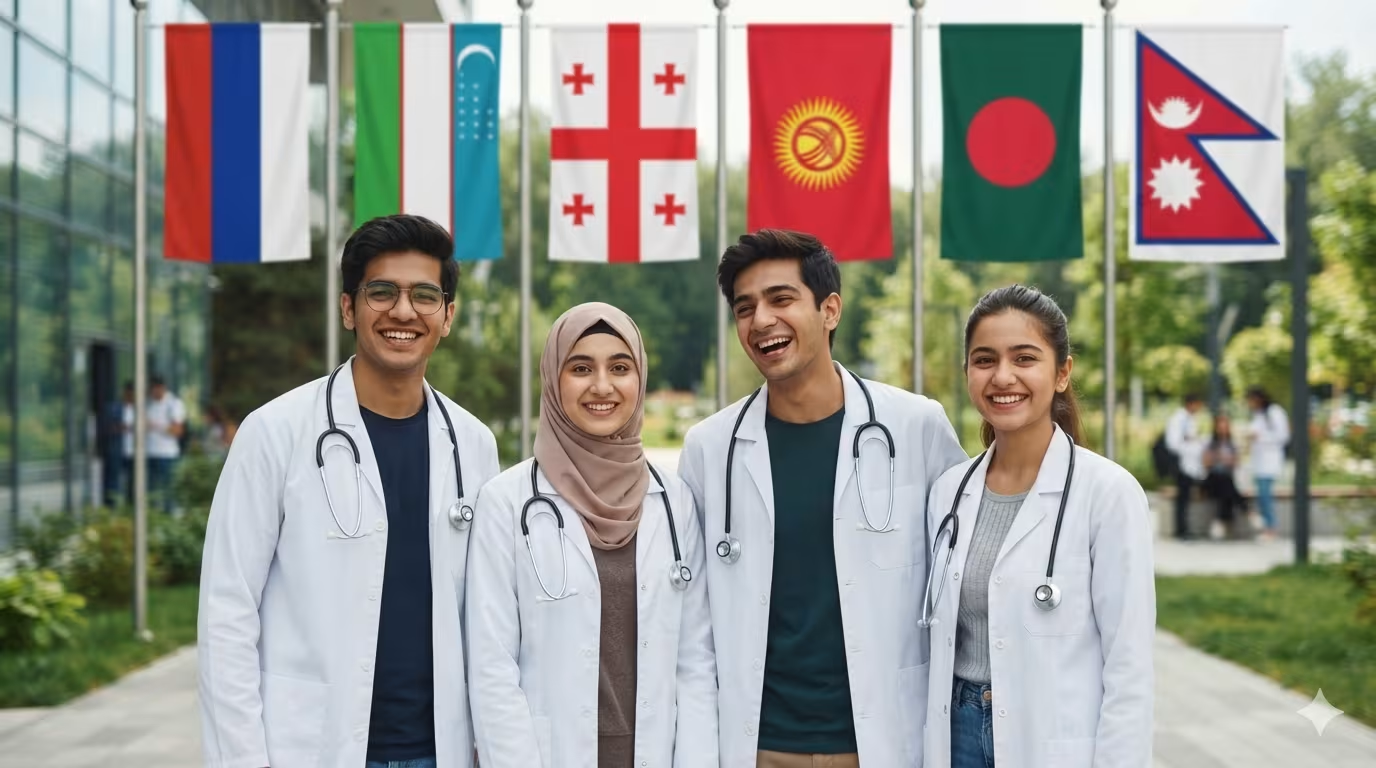
| Country | Approx. Total Budget (INR) | NMC Compliance | Key Advantage | Main Challenge |
|---|---|---|---|---|
| Russia | ₹22 – 35 Lakh | Compliant (6-year path) | Large hospitals, established state universities | Harsh winters, need for basic Russian |
| Uzbekistan | ₹22 – 28 Lakh | Compliant | Safe environment, Indian food available | Newer universities, shorter track record |
| Georgia | ₹30 – 45 Lakh | Compliant | European-style education, good pass-rate history | Higher tuition and living costs |
| Kyrgyzstan | ₹15 – 28 Lakh | Compliant (verify per university) | Lowest entry cost | Lower average pass rates, needs careful screening |
| Bangladesh | ₹35 – 50 Lakh | Compliant | Syllabus and disease patterns close to India | Higher cost, strict academic discipline |
| Nepal | ₹45 – 65 Lakh | Compliant | No visa needed, close to home, little culture shock | Most expensive option, admission process varies by college |
Budgets cover tuition, hostel and essential living costs, and vary by university and year.
This belt is the most popular choice for Indian students because of affordability and long-running medical programs.
The unfiltered truth: Classes are in English, but clinical rotations mean talking to local patients. If you can’t manage conversational Russian or Uzbek by your third year, taking histories and learning on ward rounds becomes difficult. Start learning the language from year one.
Top Russian state universities have century-old labs and huge bed capacity. In some budget locations, though, student-to-patient ratios are poor. Research the specific university, not just the country.
Georgia has become a favourite thanks to its European-style curriculum, clean cities and good infrastructure. The catch is a steadily rising cost of living, especially in Tbilisi. Also confirm the university’s local licensing pathway so it meets current NMC requirements on practice rights.
If your budget allows, these two countries offer the smoothest transition. Bangladesh in particular is known for strong FMGE outcomes, largely because students study familiar textbooks and see disease patterns and clinical settings similar to those in Indian state hospitals. Nepal offers a similar comfort level. Both cost noticeably more upfront than Central Asia.
Many agents quote only the base tuition. Add these to your calculation:
The best country for MBBS abroad is not the cheapest one or the one with the flashiest brochure. It is the one that fits your NEET status, budget, language comfort and long-term goal of practising in India. Do your homework, ask for the complete fee structure in writing, and never skip NMC verification.
Need help shortlisting NMC-compliant universities and comparing real costs? Visit ShikshaMed for guidance on your MBBS abroad journey.
Disclaimer: Fees, university lists and regulations change often. Confirm current details with the NMC and the university before making any payment.
Which is the cheapest country for MBBS for Indian students?
Kyrgyzstan and Uzbekistan generally have the lowest total budgets, but the university’s NMC compliance and FMGE track record matter more than price.
Is NEET compulsory for MBBS abroad in 2026?
Yes. You need a qualifying NEET-UG scorecard in the year of admission to be eligible for the Indian licensing exam.
How long is MBBS abroad?
The NMC requires at least 54 months of study plus a 12-month internship at the same institution. Most programs take about 6 years in total.
Is an MBBS from Russia valid in India?
Yes, if the university meets all NMC FMGL criteria and you clear the Indian screening exam.
Which country has the best FMGE passing rate?
Bangladesh is often cited for strong results, but pass rates vary by university, so check the recent data for your specific college.