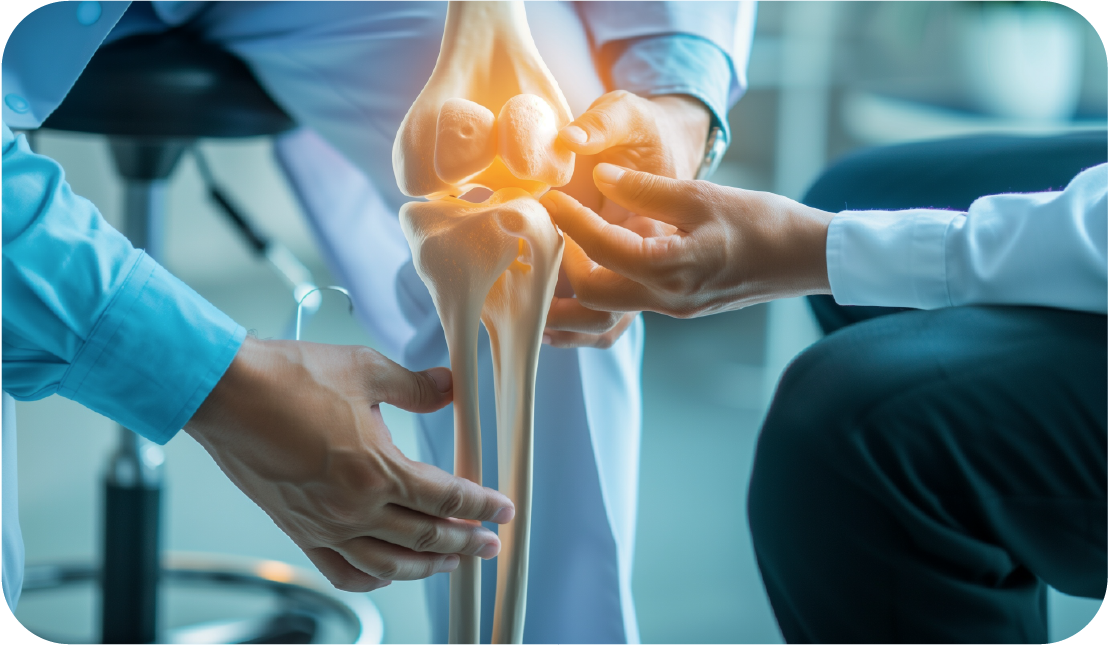
skills but also prepares doctors to handle trauma cases, fractures, joint replacements, spinal care, deformities, and bone tumors with confidence.
MS in Orthopaedics (Master of Surgery in Orthopaedics) is a 3-year postgraduate medical program that trains doctors in advanced orthopedic care. During this course, students learn various diagnostic techniques, surgical procedures, and patient-management skills related to the musculoskeletal system. The curriculum includes hands-on clinical training, research work, and exposure to real-time orthopedic emergencies.
Students get trained in areas like:
By the end of the course, students become skilled orthopedic surgeons who can treat patients through both surgical and non-surgical methods.
The main purpose of MS in Orthopaedics is to produce highly trained orthopedic surgeons who can diagnose and treat complex bone and joint-related conditions. As lifestyle diseases, obesity, and orthopedic injuries are increasing globally, the role of orthopedic experts has become extremely important.
Today, orthopedic surgeons play a major role in:
Modern healthcare cannot function effectively without orthopedic specialists, especially in trauma care, emergency services, sports medicine, and joint replacement centers.
MS in Orthopaedics is the right choice for MBBS graduates who have:
This course is ideal for doctors who enjoy hands-on procedures, decision-making in critical medical situations, and long-term patient rehabilitation.
If you’re planning to pursue MS in Orthopaedics, it’s important to understand the key features of the course. This program is designed for MBBS graduates who want to specialize in treating bone, muscle, spine, and joint-related disorders. It offers a perfect blend of theory, practical learning, and hands-on surgical experience, making it one of the most respected and in-demand medical specializations today.
Below is a quick overview of the course:
| Particulars | Details |
| Course Level | Postgraduate |
| Full Form | Master of Surgery (Orthopaedics) |
| Duration | 3 Years |
| Examination Type | Annual |
| Eligibility | MBBS degree with a minimum of 55% marks from an MCI/NMC-recognized university |
| Admission Process | Entrance Exam (NEET PG), Counselling & Interview |
| Top Recruiters | AIIMS, Apollo Hospitals, Delhi State Cancer Institute, Ganga Hospital, CMC Vellore, Max Healthcare, and Fortis |
| Popular Job Roles | Orthopedic Surgeon, Medical Consultant, Clinical Associate, Professor, Orthopedic Assistant |


If you’re planning to build a career as an orthopedic specialist, understanding the MS Orthopaedics eligibility, course length, and required entrance exams is the first step. The MS in Orthopaedics program is one of the most preferred Orthopedic PG medical courses among MBBS graduates who want to specialize in bone, joint, and musculoskeletal treatment.
The total duration of the MS Orthopaedics course is 3 years. During these three years, students receive extensive clinical exposure, surgical training, and real-time emergency handling experience. Since Orthopaedics deals with trauma, fractures, joint replacements, and spine surgeries, this structured training helps students gain confidence and develop strong practical skills.
To apply for MS Orthopaedics, students must fulfill the following eligibility requirements:
This makes sure that students entering postgraduate orthopedic training have a strong foundation in basic medical and clinical skills.
Admission to this course is done strictly through the NEET PG entrance exam. A good NEET PG rank is required to secure a seat in top government or private medical colleges offering MS Orthopaedics. Since competition is high, students need focused preparation and proper guidance to qualify.
A one-year compulsory rotating internship after MBBS is mandatory for applying to MS Orthopaedics. Students must also have a valid permanent or provisional registration certificate from NMC/MCI or the respective State Medical Council before the counseling process.
Getting admission into MS Orthopaedics requires proper planning and understanding of the complete process. Since the course is highly competitive and seats are limited, candidates must follow the correct steps—from clearing entrance exams to participating in counseling. Below is a simple step-by-step explanation to help you understand how MS Orthopaedics admission 2025 works.
Step-by-Step Admission Process
The first requirement is completing MBBS from a recognized medical college along with a compulsory one-year internship.
NEET PG is the primary entrance exam for admission to MS Orthopaedics seats in India. A good score increases the chance of getting admission into reputed institutes.
After the exam, candidates must check the MS Ortho NEET PG cut-off for government, private, or deemed universities to understand their chances.
Eligible candidates must register for central or state-level counselling depending on their preference.
Shortlisted candidates must upload or submit documents like MBBS certificates, internship completion, NEET PG scorecard, and identity proof.
Once a seat is allotted, the candidate must confirm it by paying the admission fee and reporting to the allotted college within the given timeline.
For most medical colleges in India, MS Orthopaedics admission is based on:
Securing a strong rank in these exams is essential because MS Orthopaedics is one of the most competitive PG medical branches.
The Orthopaedics PG counselling process includes both:
All India Quota (AIQ) Counselling
Conducted by MCC (Medical Counselling Committee) for:
State Counselling
Conducted by respective state authorities for the remaining 50% seats in government and private colleges.
Candidates may apply for both AIQ and state counselling to increase their chances of getting a seat.
The MS Orthopaedics syllabus is designed to give students strong theoretical knowledge along with real surgical and clinical training. During the course, students learn how to diagnose and treat fractures, joint problems, bone deformities, sports injuries, and spine conditions. The curriculum ensures that every postgraduate student becomes confident in handling orthopedic emergencies and performing surgeries independently.
The academic part of the program focuses on essential orthopedic topics that help students understand the human skeletal system and related disorders. Some major subjects include:
These subjects give a complete understanding of musculoskeletal disorders, making students well-trained for advanced Orthopedic training in India.
Practical experience is the most important part of the Orthopedic surgery postgraduate curriculum. Students actively participate in:
Students also observe live surgeries and gradually move toward performing procedures under supervision. This helps in building surgical skills, decision-making ability, and confidence.
Throughout the program, students undergo:
At the end of the course, candidates must pass:
Successful completion of all requirements confirms the student’s readiness to practice as an orthopedic specialist.
Selecting the right institution is a major decision for any student planning to pursue MS Orthopaedics. A good college ensures strong surgical exposure, high patient flow, and experienced faculty support. These factors help shape a student into a confident orthopedic surgeon. Many students search for the best colleges for MS Orthopaedics in India, and below are some of the most preferred categories.
AIIMS campuses are always the first preference for MS Orthopaedics because of their unmatched surgical exposure, expert faculty, and high patient flow. Students get hands-on training from day one, which helps them build strong clinical skills. AIIMS is counted among the Best colleges for MS Orthopaedics in India and is known as one of the Top orthopedic medical colleges due to its national reputation and excellent residency environment.
AIIMS Colleges:
Government medical colleges are ideal for students who want maximum OPD, emergency cases, and surgical exposure. These colleges offer affordable fees and real-life learning through high patient volume. Residents gain strong confidence because they handle a wide range of orthopedic cases every day. These institutes easily rank among the Top orthopedic medical colleges in India.
Deemed universities offer a balanced environment with advanced technology, clean hospital setups, and experienced faculty. These colleges provide structured training, good academic support, and a smooth learning experience. Many students prefer these institutes because they combine good clinical exposure with modern infrastructure. They are counted among the Best colleges for MS Orthopaedics in India for their quality and consistency.
Deemed Universities:
Private medical colleges offer well-organized residency programs, supportive faculty, and clean, modern hospital setups. These colleges provide good surgical exposure, research opportunities, and a structured academic schedule. Students who want a safe, stable, and organised learning environment often choose these institutes. Many private colleges are also listed among India’s Top orthopedic medical colleges for their overall training quality.
Private Colleges:
The MS Orthopaedics fees in India depend mainly on the type of college you choose—Government, Private, Deemed University, or NRI quota. Government colleges have the lowest fees, while deemed universities and NRI seats have the highest fee range.
Below is a clear and simple comparison to help you understand the difference.
Fee Range (Approx):
₹30,000 – ₹2,00,000 for the entire 3-year MS Orthopaedics course
Why Choose?
Fee Range (Approx):
₹20,00,000 – ₹50,00,000 for the full course
Why Choose?
Fee Range (Approx):
₹35,00,000 – ₹80,00,000 for the complete MS Ortho course
Why Choose?
For students applying under NRI or foreign national quota, the fees are significantly higher.
NRI Fee Range (Approx):
$60,000 – $1,20,000 USD (₹50,00,000 – ₹1,00,00,000+)
Why Choose?
MS Orthopaedics offers one of the strongest career scopes in the medical field. The demand for orthopaedic surgeons is increasing due to sports injuries, accidents, aging population, lifestyle diseases, and the rise of joint-related problems.
Whether you want to work in a government hospital, join a private specialty center, or start your own clinic, the Orthopedic surgeon career scope is excellent in India and abroad.
Why Orthopaedics Has High Scope:
Overall, jobs after MS Orthopaedics are plenty, well-paid, and available in multiple sectors.
Below is the simple and clear table showing the main job profiles and where they work:
| Job Role | Work Sector / Where You Can Work |
| Orthopedic Surgeon | Government & Private Hospitals, Super-specialty Clinics |
| Trauma Specialist | Emergency Rooms, Accident & Trauma Care Centers |
| Spine Surgeon (Super-specialization) | Clinical Practice, Super-specialty Spine Centers |
| Joint Replacement Surgeon | Ortho Hospitals, Knee & Hip Replacement Clinics |
| Sports Injury Specialist | Sports Hospitals, Athlete Rehabilitation Centers |
| Orthopedic Consultant | Corporate Hospitals, Private Clinics |
| Pediatric Orthopedic Surgeon | Children’s Hospitals & Ortho Units |
| Arthroscopy Surgeon | Daycare Surgery Units, Orthopedic Clinics |
| Academic/Teaching Faculty | Medical Colleges & Universities |
| Research Associate | Medical Research Institutes & Ortho Labs |
The salary after MS Orthopaedics depends on skills, location, surgical experience, and specialization.
Starting Salary for Fresh Orthopedic Surgeons:
₹10 – ₹20 Lakhs per year (in Govt/Private Hospitals)
After 3–5 years of Experience:
₹18 – ₹35 Lakhs per year
Super Specialist Surgeons (Spine / Joint Replacement / Sports):
₹40 Lakhs – ₹1 Crore+ per year
Own Clinic / Private Practice:
Income can go very high depending on patient flow, surgery numbers, and location.
After completing MS Orthopaedics, many doctors choose advanced training to improve their surgical skills, explore a specific subspecialty, and increase their income. With more complex cases today—sports injuries, spine disorders, joint replacements—super specialization after MS Orthopaedics has become very important.
Higher studies help you become an expert in your chosen field and open doors to top hospitals and international opportunities.
DNB Orthopaedics is a national-level postgraduate qualification offered by the National Board of Examinations (NBE).
It is considered equivalent to MS in India.
Why Choose DNB?
DNB can also be done after MS as a second degree if someone wants additional certification.
MCh is a super-specialty surgical degree, usually pursued after MS or DNB.
Why Choose MCh Orthopaedics?
Some MCh seats are available in government institutes, private universities, and national-level entrance exams.
Fellowships are the most preferred super specialization after MS Orthopaedics
They are short-term programs (6 months – 2 years) that focus on a particular surgical area.
✔ Arthroscopy & Sports Medicine
✔ Spine Surgery
✔ Joint Replacement (Hip & Knee)
✔ Trauma & Accident Surgery
✔ Pediatric Orthopaedics
✔ Hand & Microvascular Surgery
Why Fellowships Are Popular
For global exposure, many doctors pursue fellowships in:
These fellowships offer advanced training, cutting-edge technology, and good international recognition.
Orthopaedics is considered one of the highest paying medical branches in India because of the huge demand for trauma care, joint replacements, spine surgeries, and sports injury management. The earning potential increases quickly as your surgical experience grows.
Whether you join a government hospital, enter the private sector, or start your own practice, MS Orthopaedics doctor income is strong from the very beginning.
Government hospitals offer stable jobs, fixed working hours, and good benefits.
Salary Range:
₹10 Lakhs – ₹18 Lakhs per year
(₹80,000 – ₹1,50,000 per month)
What You Get:
Government jobs are great for doctors who want stability + good experience.
Private sector pays higher, especially if you have good surgical skills.
Salary Range:
₹15 Lakhs – ₹35 Lakhs per year
(Depends on city, hospital size, and experience)
Super-specialists like spine surgeons or arthroscopy experts can earn even more.
Why Private Sector Pays Better:
Many doctors prefer private hospitals because income grows quickly.
This is where orthopedic doctors earn the highest income.
Earning Range:
₹25 Lakhs – ₹1 Crore+ per year
Income depends on:
Private practice is one of the main reasons Orthopaedics is ranked among the highest paying medical branches in India.
Orthopedic surgeons are in high demand internationally, especially in:
USA
$300,000 – $500,000 per year
(₹2.5 – ₹4 Crore+)
UK
£70,000 – £200,000 per year
(₹70 Lakhs – ₹2 Crore)
UAE / Gulf
₹40 Lakhs – ₹1.2 Crore per year
(Tax-free salary in many hospitals)
Why Demand Is High Abroad:
International packages make Orthopaedics one of the most rewarding specialties globally.
Your earning potential increases with:
✔ Experience
✔ Surgical mastery
✔ Fellowships (Spine, Arthroscopy, Joint Replacement)
✔ Private practice
✔ International exposure
Surgeons who perform spine surgeries, knee replacements, arthroscopy, and sports injury treatment see the fastest growth in their careers.
Before choosing any PG branch, students want to know the real advantages and challenges. Orthopaedics is a highly respected surgical field, but it also demands physical strength, long hours, and continuous learning. If you’re wondering, “Is MS Orthopaedics a good career?”, here is a clear and honest breakdown to help you decide.
High Respect & Strong Reputation
Orthopedic surgeons are highly respected because they handle critical cases like fractures, trauma, spine injuries, dislocations, and joint replacements.
Your work directly improves a patient’s mobility and quality of life.
One of the Highest Paying Medical Branches
Orthopaedics is considered among the highest-earning specialties.
Income grows very fast with experience, especially with surgeries like:
Huge Demand & Unlimited Job Opportunities
The demand is increasing due to:
Opportunities for Super Specialization
You can further expand your career with fellowships in:
Rewarding Career with Visible Results
Orthopedic treatments give quick improvements.
Seeing a patient walk again after surgery is extremely satisfying and motivating.
High Physical Workload
Orthopaedics is physically demanding.
Surgeries require strong stamina, long standing hours, and sometimes dealing with heavy instruments.
If you prefer gentle, delicate procedures, this may feel challenging.
Long Working Hours
Trauma and emergency cases can come at any time — day or night.
Compared to many other specialties, orthopedic surgery often involves:
Stressful During Early Years
The initial years after MS can be tough due to:
Constant Need to Update Skills
New implants, new surgical techniques, and new technology are introduced frequently.
You must keep learning to stay updated and deliver the best care.
High Responsibility
Orthopedic surgeons handle serious injuries and life-altering conditions.
The responsibility level is high, and mistakes can affect long-term patient mobility.
Choosing a PG branch is a big decision, and many NEET PG students compare Orthopaedics with other popular specialties. Here is a simple and honest comparison to help you understand how MS Orthopaedics stands against MS General Surgery, MD Radiology, and MS ENT.
| Parameter | MS Orthopaedics | MS General Surgery | MD Radiology | MS ENT |
| Nature of Work | Bone, joint, fracture, trauma, sports injuries | Abdominal, GI, vascular, emergency surgeries | Imaging, CT, MRI, USG, diagnostics | Ear, nose, throat, head & neck surgeries |
| Surgical Load | Very High – trauma, joint replacement, spine | High – long, complex surgeries | None / Minimal | Moderate – mostly short surgeries |
| Physical Workload | Heavy, long hours, standing OT | Heavy & tiring | Very low | Light to moderate |
| Emergencies | Frequent trauma emergencies | Very frequent | Very rare | Occasional |
| Lifestyle / Work–Life Balance | Medium | Low | Excellent | Good |
| Salary Growth | Highest with experience & surgeries | Good but slower | High & stable | Good |
| Scope in India | Very high due to injuries, accidents, arthritis | High but competitive | Very high in diagnostics | Moderate to high |
| Super-Specialization Options | Spine, Arthroscopy, Joint Replacement, Sports Medicine | Surgical Gastro, Onco, Urology | Interventional Radiology | Head & Neck, Skull Base |
| Best For | Students who love surgery, trauma, active work | Students who like ICU, major surgeries | Students wanting comfort + tech | Students wanting surgery with balanced lifestyle |
| Key Decision Point | High physical work but high salary | Hard lifestyle, many emergencies | Best lifestyle + high income | Balanced lifestyle + surgical field |
Choosing MS Orthopaedics is a big decision. But getting the right seat in a top medical college is even bigger. With hundreds of counselling rules, changing cut-offs, and confusing fee structures, the admission process can feel overwhelming. This is where ShikshaMed becomes your strongest support.
ShikshaMed is trusted by thousands of MBBS graduates for providing honest, clear and personalized guidance for MS Orthopaedics admission through NEET PG. If you want a smooth, stress-free journey from rank to admission, ShikshaMed is the best partner you can have.
MS Orthopaedics requires careful planning because seats are limited and demand is high.
ShikshaMed analyses your NEET PG rank, budget, and preferences to guide you toward the best orthopaedic colleges where you genuinely have a chance.
You get guidance from experts who know:
Students love ShikshaMed because everything is transparent:
You get only honest advice, backed by real data and experience. This builds trust and confidence throughout the process.
ShikshaMed has deep knowledge of government, private, and deemed universities across India.
Whether you want:
This increases your chances of getting the best MS Orthopaedics seat within your rank range.
The team supports you at every stage:
✔ MCC AIQ counselling
✔ State counselling
✔ Choice filling
✔ Seat locking
✔ Mop-up & stray rounds
✔ Document verification
You never miss deadlines or make mistakes in choice filling the most common reason students lose good seats.
Every student is different.
ShikshaMed provides 1-on-1 guidance to help you decide:
This personalized strategy makes admission much easier.
After seat allotment, ShikshaMed helps with:
You get full support until you successfully join your college.
MS is one of the most rewarding and fast-growing specialties in modern medicine. With high demand, strong career stability, advanced surgical opportunities, and excellent salary growth, it offers a powerful combination of professional respect and long-term financial security. Whether you want to become a trauma expert, joint replacement surgeon, spine specialist, or sports medicine doctor, this branch opens countless opportunities in India and abroad.
If you are passionate about surgery, teamwork, and helping patients regain mobility, MS Orthopaedics is an exceptional choice for your future.
Can I do MS Orthopaedics without NEET PG?
No. NEET PG is mandatory for MS Orthopaedics admission in India.
Without NEET PG, you cannot join MS Ortho in any government, private, or deemed university.
Is MS Orthopaedics better than DNB Orthopaedics?
Both are good, but MS Orthopaedics is generally preferred because:
What is the duration of MS Orthopaedics?
The MS Orthopaedics course is 3 years, full-time, including theory, clinics, trauma duty, and OT training.
What NEET PG rank is required for MS Orthopaedics?
Approximate trends:
Cut-off changes each year depending on seats and applicants.
Is MS Orthopaedics a good career?
Yes. It is one of the best and highest-paying surgical branches with strong demand in hospitals, trauma centres, sports clinics, and private practice.
What is the starting salary after MS Orthopaedics?
Fresh orthopaedic surgeons typically earn:
₹10–20 lakhs per year, depending on hospital type and city.
Income rises quickly with surgical experience.
Which is better: MS Orthopaedics or MD Radiology?
Both are excellent but depend on your interest.
Is orthopaedic surgery physically demanding?
Yes. MS Ortho requires:
Can I open my own clinic after MS Orthopaedics?
Yes. Many orthopaedic surgeons start their own practice or join a joint replacement / trauma clinic.
Private practice offers excellent income and independence.
What super-specializations can I do after MS Orthopaedics?
Popular higher studies options include:
These fellowships boost career growth and earning potential.
Is MS Orthopaedics good for girls?
Yes, many female doctors choose Orthopaedics now.
Although physically active, the branch offers:
Can orthopaedic surgeons work abroad?
Yes. Countries like USA, UK, Australia, and Gulf nations hire orthopaedic surgeons.
You may need exams like USMLE, PLAB, AMC, or DHA depending on the country.
Is MS Orthopaedics difficult?
It is challenging but manageable.
You must handle trauma, learn multiple surgeries, and work long hours initially.
With experience, the work becomes easier and more rewarding.
Is Orthopaedics one of the highest paying medical branches?
Yes. Orthopaedics is among the highest-paying specialties in India and abroad due to high demand for fracture care, joint replacement, spine surgeries, and sports injuries.
What are the job options after MS Orthopaedics?
You can work as: