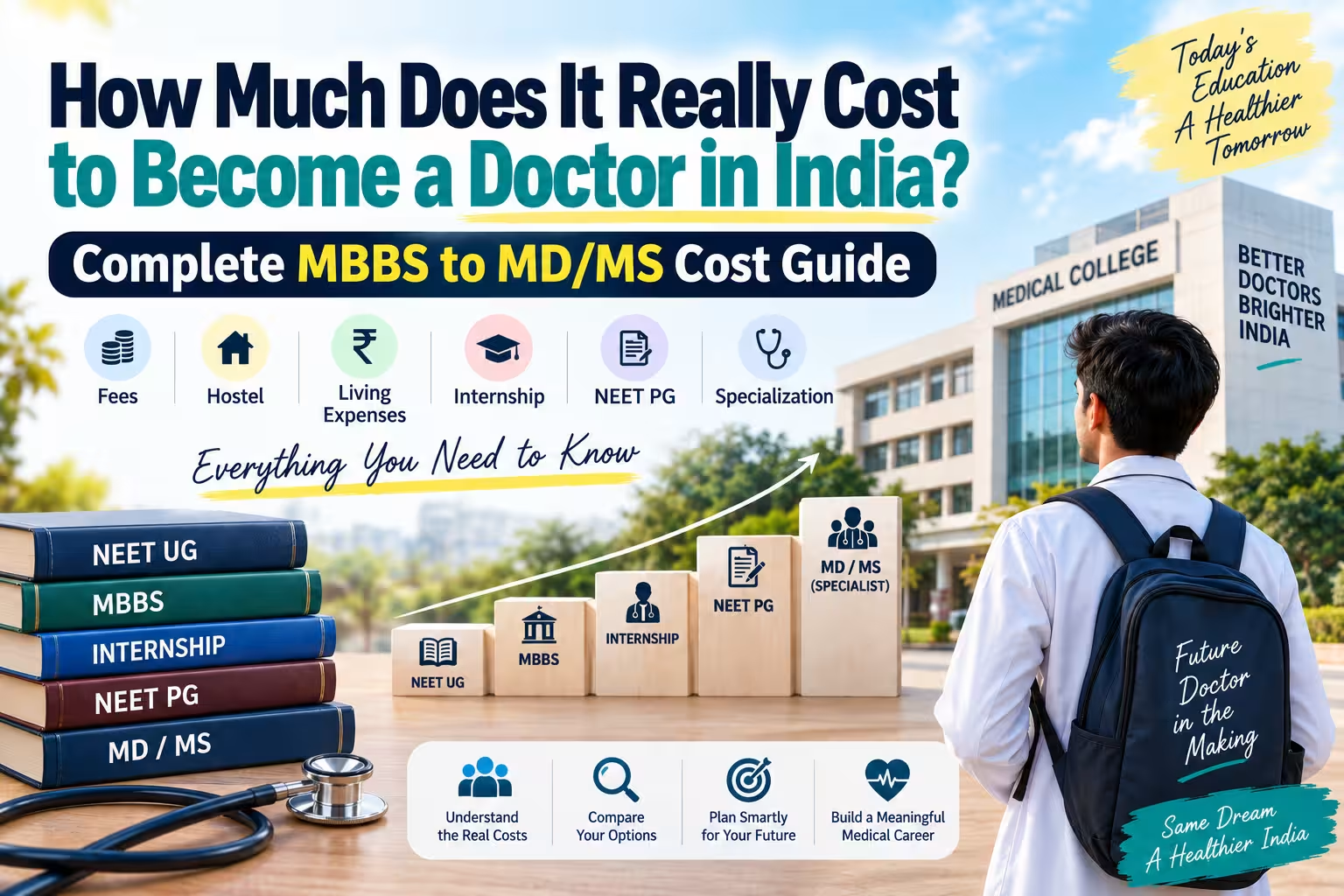
Every year, lakhs of students clear NEET, secure an MBBS seat, and spend five and a half years becoming doctors. Sooner or later, almost every one of them faces the same question: “Is MBBS enough, or do I have to do MD/MS to have a proper career?”
The short answer is yes, an MBBS doctor can absolutely work without MD/MS. Your MBBS degree, once you complete the internship and register with the National Medical Commission (NMC) or a State Medical Council, gives you the legal right to practise modern medicine in India. You can treat patients, prescribe medicines, run a clinic, work in hospitals, join government services, and build a full and respectable career.
The longer answer is more nuanced. An MBBS-only career is completely valid, but the type of work, the growth ceiling, the income pattern, and the professional identity differ from those of a specialist. This guide explains everything an MBBS graduate needs to know so you can decide with clarity instead of pressure.
MBBS stands for Bachelor of Medicine and Bachelor of Surgery. It is a professional undergraduate medical degree that trains you in the foundations of medicine: anatomy, physiology, biochemistry, pathology, pharmacology, microbiology, forensic medicine, community medicine, medicine, surgery, obstetrics and gynaecology, paediatrics, orthopaedics, ENT, ophthalmology, and more. After the academic years, you complete a compulsory rotating internship, usually one year, in which you work in real hospital departments under supervision.
Once the internship is finished and your registration is granted, you are a licensed medical practitioner. In practical terms, that means you can:
An MBBS doctor is often called the “backbone” of the healthcare system, especially in a country like India, where a large part of the population first meets a doctor at a primary health centre, a small-town clinic, or a district hospital. A well-trained, empathetic MBBS doctor is the person who catches diseases early, refers complicated cases correctly, and keeps families healthy.
If MBBS is legally sufficient, why does everyone talk about PG as if it’s compulsory? There are a few honest reasons.
1. Specialisation and credibility. Patients and hospitals often trust specialists for complex conditions. A cardiologist, a radiologist, or a surgeon carries a specific professional identity that a general MBBS doctor does not.
2. Earning potential. In many cities and private hospital settings, specialists tend to have higher earning potential, particularly in procedure-heavy or diagnostic-heavy fields.
3. Faculty and academic careers. To become a clinical teacher in a medical college, a postgraduate qualification is generally required.
4. Peer pressure and social expectations. Family, relatives, and classmates often treat “MBBS + MD” as the “complete” version of a doctor, which is not really true but feels true socially.
5. Competition for good jobs. In big-city private hospitals, many roles prefer or require a postgraduate degree.
Understanding these reasons helps you see that MD/MS is a choice with benefits, not a legal requirement to practise. Your decision should come from your goals, your finances, and your interests, not from fear.
Here is a detailed look at the paths that are open to you with only an MBBS degree.
The most traditional route is to start your own clinic as a General Practitioner or Family Physician. In small towns, semi-urban areas, and even parts of large cities, a trusted family doctor builds a loyal patient base over years. You treat fevers, infections, hypertension, diabetes, respiratory illnesses, skin problems, minor injuries, and countless everyday complaints.
The strength of this path is independence. You choose your location, your timings, your consultation style, and your fees. The challenge is that reputation takes time to build, and you need good communication skills, patience, and a genuine willingness to keep learning. Many successful GPs eventually add small procedures, a pharmacy tie-up, a diagnostic collection point, or a day-care setup to grow their practice.
State governments regularly recruit MBBS doctors as Medical Officers in Primary Health Centres (PHCs), Community Health Centres (CHCs), and district hospitals. These posts come with job security, a fixed salary, allowances, pension or retirement benefits (depending on the state and scheme), and social respect. Public health work also gives you deep clinical exposure to a wide variety of cases, because you handle everything from maternal and child health to infectious diseases and emergencies.
Recruitment is usually conducted through state public service commissions or health department notifications. Keep an eye on official notifications and prepare early, because competition for good postings can be significant.
The Combined Medical Services (CMS) examination conducted by UPSC recruits MBBS doctors for roles such as Medical Officer in Central Health Service, Railways, Municipal Corporations of Delhi, and other central organisations. Other central and semi-government bodies, such as ESIC hospitals and various public sector undertakings, also hire MBBS doctors.
These jobs offer stability, structured promotions, and in many cases the opportunity to pursue postgraduate study later through service-linked routes. For students who prefer security over the uncertainty of private practice, this is a very attractive path.
The Indian Army, Navy, and Air Force recruit MBBS doctors as officers through Short Service Commission and permanent commission routes. This path combines medical practice with discipline, travel, leadership training, and a unique sense of service. Postings can range from field hospitals to major military hospitals, and the exposure is quite different from civilian practice.
Private hospitals and nursing homes regularly hire MBBS doctors as Resident Medical Officers (RMO), Casualty Medical Officers (CMO), ICU duty doctors, and in-patient ward doctors. These jobs are hands-on, fast-paced, and excellent for learning. You gain confidence in handling emergencies, managing critically ill patients, and working with consultants.
Many doctors use a few years in these roles as a stepping stone: earning, building experience, and preparing for a PG entrance exam, a diploma, or a fellowship in parallel.
Emergency and critical care are growing sectors. Many hospitals now maintain dedicated emergency departments and ICUs that need well-trained doctors. With an MBBS and short-term certifications in emergency medicine, ACLS, ATLS, or critical care, you can build a strong career in this high-demand area. Fellowships and certificate courses in emergency and critical care are available for MBBS graduates who want to specialise without a full MD/MS.
Not every postgraduate qualification is an MD or MS. Many specialities offer 2-year postgraduate diploma courses, which are generally less competitive than the MD/MS route while still giving you formal specialist training. Examples historically include DGO (obstetrics and gynaecology), DCH (child health), DA (anaesthesia), DMRD (radiodiagnosis), DLO (ENT), DOMS (ophthalmology), and others. Availability of specific diplomas can vary by institution and NMC regulations, so always check current seat matrices and approvals before you decide.
The DNB is a widely recognised postgraduate qualification offered through accredited hospitals rather than only medical colleges. It is considered equivalent to MD/MS for many purposes, and it opens doors to super-speciality training as well. DNB seats are filled through the NEET PG process, so preparation remains similar.
If you want clinical skills without committing to a three-year PG, there are many fellowship and certification programmes in areas like diabetology, cardiology (non-invasive), critical care, emergency medicine, echocardiography, sonography, dermatology and cosmetology, sports medicine, geriatric medicine, and family medicine. These help general practitioners add a defined focus area and improve patient trust and income, although you should always confirm that the course is from a recognised, credible institution.
If clinical work is not your only interest, you can pursue an MPH (Master of Public Health), a diploma in public health, or hospital and health administration. Careers include working with the WHO, UNICEF, NGOs, government health missions, epidemiology units, and research organisations. Public health doctors shape programmes such as immunisation, disease surveillance, maternal health initiatives, and health system reform.
Hospitals need people who understand both medicine and management. An MBBS graduate with an MBA in Healthcare or a Master’s in Hospital Administration (MHA) can move into roles such as hospital administrator, medical superintendent, quality head, insurance and TPA head, or healthcare consultant. This path suits doctors who enjoy leadership, operations, and strategy more than daily clinical work.
The pharmaceutical and clinical research industry values medical graduates. Roles include Clinical Research Physician, Medical Advisor, Drug Safety Physician, Pharmacovigilance Specialist, and Clinical Trial Investigator. These jobs usually offer a regular schedule, corporate exposure, and competitive salaries, especially in metro cities and multinational organisations.
If you enjoy writing and explaining, medical writing is a rewarding route. You can work with pharma companies, health-tech platforms, publishing houses, medical education companies, or as a freelancer creating patient education material, regulatory documents, and scientific content.
Online consultation platforms and health-tech startups have created a completely new job market for MBBS doctors. You can offer remote consultations, work as an online medical expert, support digital health products, or build your own online practice. The flexibility is a major advantage, though it requires strong communication skills and compliance with telemedicine guidelines.
Medical colleges need faculty in non-clinical subjects like anatomy, physiology, and biochemistry. Depending on prevailing NMC norms, certain positions may be open to MBBS graduates in specific roles, and many doctors choose these subjects for MD/MSc as well. If you love teaching and academic life, this can be an appealing direction. Always check the latest NMC faculty eligibility rules for exact requirements.
An MBBS degree is the base qualification for licensing exams like USMLE (USA), PLAB (UK), AMC (Australia), MCCQE (Canada) and others. While these routes are demanding and require careful planning, many Indian doctors build strong international careers. Even here, postgraduate training abroad usually happens through residency programmes, which is a different pathway from the Indian MD/MS system.
Factories, corporates, airlines, and large industrial establishments employ doctors to manage employee health, workplace safety, and occupational disease prevention. Corporate medical officer roles offer regular hours and a stable work environment.
Insurance companies and TPAs hire MBBS doctors as medical reviewers, claim assessors, and underwriting consultants. Medico-legal advisory and forensic support roles are also possible with additional training. These jobs suit doctors who prefer an analytical, desk-based environment.
An honest guide must also explain the trade-offs so that you make an informed decision.
Scope of practice. With MBBS alone, you should not present yourself as a specialist. Using titles like “Cardiologist” or “Surgeon” without the relevant recognised qualification is against medical regulations. Advanced procedures and super-specialised care generally require formal training and recognised degrees.
Career ceiling in certain settings. In large corporate hospitals, consultant-level roles typically require postgraduate qualifications. An MBBS doctor may remain in duty doctor or medical officer roles unless they upskill.
Clinical faculty roles. Teaching clinical subjects in medical colleges generally requires an MD/MS or an equivalent qualification.
Income variation. Early income for MBBS doctors can be modest, especially in private jobs, though it can rise significantly with experience, reputation, and additional skills.
None of these are dead ends. Many doctors overcome these limitations later through diplomas, fellowships, DNB, or a delayed PG attempt.
Rather than asking “Is PG necessary?”, ask better questions:
There is no universal right answer. The best career is one where your interest, skills, and life situation meet.
Many doctors work first and take up PG afterwards. This is a perfectly valid strategy, and often a wise one because clinical experience sharpens your sense of what you actually want to specialise in. If you choose this route:
Counselling can be confusing, with multiple rounds, changing rules, and varying fee structures. This is where guidance from experienced advisors like Shiksha Med can help you understand your options for MD/MS/DNB/diploma admissions across India based on your NEET PG score and category.
If you are reading this before joining MBBS, remember that the foundation of a successful medical career begins with choosing the right college and country. Students with a good NEET score can aim for government or private seats in India, while others look at recognised medical universities abroad. Verify NMC recognition, FMGE/NExT eligibility, clinical exposure, fee structure, and safety before deciding.
For students planning admission, you can explore guidance on MBBS admission in India and MBBS abroad options with a trusted advisory team that offers personalised counselling.
Look around and you will find MBBS doctors who run thriving clinics that serve thousands of families, who lead public health programmes, who head hospital operations, or who build health-tech companies. Equally, there are MD/MS doctors who struggle to find their footing. The degree opens doors, but skill, communication, ethics, continuous learning, and consistency are what keep them open.
If you decide not to do PG, invest in certifications, communication, technology, and networking. If you decide to do PG, choose a branch that you can genuinely see yourself doing for decades. Either way, your reputation is built one patient at a time.
Q1. Can I start my own clinic with only an MBBS degree?
Yes. After completing your internship and getting registered with the NMC or State Medical Council, you can start a clinic and practise general medicine, following local regulations and clinical establishment rules.
Q2. Is MBBS alone enough for a government job?
Yes. Many state and central government posts, including Medical Officer roles, UPSC CMS positions, Railways, ESIC, and armed forces medical services, are open to MBBS graduates.
Q3. Can an MBBS doctor perform surgery?
An MBBS doctor can perform minor procedures within their competence and training. Major surgeries are generally performed by qualified surgeons with the relevant postgraduate degree.
Q4. Is a diploma or DNB better than MD/MS?
Each has different duration, recognition, and competition levels. DNB is widely recognised, and diplomas are shorter routes. The best choice depends on your goals, availability, and current NMC rules.
Q5. Can I do MD/MS after working for a few years?
Yes. There is no strict rule that PG must be done immediately after internship, though you should check current eligibility and attempt criteria.
Q6. Which non-clinical careers are best for MBBS doctors?
Clinical research, pharmacovigilance, medical writing, healthcare management, public health, insurance medical review, and digital health are among the popular non-clinical options.
Q7. What if my NEET PG rank is low?
A low rank does not end your career. You can explore diploma seats, DNB, different states, private or deemed universities, or build your career through other paths. A counsellor can help you evaluate realistic options.
So, can an MBBS doctor work without MD/MS? Absolutely yes. MBBS gives you a legally recognised, respected, and versatile medical qualification. From general practice and government service to research, public health, administration, and digital health, there are many rewarding paths that do not require a specialist degree.
At the same time, MD/MS, DNB, or a diploma can add specialisation, credibility, and growth opportunities if you are passionate about a particular field. The smartest approach is to understand your interests, evaluate your finances and timeline, and choose the path that fits your life, not the one that simply follows the crowd.
If you are confused about NEET PG counselling, MD/MS/DNB admissions, or MBBS admissions in India and abroad, you can connect with the team at Shiksha Med for personalised, step-by-step guidance and get clarity before you take the next big decision of your medical career.
Suggested internal links to add (replace with your real page URLs):