Published: November 2026 | By Team ShikshaMed | Medical Admission & NEET Counselling Guidance
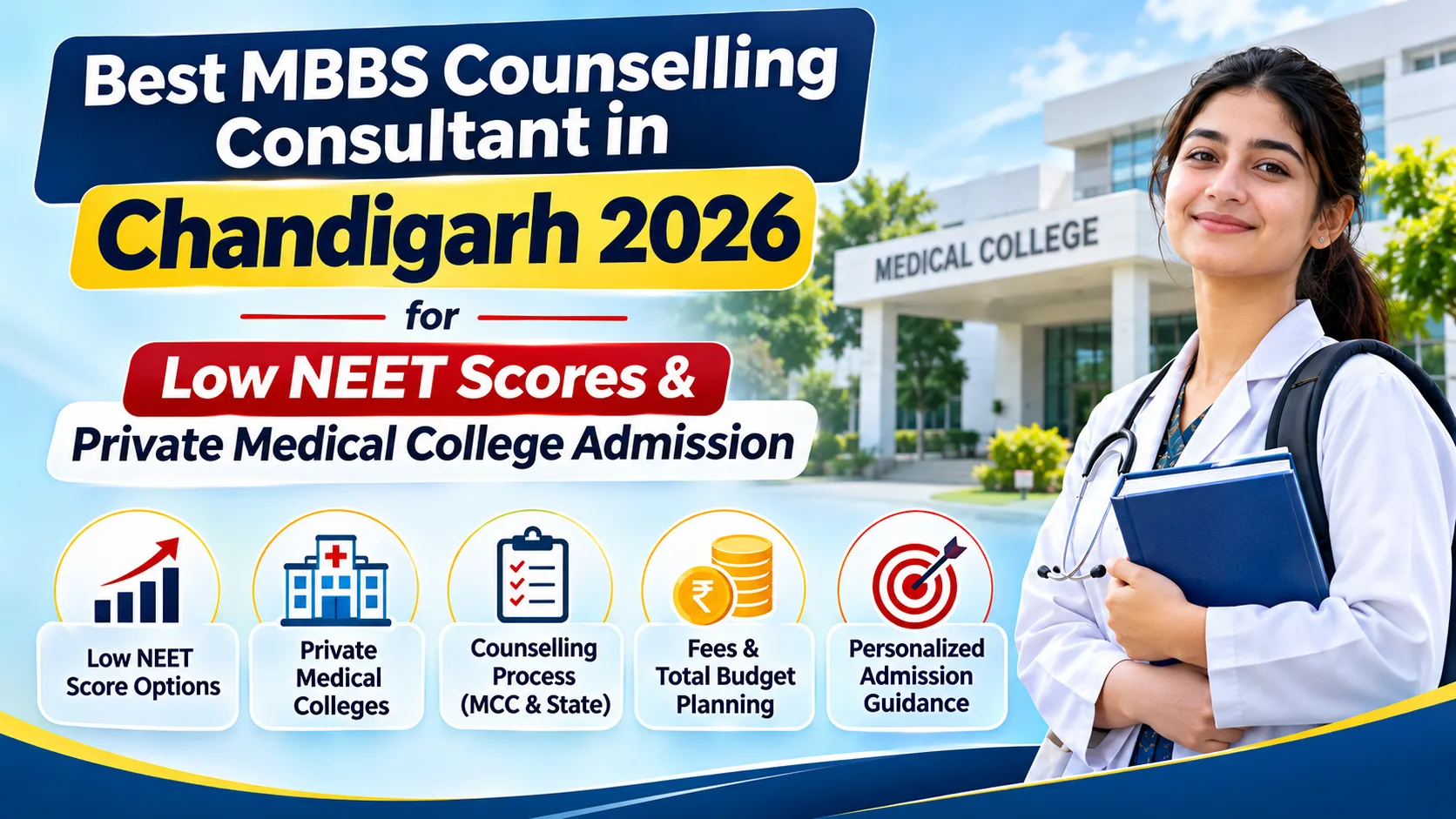
Choosing the right medical college after NEET UG is one of the most important decisions in a student’s academic journey. For thousands of medical aspirants across Chandigarh, Mohali, Panchkula, Punjab, Haryana and Himachal Pradesh, the challenge is not limited to qualifying for NEET. The real challenge begins when students receive their results and must understand which medical colleges are available according to their scores, All India Rank, category, domicile eligibility and family budget. Students with comparatively lower NEET scores often experience greater uncertainty because government medical college admission can be highly competitive, private medical college fees vary significantly, and counselling rules differ between states. This is why many students and parents search online for the Best MBBS Counselling Consultant in Chandigarh 2026, hoping to find reliable information, personalised admission planning and professional assistance throughout the medical counselling process.
For students exploring MBBS admission with low NEET scores in 2026, choosing an appropriate college requires much more than searching for the lowest cutoff or the cheapest medical institution. A sensible admission strategy should consider the student’s actual NEET rank, eligible counselling categories, previous admission trends, current seat availability, academic preferences, location, total course fees, accommodation expenses and long-term career plans. Even students with similar marks may have different admission opportunities because of differences in category, domicile, counselling eligibility and financial circumstances. Consequently, personalised MBBS counselling can help families understand the available pathways without relying on misleading assurances or outdated admission information.
ShikshaMed, a Chandigarh-based medical admission guidance organisation, assists aspiring doctors and their parents with NEET UG counselling, private medical college shortlisting, state-wise admission planning, fee comparisons, documentation and choice-filling guidance. Students looking for a reliable MBBS admission consultant in Chandigarh can explore the services offered by ShikshaMed and learn how professional counselling support can simplify a complex admission journey.
After NEET results are declared, students frequently begin searching for medical colleges that match their scores and financial expectations. While some candidates focus exclusively on government medical colleges, others explore private institutions, deemed universities, management quota seats and available counselling opportunities in different states. Unfortunately, many families are unfamiliar with the differences between these pathways. They may not understand which application portals to use, whether they are eligible to participate in another state’s counselling, how much security money must be deposited or whether a particular college’s total course expenses fit their budget. Such confusion can result in missed deadlines, unsuitable college choices or unnecessary financial commitments.
Chandigarh is an important educational centre for students from northern India. Families from Mohali, Panchkula, Ludhiana, Patiala, Ambala, Bathinda, Shimla and nearby regions often seek medical admission guidance in Chandigarh because they want to explore opportunities beyond their home state. However, living near Chandigarh does not automatically make a student eligible for every counselling category in Punjab, Haryana or Chandigarh itself. Admission rules are determined by the relevant counselling authorities and must be checked individually.
An experienced counselling consultant should therefore begin by understanding the student’s academic and personal admission circumstances rather than immediately recommending a college. The first discussion should include NEET score, All India Rank, category, domicile, preferred states, family budget and willingness to consider different types of institutions. This initial assessment provides the foundation for a realistic admission plan. Students can learn about ShikshaMed’s counselling assistance through its medical admission services page.
One of the most frequently asked questions among NEET aspirants is whether MBBS admission is possible with a comparatively low score. The answer depends primarily on whether the candidate has qualified under the applicable NEET eligibility requirements and whether a suitable seat is available through an authorised counselling process. A low score does not automatically mean that a student has no possibility of securing an MBBS seat. However, it also does not mean that private medical colleges must admit every candidate. Admission depends on eligibility, rank, reservation category, available seats, counselling rounds, institutional requirements and the applicable regulations.
Students should understand the important difference between NEET qualifying marks and MBBS admission closing ranks. The qualifying threshold establishes whether a candidate meets the relevant examination requirement, while the closing rank reflects the last admitted candidate in a particular college, category, quota and counselling round. Meeting the qualifying requirement does not guarantee an MBBS seat. Likewise, comparing only the marks obtained by students in previous years can be misleading because the relationship between marks and ranks changes with the examination and candidate distribution.
For candidates with lower ranks, the most practical starting point is to review the different categories of recognised medical institutions and determine which ones offer realistic possibilities according to the student’s individual profile. Families should compare government colleges, private medical colleges, deemed universities and any additional eligible admission categories. The objective should not be to find a college simply willing to accept a candidate, but to identify institutions where admission may be possible through legitimate counselling procedures and where the total financial commitment is manageable.
Students looking for a more detailed explanation can read ShikshaMed’s related article, What to Do After NEET 2026 if Your Rank Is Low?, which discusses alternative academic and admission options for students concerned about their NEET performance.
Private medical colleges play an important role in medical education in India. For families unable to secure a government MBBS seat, private institutions may offer another legitimate admission pathway, provided the candidate satisfies applicable eligibility requirements and obtains a seat through the authorised process. However, private medical colleges differ substantially in fee structure, location, clinical training environment, infrastructure, accommodation and admission rules. Consequently, selecting a private institution should involve careful research rather than focusing exclusively on the possibility of admission.
For MBBS aspirants in Chandigarh and surrounding regions, suitable colleges may need to be explored across several states. Punjab and Haryana are frequently considered because of their geographical proximity, while some families also examine medical college options in Uttar Pradesh, Rajasthan, Uttarakhand, Himachal Pradesh, Karnataka and other states. Nevertheless, not every state permits every candidate to participate in every private or management quota category. The availability of seats for outside-state candidates, the applicable reservation policy and the registration requirements must be verified through the official counselling bulletin for the relevant admission session.
The best private MBBS admission consultant in Chandigarh should be able to explain these distinctions clearly. A consultant should help students compare potential colleges based on their eligibility, fee affordability and individual preferences, while also explaining uncertainties associated with cutoff trends and future seat availability. At ShikshaMed, the counselling process focuses on helping students evaluate medical admission options through personalised guidance and college comparisons.
For a broader introduction to undergraduate medical counselling services, visit the ShikshaMed NEET UG counselling page.
Government medical colleges are often the first preference for NEET aspirants because their tuition fees are generally lower than those charged by many private medical institutions. They are also highly competitive, particularly in admission categories where the number of applicants exceeds the available seats by a substantial margin. However, students should not assume that every government college offers the same facilities, clinical exposure or financial conditions. Fee structures, service bonds, accommodation arrangements and other institutional policies may vary across states and institutions.
Private medical colleges provide additional educational opportunities but usually involve a significantly greater financial commitment. Parents should calculate the complete cost of the MBBS programme before making a decision. This includes annual tuition fees, hostel charges, mess expenses, university fees, examination expenses, deposits, transportation and other mandatory costs. Where a college publishes a fee schedule, families should examine the official prospectus and request clarification regarding charges that may change during the course.
For some families, a private MBBS seat close to home may be preferable to studying in a distant location. Others may prioritise affordability, hospital patient exposure, institutional reputation or specific geographical preferences. There is no single medical college that is automatically the best choice for every NEET aspirant. An informed decision should consider both educational quality and financial sustainability.
Students researching medical college availability can also explore the State-wise MBBS Seat Matrix 2026–27 published on ShikshaMed. Seat numbers should always be cross-checked against the latest official counselling matrix.
One of the biggest sources of confusion during MBBS admission is the difference between centralised counselling conducted by the Medical Counselling Committee and counselling organised by individual states or other authorised bodies. Students sometimes assume that completing MCC registration automatically includes them in every state-level admission process. This assumption is incorrect. Different counselling authorities can have separate registration procedures, deadlines, eligibility criteria, security deposits, document requirements and seat allotment rules.
The Medical Counselling Committee manages specified categories of undergraduate medical counselling, including All India Quota seats and applicable seats in participating institutions. State counselling authorities administer the categories of seats allocated under their respective admission frameworks. Some students may be eligible to participate in more than one counselling process, but their participation must comply with the applicable rules and restrictions governing registration, allotment, reporting, resignation and seat retention.
For a student with a relatively low NEET rank, understanding these distinctions is especially important because relying on only one counselling process can limit the options considered. Nevertheless, students should not register indiscriminately without evaluating eligibility requirements and financial liabilities. Security deposits, non-refundable registration fees and penalties for failing to comply with counselling conditions can be substantial in certain admission categories.
Families should refer to the official MCC UG counselling website and the relevant state authority for authoritative information. Professional counselling can help candidates interpret these rules and develop an application strategy suited to their profile.
Students from Chandigarh, Mohali, Panchkula and other parts of northern India commonly explore MBBS admission opportunities in Punjab and Haryana because these states offer a range of medical education institutions. However, the specific admission pathway depends on the candidate’s domicile, category, institutional preference and eligibility under the relevant seat quota. Candidates should not assume that the same rules apply to every government or private college.
For Punjab, medical admission planning should begin with the official counselling rules issued by the competent authority. Families should examine the distinction between government and private medical institutions, eligible seat categories, fee structures, documentation requirements and applicable reservation conditions. Similarly, Haryana’s counselling framework should be reviewed independently, particularly where students are interested in private medical colleges or management quota participation.
Candidates living outside a state may be able to participate in certain eligible private college categories, depending on the applicable admission rules. However, this must be established through the official prospectus rather than based on general internet claims. A candidate who participates in the wrong category or fails to provide required documents may face difficulties during verification or allotment.
Students considering nearby institutions can begin their research with ShikshaMed’s guide to MBBS Admission in Chandigarh 2026 and its MBBS Colleges in Chandigarh 2026–27 resource.
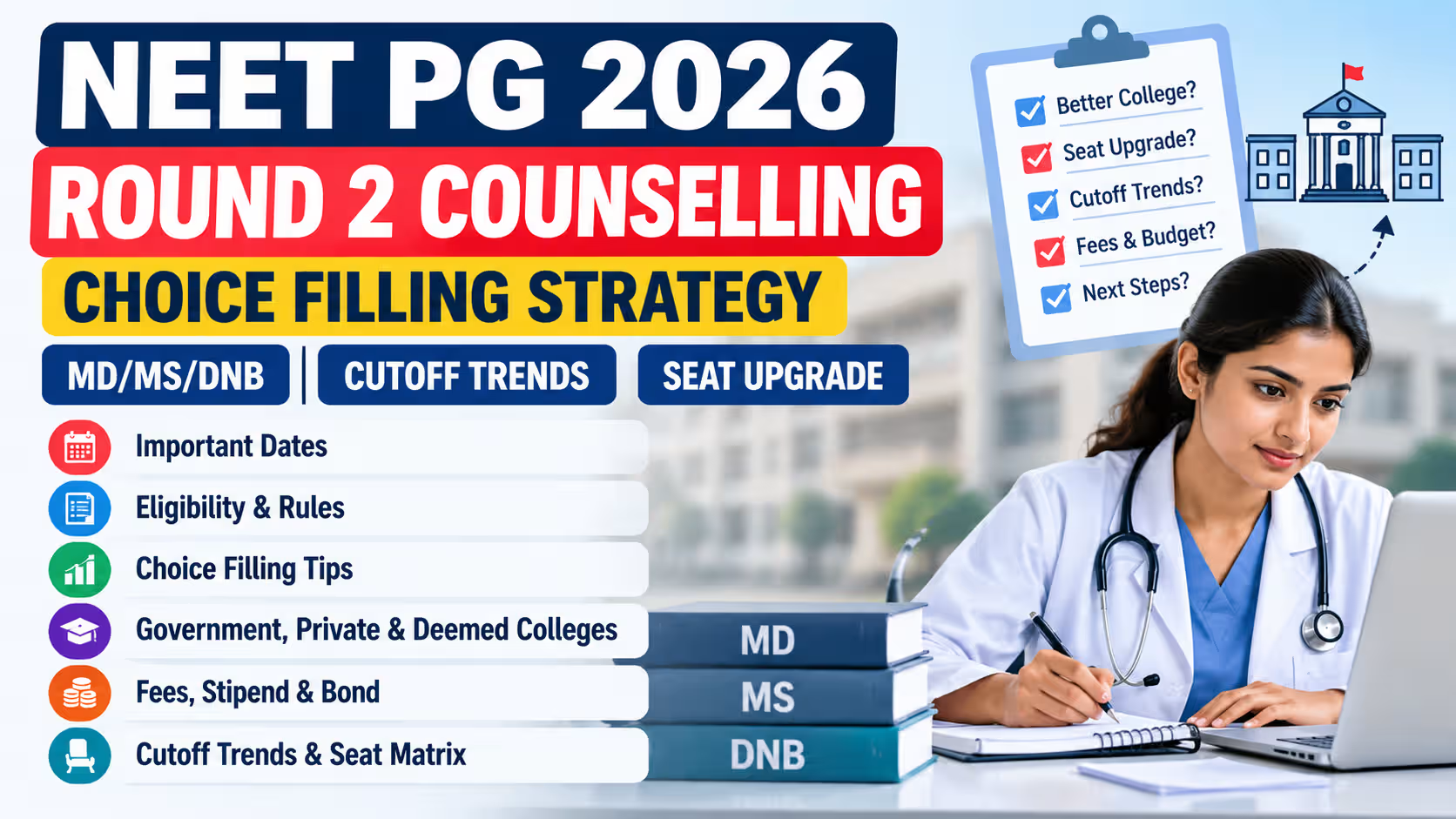
Choice filling is the stage where a student arranges eligible medical colleges according to personal preferences and the counselling authority’s instructions. It is much more than selecting a few familiar college names. A well-considered preference list reflects the student’s eligibility, genuine college preferences, available courses, financial limitations, geographical requirements and willingness to accept an allotment.
Students sometimes make the mistake of adding only colleges whose previous closing ranks appear close to their own rank. Others choose colleges based exclusively on advice from friends or online forums. Some candidates place an expensive institution at the top of their list without understanding the full course fees. These approaches may create unnecessary risk because admission conditions and seat availability can vary between counselling rounds.
A sensible strategy should begin by identifying colleges that the student is genuinely willing and financially able to join. Institutions can then be compared using recognised approval status, academic facilities, clinical training, location, total expenses and the student’s individual priorities. Historical closing ranks can provide useful context, but they should never be presented as guarantees of future allotment.
Students searching for an MBBS choice filling consultant in Chandigarh should look for guidance that explains the reasoning behind every major preference rather than simply offering a prepared college list. ShikshaMed provides admission planning and choice-filling assistance as part of its medical counselling services.
Cutoff analysis is an important part of medical admission planning, but it must be interpreted correctly. Every counselling cycle involves different NEET results, candidate rankings, seat matrices, reservation policies, college preferences and allotment conditions. As a result, the same score may correspond to a different All India Rank in another year, and the closing rank for a particular college can shift between rounds.
A reliable cutoff analysis should distinguish between the All India Rank and examination marks, and should compare the correct college, course, quota, category and counselling round. Looking only at a viral social media post showing an unusually low closing score can create unrealistic expectations if the post does not identify the seat category or relevant conditions.
Historical information is most helpful when combined with current official seat availability and the student’s actual eligibility. Students should also understand that vacancies in later counselling rounds are unpredictable. A previous vacancy does not establish that the same seat will be available again or that another candidate will be able to secure it.
For this reason, personalised NEET counselling should focus on a balanced assessment of admission possibilities rather than promises based on isolated cutoff examples.
MBBS admission is not simply an academic decision; it is also a major financial commitment for many families. One of the most important responsibilities of a parent is to understand whether the total expected cost of medical education can be managed throughout the course. Annual tuition fees provide only part of the picture, particularly when colleges charge additional amounts for accommodation, security deposits, university services or other mandatory facilities.
For private MBBS admission, families should obtain the current official fee structure for every shortlisted institution. They should determine whether tuition fees are fixed or subject to applicable revision policies, which deposits are refundable, whether hostel residence is compulsory and what financial consequences may arise if a student withdraws after accepting a seat. Any service agreement, bond or other financial obligation should be reviewed before admission.
Parents should avoid relying on unofficial verbal assurances about future fee concessions or guaranteed scholarships. Financial planning should be based on written institutional information and official notices. A medical college that appears affordable during the initial registration stage may represent a significantly larger financial commitment once all applicable expenses are included.
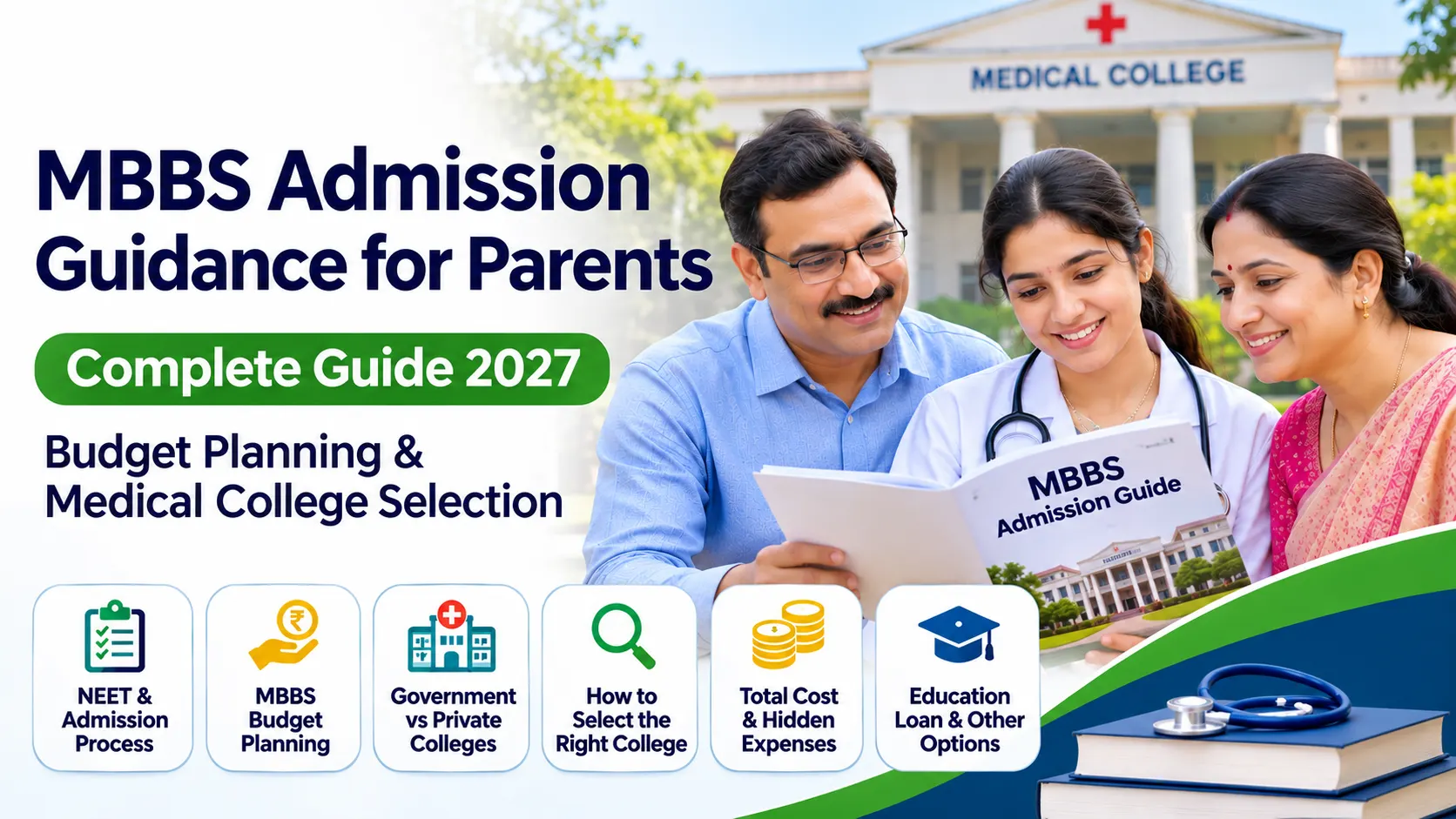
ShikshaMed’s counselling services can help families compare medical colleges and understand published fees. Families seeking a more detailed approach to evaluating college expenses can explore the MBBS Admission Guidance for Parents article.
Students who receive lower-than-expected NEET results sometimes make admission decisions under intense emotional pressure. After preparing for the examination for months or years, they may feel anxious about disappointing their families or losing another academic year. Unfortunately, this anxiety can make them vulnerable to unrealistic assurances about admission availability, unusually attractive fee offers or misleading claims of guaranteed seats.
One common mistake is believing that payment to an individual or agency can bypass official medical counselling requirements. Another is failing to verify whether a particular medical institution is recognised or whether its advertised MBBS seats have the necessary regulatory approval. Students also sometimes submit incomplete documents, miss official deadlines or fail to understand the terms of seat allotment and resignation.
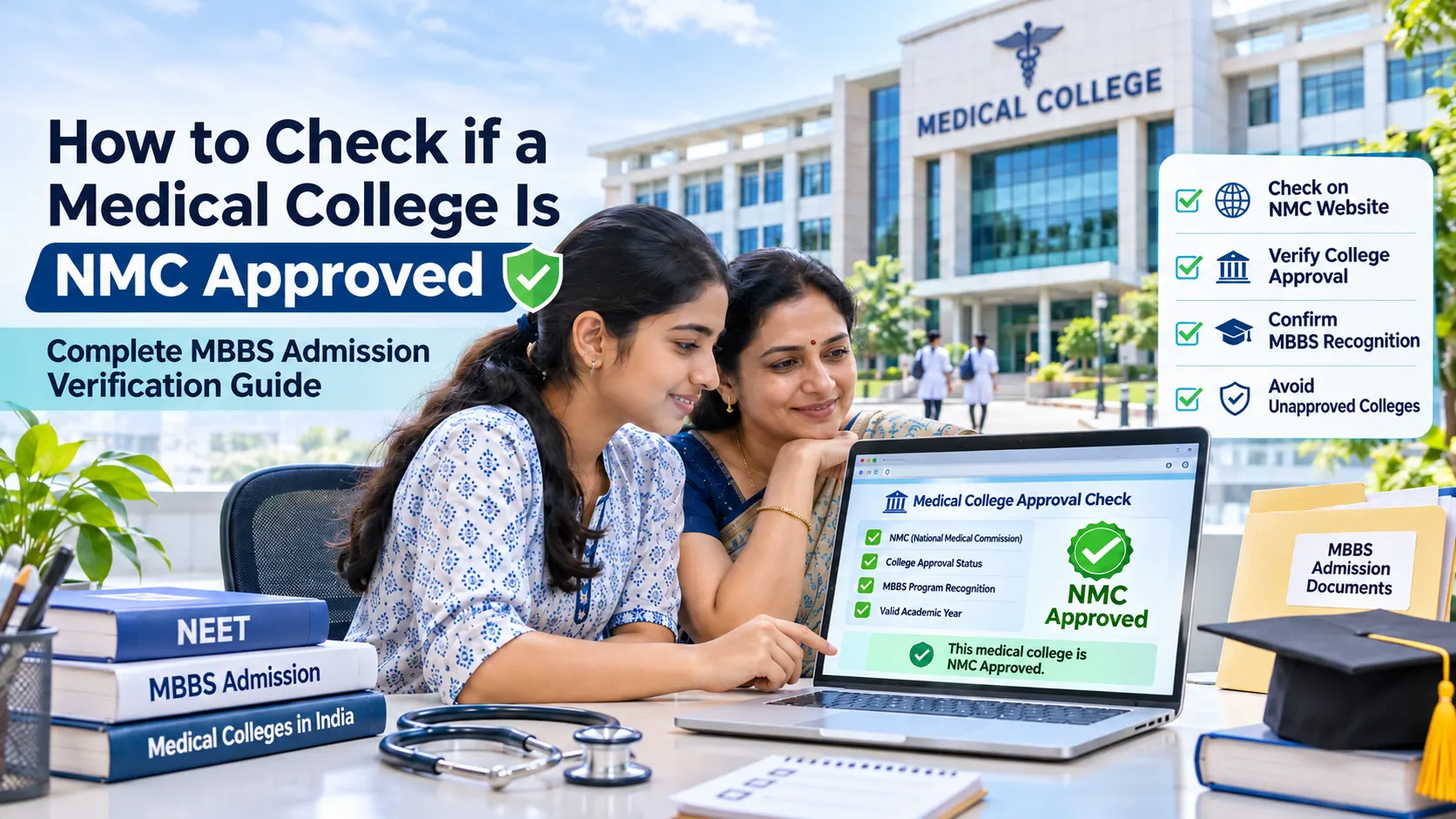
The National Medical Commission has advised students and parents to verify the authenticity and regulatory approval of medical institutions before admission or payment. Therefore, candidates should check official notices and independently verify the status of any medical college they are considering.
A trustworthy MBBS counselling consultant should never promise admission outside the applicable merit-based and regulated admission framework. Instead, the consultant should explain realistic opportunities, potential risks, documentation requirements and legitimate counselling routes.
ShikshaMed provides medical admission and career counselling guidance to students exploring undergraduate medical education in India and abroad. The organisation assists students with understanding NEET counselling procedures, comparing institutions, reviewing published fee structures, preparing admission documents and identifying suitable college options based on their individual circumstances.
A key aspect of personalised counselling is understanding that students have different admission priorities. One candidate may be concerned primarily about obtaining an MBBS seat within a limited budget, while another may prefer a particular region because of family circumstances. Some students need help understanding state quota rules, while others require detailed comparisons of private medical colleges or deemed universities. Effective guidance should reflect these differences rather than applying one standard college list to every candidate.
Students and parents can explore ShikshaMed’s medical admission experts, learn more about its counselling team and review the organisation’s services before arranging a consultation.
For students searching for the best NEET UG counselling consultant in Chandigarh, the most important factors should be accuracy, transparency, accessibility and a clear understanding of the admission process.
Although many medical counselling activities take place online, some families prefer the opportunity to discuss complex admission decisions with a counselling team in person. Parents often want detailed explanations about medical college fees, eligibility requirements, state-wise admission opportunities and the risks associated with different counselling decisions. Meeting a consultant locally can make it easier to discuss documents, compare options and clarify misunderstandings before submitting an application.
Chandigarh is accessible to families from Mohali, Panchkula, Ambala, Patiala, Ludhiana and several neighbouring districts. For these students, a Chandigarh-based counselling organisation may offer a convenient point of contact while they explore medical colleges located across India.
However, choosing a local consultant should not replace independent verification of official admission information. Parents should ask the consultant to explain the services being provided, any applicable professional fees, the limitations of counselling guidance and the official sources used to support admission recommendations.
ShikshaMed’s Chandigarh presence allows students and parents to explore counselling support for medical education in India and selected overseas destinations. More details are available through ShikshaMed’s Chandigarh MBBS admission consultancy page.
For some candidates, MBBS abroad becomes an option when admission to an affordable Indian medical college appears difficult. Overseas medical education may offer different tuition structures, admission requirements, campus environments and living expenses. However, selecting a foreign university requires careful investigation of regulatory compliance, course duration, clinical training, language requirements and eligibility to practise medicine in India after graduation.
A student should never choose an overseas medical institution solely because the published tuition fee appears lower than that of a private college in India. The family should consider the total cost of education, including accommodation, food, transportation, insurance, travel and other expenses. It is also essential to review the National Medical Commission’s applicable regulations for foreign medical graduates, particularly where the candidate intends to return to India for medical practice.
The choice between private MBBS admission in India and MBBS abroad depends on academic eligibility, financial resources, educational preferences and professional goals. Families should compare both pathways objectively before making a final decision.
To understand international options, students can read MBBS Abroad 2026: Fees, Eligibility, Top Countries and Admission Process.
When evaluating a medical admission consultancy, students and parents should look beyond promotional claims such as “100% guaranteed admission” or “No. 1 MBBS consultant.” These claims do not establish the accuracy or reliability of the guidance provided. A professional consultant should be willing to explain the official counselling procedure, identify applicable eligibility conditions and discuss both possible admission outcomes and limitations.
The consultant should also be transparent about service charges, refund policies, college fee structures and financial obligations. Candidates should ask whether the organisation provides support for state counselling registration, document preparation, college comparison, choice filling, allotment interpretation and reporting formalities. They should also understand which activities remain the responsibility of the candidate and which decisions rest exclusively with the counselling authority.
Another important consideration is the quality of communication. Admission schedules can change, additional notices may be published and candidates may need to respond to time-sensitive instructions. An organised counselling team should provide information clearly and refer students to authoritative sources instead of relying on rumours or unverified social media messages.
Ultimately, the best consultancy for a student is one that supports an informed, lawful and financially realistic decision. Students can learn more about ShikshaMed’s approach through its Why Choose Us page.
As the 2026 medical admission cycle approaches its final stages, students and families should distinguish between opportunities that are officially available and those that have already closed. Counselling schedules, reporting requirements, stray vacancy procedures and admission deadlines are determined by the relevant authorities. Students should not assume that a registration window remains open merely because a college previously reported vacant seats.
Candidates who have not secured admission should review the latest official notifications to determine whether any eligible counselling opportunities remain. If the admission cycle has concluded for the desired category, families can evaluate preparation for the next NEET examination or consider other legitimate educational pathways.
For students preparing for future admission sessions, early planning can help with medical college research, financial budgeting, documentation and understanding counselling procedures. However, eligibility rules, fees, seat availability and schedules for a future academic year must be confirmed after the official notices are published.
The best consultant depends on the individual student’s requirements, desired medical colleges, NEET rank, financial budget and preferred counselling services. ShikshaMed is a Chandigarh-based medical admission guidance organisation offering support for NEET UG counselling, MBBS college selection, fee comparisons and admission planning.
Admission may be possible for candidates who meet the applicable eligibility requirements and obtain a seat through authorised counselling. Opportunities depend on rank, category, domicile, quota, fees and available seats. No particular score alone guarantees admission.
No legitimate MBBS admission pathway in India allows a candidate to bypass the applicable NEET-based admission requirements. Students should avoid offers promising admission outside official regulations.
Yes. ShikshaMed provides medical admission counselling support to students from Chandigarh and neighbouring regions, including Punjab and Haryana. Eligibility for particular state counselling categories must be verified separately.
Begin by comparing your NEET rank, eligible state and institutional categories, historical closing ranks and official college fee structures. A counselling assessment can help narrow the options, but affordability and eligibility should be independently verified before registration or payment.
Students may participate in certain admission categories outside their home state, subject to the rules of the relevant counselling authority. Domicile restrictions and institutional eligibility requirements must be reviewed before applying.
Documents commonly include the NEET UG admit card and scorecard, academic certificates, identity proof, photographs and applicable category or domicile certificates. Additional documents may be required depending on the authority, institution and seat category.
A consultant can help students understand official admission procedures, evaluate college choices, compare fees, prepare documents and plan choice filling. The consultant cannot guarantee a seat or override official admission decisions.
Management quota eligibility and allotment depend on the relevant institutional and counselling rules. Candidates must satisfy applicable NEET eligibility requirements, and admission remains subject to merit, seat availability and authorised procedures.
Students and parents can contact ShikshaMed through its official website or speak with the counselling team using the numbers provided below.
If you are searching for the Best MBBS Counselling Consultant in Chandigarh 2026 for Low NEET Scores and Private Medical College Admission, the first step is to understand your real admission options rather than rely on assumptions about cutoffs or admission guarantees.
ShikshaMed helps aspiring medical students and their families explore suitable MBBS admission pathways according to NEET performance, admission eligibility, college preferences and financial circumstances. Whether you need assistance understanding MCC counselling, comparing private medical colleges, evaluating state-wise options, interpreting fee structures or developing a practical choice-filling strategy, the counselling team can help you navigate the process with greater clarity.
SHIKSHAMED PRIVATE LIMITED
Medical Admission & NEET Counselling Guidance
Head Office: Sector 34A, Chandigarh, Punjab–Chandigarh Tricity Region, India
Call/WhatsApp: +91 9041441449 | +91 9041441450
Website: www.shikshamed.com
Explore more: NEET UG Counselling | Our Services | MBBS Admission Consultant Chandigarh
Your Medical Career Deserves the Right Guidance — Plan Your MBBS Admission Journey with ShikshaMed.