Every year, more than 24 lakh students sit for NEET-UG, but India has only a limited number of MBBS seats — and an even smaller number of government seats. For thousands of qualified, hardworking students, the dream of becoming a doctor does not end with a low NEET rank. It simply takes a different route: MBBS abroad.
What used to be considered a “backup option” a decade ago has now become a well-planned, well-researched career decision for Indian families. Lower fees, no donation or capitation charges, globally recognised universities, and a genuine path to practising medicine in India after returning — these are the real reasons MBBS abroad has grown so popular in 2026.
This guide walks you through everything you need to know before choosing a country, a university, and a consultant for your MBBS abroad journey — including the documents, the eligibility rules, the real costs, and the mistakes you must avoid.
As per current National Medical Commission (NMC) guidelines, any Indian student who wants to pursue MBBS abroad must have qualified NEET-UG in the relevant academic year. Even if your rank is low, qualifying the exam is what matters for MBBS abroad — not your All India Rank. You can check the latest exam updates on our NEET UG counselling page.
This is the single most important checkpoint. The university you choose must be on the NMC-approved list of foreign medical institutions. If it is not, your degree will not be valid for practising medicine in India, no matter how good the campus looks in photos. Always verify recognition before paying any admission fee — our team cross-checks this for every MBBS in Abroad admission we process.
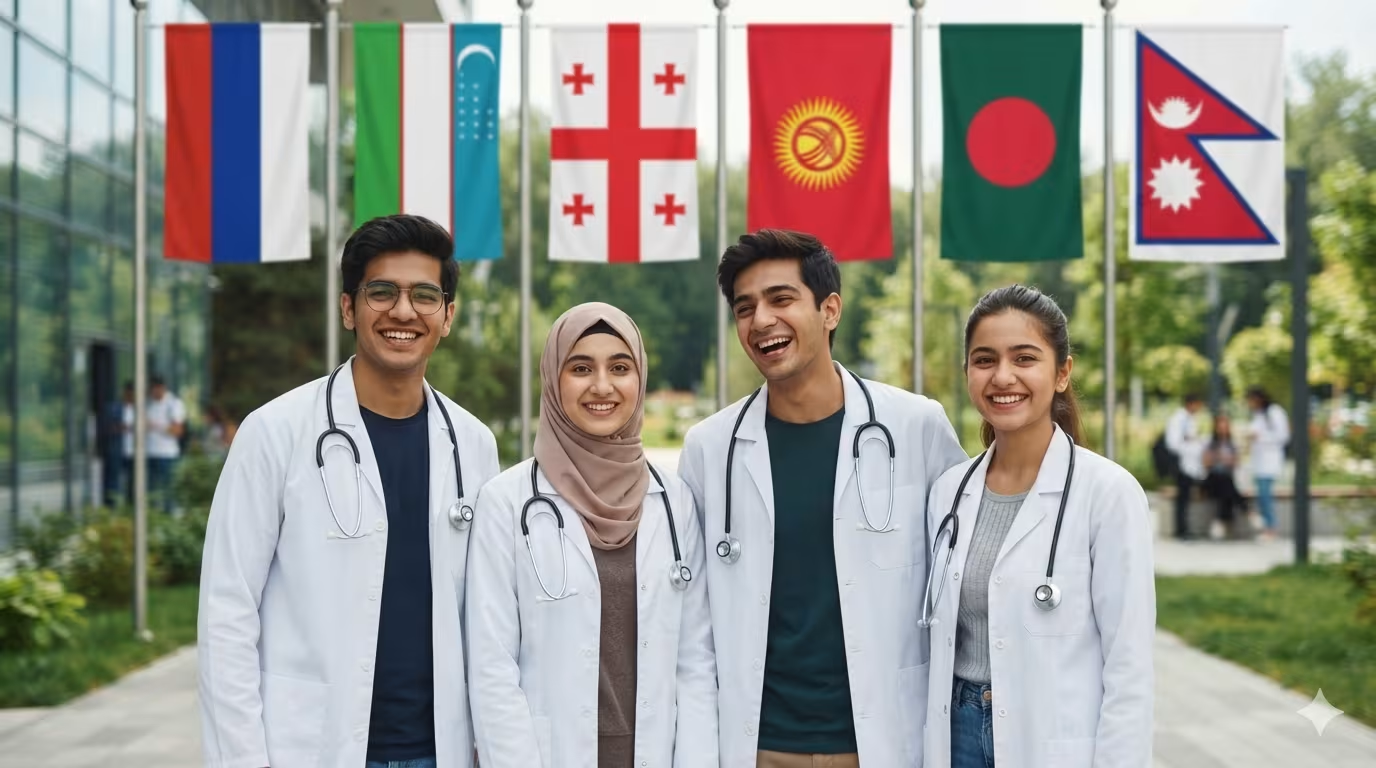
Not every country suits every student. Budget, climate, food habits, safety, and FMGE/NExT pass percentage should all factor into your decision. Here is an honest look at the most popular destinations for Indian students this year.
Georgia has become one of the fastest-growing destinations for Indian MBBS aspirants. It offers European-standard medical education, modern hospitals for clinical training, and a genuinely safe environment for international students.
Explore detailed fees and university options on our MBBS in Georgia page.
Russia has been a trusted MBBS destination for Indian students for decades. Several of its medical universities have a long track record of producing NMC-compliant graduates with strong clinical exposure.
Check current intake details on our MBBS in Russia page.
Kazakhstan is known for being one of the most budget-friendly options without compromising on NMC recognition. Cities like Almaty already host a large Indian student community, which makes the transition much smoother for first-time travellers.
More details are available on our MBBS in Kazakhstan page.
China is preferred by students looking for advanced medical infrastructure and globally ranked universities. The cost is slightly higher than Central Asian countries, but the academic reputation is strong.
Visit our MBBS in China page for university-wise details.
For students who want to stay closer to home, Nepal is an excellent choice. Similar food, culture, and an easy travel distance make it a comfortable option for students and a reassuring one for parents.
Learn more on our MBBS in Nepal page.
Bangladesh offers established medical colleges with a similar advantage of geographic and cultural proximity to India, along with a relatively smooth admission process.
See full details on our MBBS in Bangladesh page.
Both Kyrgyzstan and Uzbekistan have grown steadily as Central Asian MBBS hubs, offering some of the lowest course fees among NMC-recognised options. They are particularly suited to students who want a quality medical degree on a tighter budget.
Explore MBBS in Kyrgyzstan and MBBS in Uzbekistan for fee structures.
The Philippines follows a US-style medical curriculum and is popular among students who prefer a teaching style closer to the American system, along with a tropical climate similar to India.
Read more on our MBBS in Philippines page.
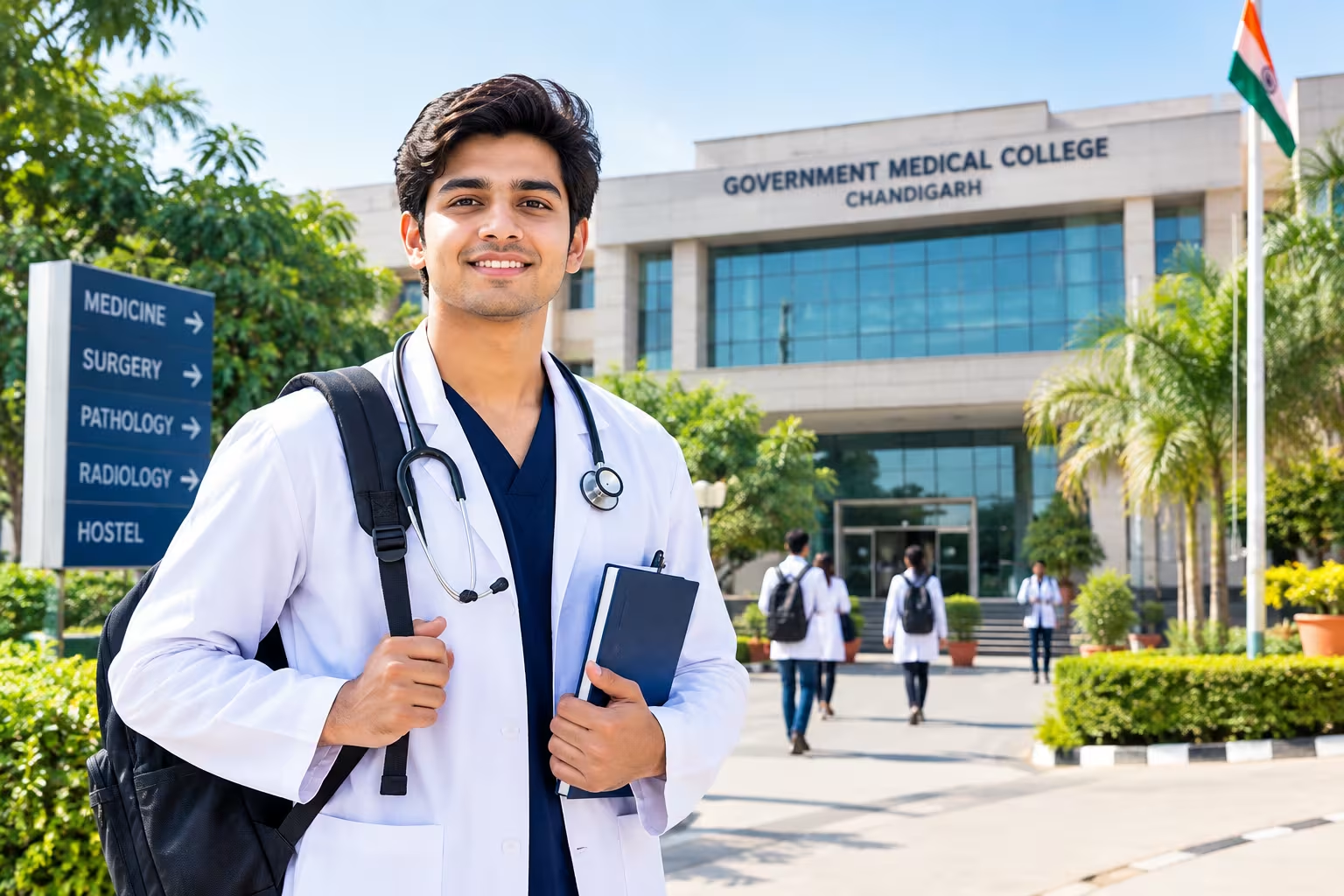
Many students assume MBBS abroad is “easier,” but that’s not quite accurate — it’s different, not easier. If your NEET score allows it, MBBS in India remains a strong option, and you can compare seats and fees on our MBBS in India page or check state-specific options like MBBS in Punjab and MBBS in Chandigarh.
Here’s a fair comparison:
Start only with universities that appear on the official NMC list for the relevant intake year.
Ask for tuition, hostel, food, visa, and flight costs together — not just the headline tuition fee shown in advertisements.
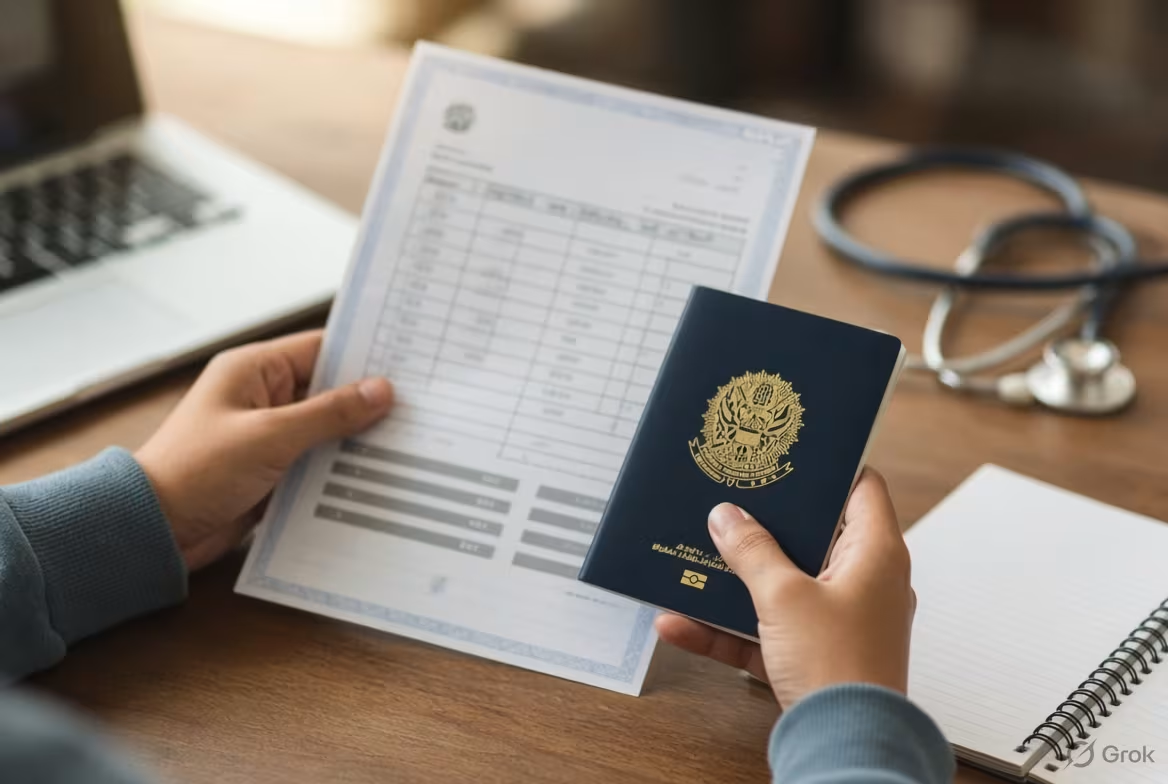
Submit your documents, get your offer letter, and confirm your seat with the required initial payment.
Apply for your student visa with the support of your consultant. Visit our Study Visa page to understand the process and documentation required.
Once your visa is approved, complete your university enrolment formalities on arrival.
Students who complete MBBS abroad must clear the Foreign Medical Graduate Examination (FMGE), soon to be fully replaced by the NExT exam, before they can practise medicine in India. This is exactly why checking a university’s FMGE pass percentage before admission matters more than how impressive its campus photos look. A university with a strong academic foundation will naturally produce graduates who clear this exam at a higher rate.
Choosing the right country and university is not something to decide from forums and Instagram reels. Shiksha Med has been guiding NEET aspirants since 2000, with offices across Chandigarh, Ludhiana, Bathinda, Dehradun, Faridabad and Muzaffarnagar, and has helped 30,000+ students secure admission in India and abroad.
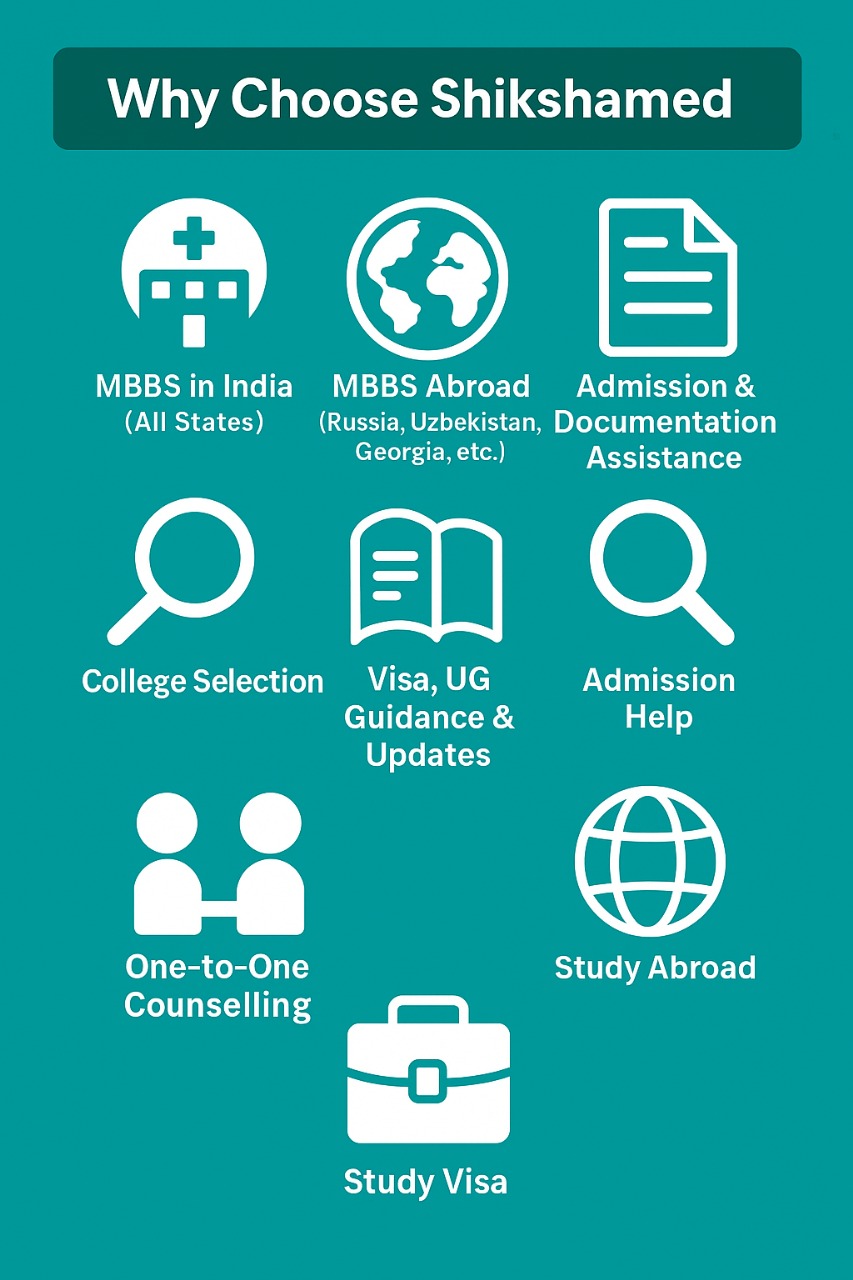
Our counselling covers everything from NEET UG and NEET PG guidance to Deemed University admissions, MBBS Abroad placements, visa support, and complete documentation assistance. You can read more about our approach on the Why Choose Shiksha Med page or learn about our background on the About Us page.
If you’d like a transparent, college-wise fee comparison before deciding anything, check our Fee Structure page, or book a free session through Free UG Counselling / Free PG Counselling.
Yes, provided the university is on the NMC-approved list and you clear the FMGE/NExT exam after returning.
There is no fixed minimum score — you simply need to have qualified NEET-UG in the applicable year.
Central Asian countries like Kyrgyzstan, Uzbekistan, and Kazakhstan generally offer the lowest total costs among NMC-recognised options.
Most countries follow a 6-year structure, including a compulsory internship year.
Yes. Our counsellors handle university shortlisting, documentation, visa support, and pre-departure guidance from start to finish. Contact us to get started.
MBBS abroad in 2026 is not a compromise — for the right student, with the right university, it’s a genuinely smart, globally recognised path into medicine. The difference between a successful MBBS abroad journey and a stressful one almost always comes down to one thing: how carefully the university and country were chosen at the very start.
Take the time to verify, compare, and ask questions — or simply let an experienced counselling team do that groundwork for you.
Choosing the right country and university for MBBS abroad is one of the most important decisions in your medical career. A trusted guidance partner can help you avoid costly mistakes, select NMC-recognised universities, understand the complete fee structure, and ensure a smooth admission and visa process. At ShikshaMed, our experienced medical counsellors provide transparent, student-focused guidance for MBBS admissions in top countries such as Georgia, Russia, Kazakhstan, Kyrgyzstan, Uzbekistan, Nepal, Bangladesh, and more. From university shortlisting to visa assistance and pre-departure support, we help students and parents make informed decisions with confidence.