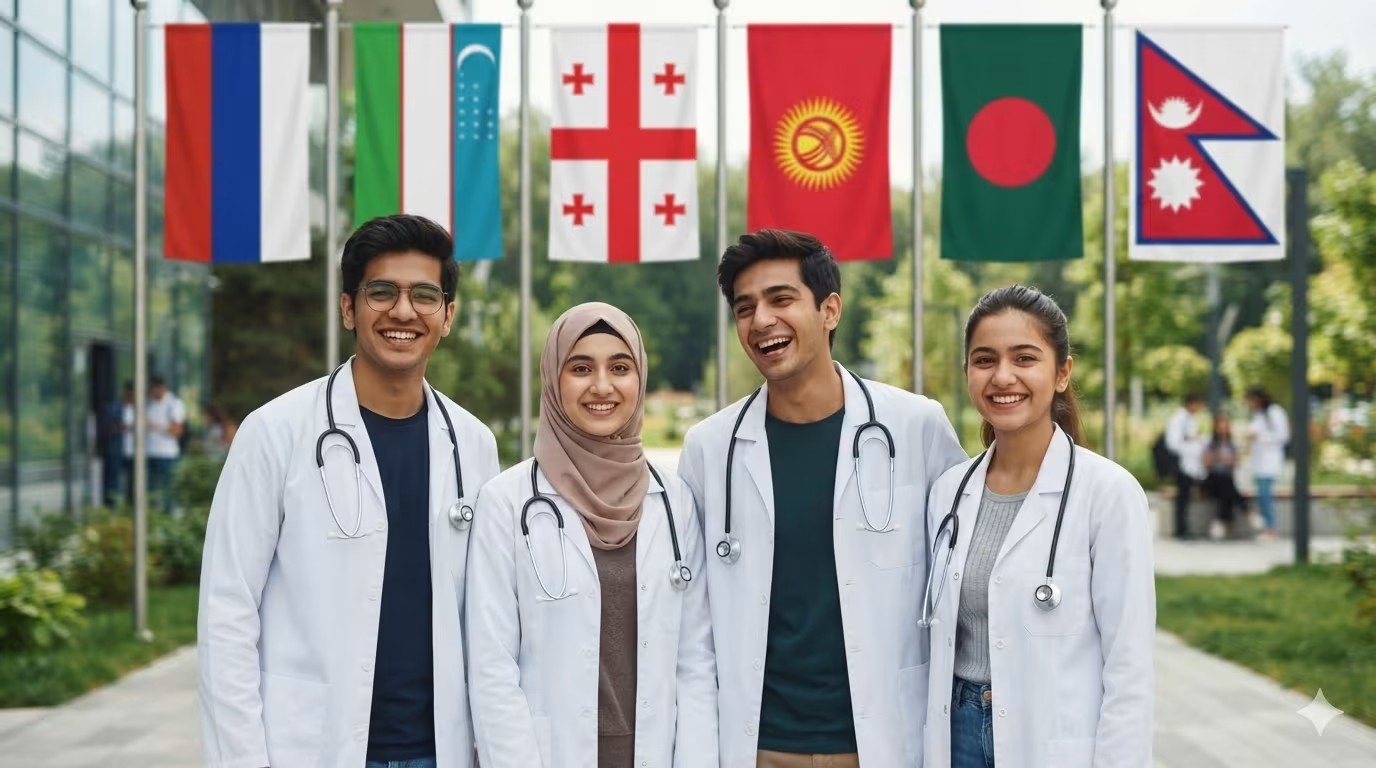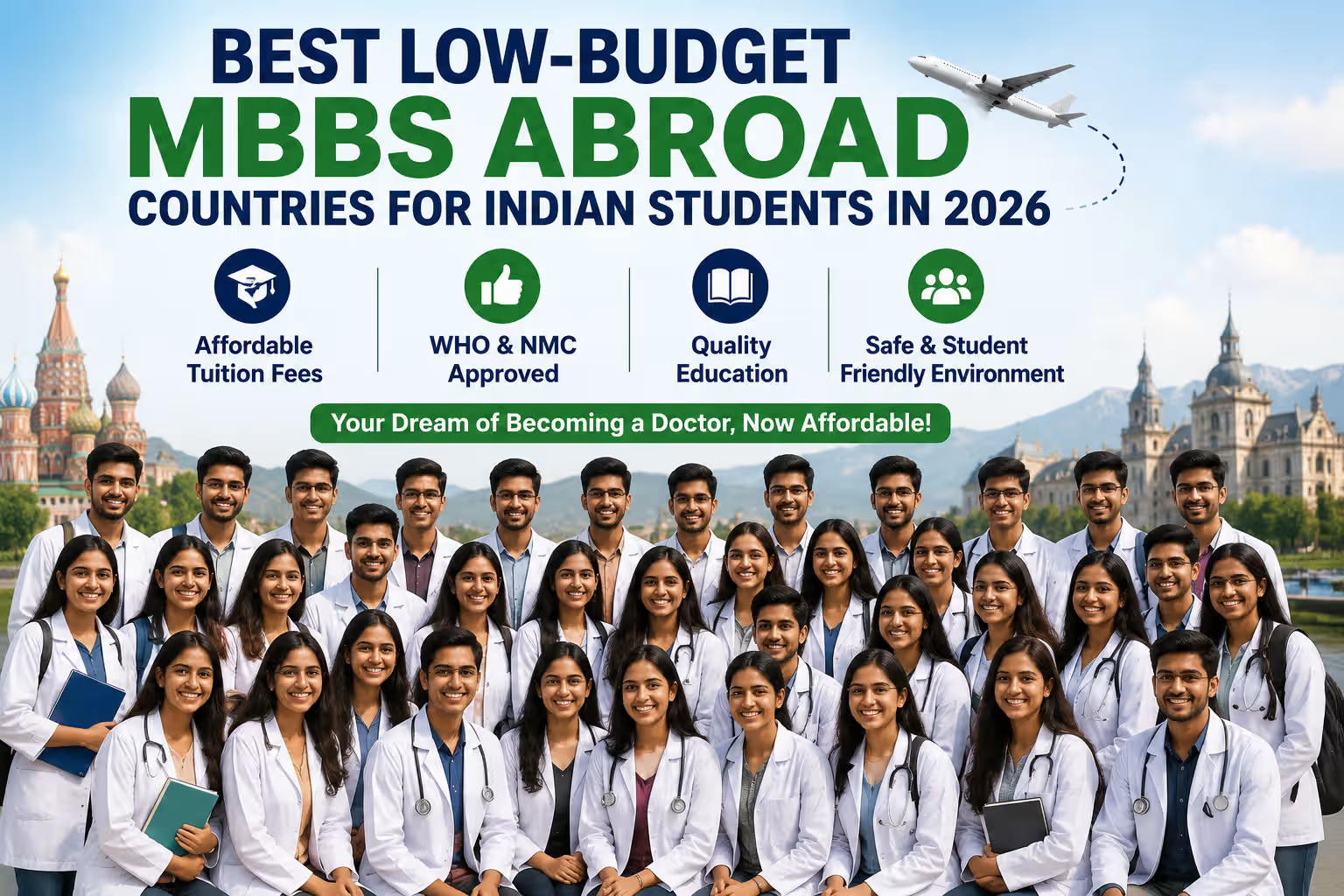
Over 23 lakh students registered for NEET UG 2026, competing for roughly 1.08 lakh MBBS seats across India. Government college seats are won by a tiny fraction of toppers, and private medical colleges in India now charge anywhere between ₹70 lakh and ₹1.5 crore for a single MBBS degree. For most middle-class families, that price tag simply isn’t realistic — which is why thousands of Indian students every year choose to study MBBS abroad instead, at a fraction of the cost.
But “low budget” can be a dangerous phrase if you don’t know what you’re looking at. Some of the cheapest-looking options online quietly skip NMC requirements, leaving students with a degree they can never use to practice in India. This guide walks through the genuinely affordable, NMC-compliant countries for MBBS abroad in 2026 — what they cost in full, who they suit, and exactly what to verify before you pay anyone a single rupee.
It comes down to three things:
The result: a full six-year MBBS abroad — tuition, hostel, food, and visa — typically costs ₹15–40 lakh total, against ₹50 lakh–₹1.5 crore in India.
Before comparing countries, make sure you actually qualify:
| Requirement | Detail |
| Minimum age | 17 years by December 31 of the admission year |
| Upper age limit | None — NMC has removed upper age restrictions for NEET and MBBS abroad |
| Academic qualification | 10+2 with Physics, Chemistry, Biology/Biotechnology, and English as a compulsory subject |
| Minimum marks | 50% aggregate in PCB (General category); 40% for SC/ST/OBC |
| NEET-UG | Mandatory qualifying score (not rank) — required even if the foreign university itself doesn’t ask for it |
| NEET score validity | Valid for 3 years for abroad admissions — a 2024 or 2025 qualifying score can still be used for 2026 admission |
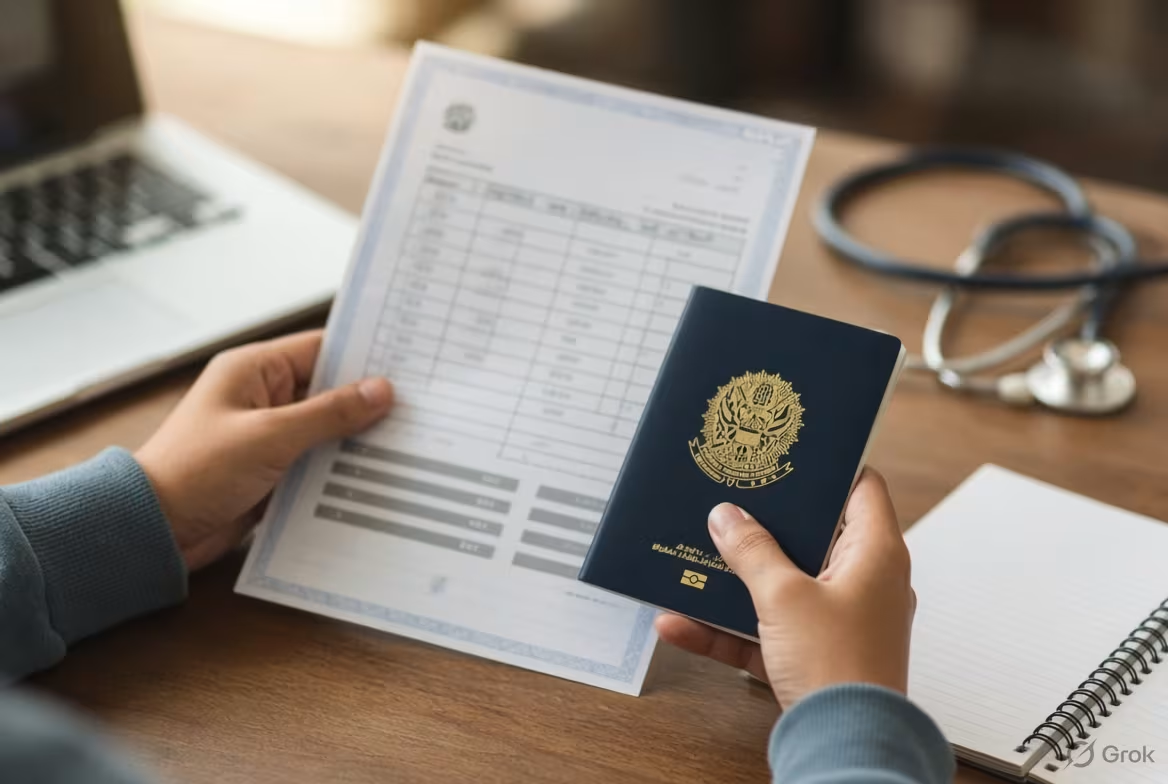
| Documents needed | 10th & 12th mark sheets, NEET scorecard, passport, passport-size photos, medical fitness certificate, university admission/offer letter |
Gap years after 12th standard do not disqualify you, and NIOS/open-schooling candidates with PCB and English are also eligible.
| Country | Total 6-Year Cost (approx.) | Course Duration | Medium | Best For |
| Kyrgyzstan | ₹15–25 lakh | 6 years | English | Tightest budgets, large Indian community |
| Uzbekistan | ₹18–30 lakh | 6 years | English | Transparent fixed packages, strong FMGE/NExT support |
| Kazakhstan | ₹20–35 lakh | 6 years | English | Decent infrastructure, steady Indian enrollment |
| Russia | ₹20–40 lakh | 6 years | English | Wide university choice, some of the lowest annual fees |
| Bangladesh | ₹18–32 lakh | 5–6 years | English | Cultural proximity, short travel time, low flight costs |
(Figures are commonly reported 2026 averages and vary by specific university and currency fluctuation — always get a written, itemized quote.)
Kyrgyzstan is repeatedly ranked the cheapest country for MBBS for Indian students, and it’s not a fluke — annual tuition at universities like Kyrgyz State Medical Academy runs around $4,000–4,500 a year, and total six-year costs including hostel and an Indian mess typically land between ₹15–25 lakh.
Why students choose it:
Watch out for: University quality varies more than the marketing suggests — always check FMGE/NExT pass rates per institution, not just the country average.
Uzbekistan has moved from a niche option to a mainstream budget destination in the last few years, mainly because of fixed, transparent tuition packages that don’t fluctuate the way Russian fees sometimes do with currency.
Typical costs: Total six-year cost (including Indian food in hostel) generally ranges from ₹18–30 lakh, depending on the university.
Notable detail: Universities such as Fergana Medical Institute of Public Health have reported some of the strongest FMGE pass rates among Uzbekistan institutions — a useful proxy when comparing universities within the country.
Best for: Students who want price predictability and don’t want to deal with currency-driven fee swings.
Kazakhstan sits a notch above Kyrgyzstan and Uzbekistan in cost but offers more developed infrastructure and a longer track record of hosting Indian medical students.
Typical costs: ₹20–35 lakh for the full six-year program.
Best for: Students who want a budget option but are willing to pay slightly more for better facilities and clinical exposure.
Russia remains one of the most popular MBBS abroad destinations for Indians, with multiple NMC-recognised universities spread across different cities — and fee structures that vary significantly by location.
Typical costs: Some universities (for example, in smaller cities like Syktyvkar) charge annual fees as low as ₹4 lakh, while others in larger cities cost considerably more. Total six-year cost across the country ranges from ₹20–40 lakh.
Important: Don’t compare “Russia” as a single price point — compare specific universities. The gap between the cheapest and most expensive NMC-recognised Russian university can be ₹15–20 lakh over six years.
Bangladesh offers a genuinely low-cost MBBS option with the added advantage of geographic closeness — shorter flights, lower travel costs over six years, and a culturally familiar environment for many Indian students.
Typical costs: ₹18–32 lakh for the full course.
Best for: Students from Eastern and Northeastern India who want lower travel costs and time, alongside an affordable fee structure.
A quoted tuition fee is rarely the full picture. Before you commit, get written clarity on:
A package advertised at “₹10 lakh total” that excludes most of the above isn’t actually a ₹10 lakh MBBS — it’s a tuition-only quote in disguise.
The National Medical Commission tightened its guidelines significantly in 2026. None of the savings above matter if your degree fails these checks:
Skipping any of these isn’t a shortcut — it’s how students end up with a six-year, ₹25-lakh degree they can never legally use.
Is Kyrgyzstan really the cheapest country for MBBS abroad in 2026? Yes, among NMC-recognised options, Kyrgyzstan and Uzbekistan currently offer the lowest total six-year costs, generally between ₹15–25 lakh, including hostel and food.
Can I study MBBS abroad without NEET? Some foreign universities don’t require NEET for admission, but without a qualifying NEET-UG score, you will never be able to register as a doctor or practice in India — your degree becomes practically unusable for an Indian medical career.
Is NExT harder than FMGE? Yes. NExT tests clinical reasoning and practical competence more rigorously than the old FMGE qualifying format, and full implementation timelines are still being finalised by NMC — keep checking official notifications.
Will my low-budget MBBS abroad degree be valid in India? Only if the university satisfies all NMC 2026 requirements: 54-month duration, English medium, in-person attendance, 12-month internship at the same institution, and WFME/FAIMER listing.
Is Georgia a low-budget option too? Georgia offers good quality medical education but is generally positioned as a mid-to-premium destination rather than the lowest-cost option — Kyrgyzstan, Uzbekistan, and parts of Russia are more budget-friendly.
For Indian students in 2026, Kyrgyzstan, Uzbekistan, and select universities in Russia currently offer the best balance of low cost and full NMC compliance. But the real savings come from choosing the right university within these countries — not chasing the lowest sticker price you find online.
Shiksha Med has guided 30,000+ students into verified, NMC-compliant medical universities since 2013, with fully transparent, all-inclusive fee structures and zero hidden charges across 6 offices in North India. Before you pay anyone a token amount, talk to our counsellors — it could save you years and lakhs of rupees.