The landscape of medical education in India is undergoing significant updates, and Karnataka is leading the charge for the 2026-2027 academic session. In a historic move, the state has substantially expanded its medical infrastructure, creating unprecedented opportunities for both domestic students and Non-Resident Indian (NRI) aspirants. Through a calculated expansion policy, Karnataka has added over 1,200 new MBBS seats across its state-run and private medical institutions. This structural upgrade fundamentally scales up the 15% NRI quota allocations, making Karnataka one of the most attractive destinations for global Indian students looking to secure an MBBS degree.
Navigating the complex pathways of medical admissions requires precise information on seat structures, verification rules, and financial timelines. If you are an NRI student or a sponsored candidate targeting a seat in India’s premier medical hub, this guide breaks down every critical aspect of the Karnataka MBBS NRI admissions framework for 2026.
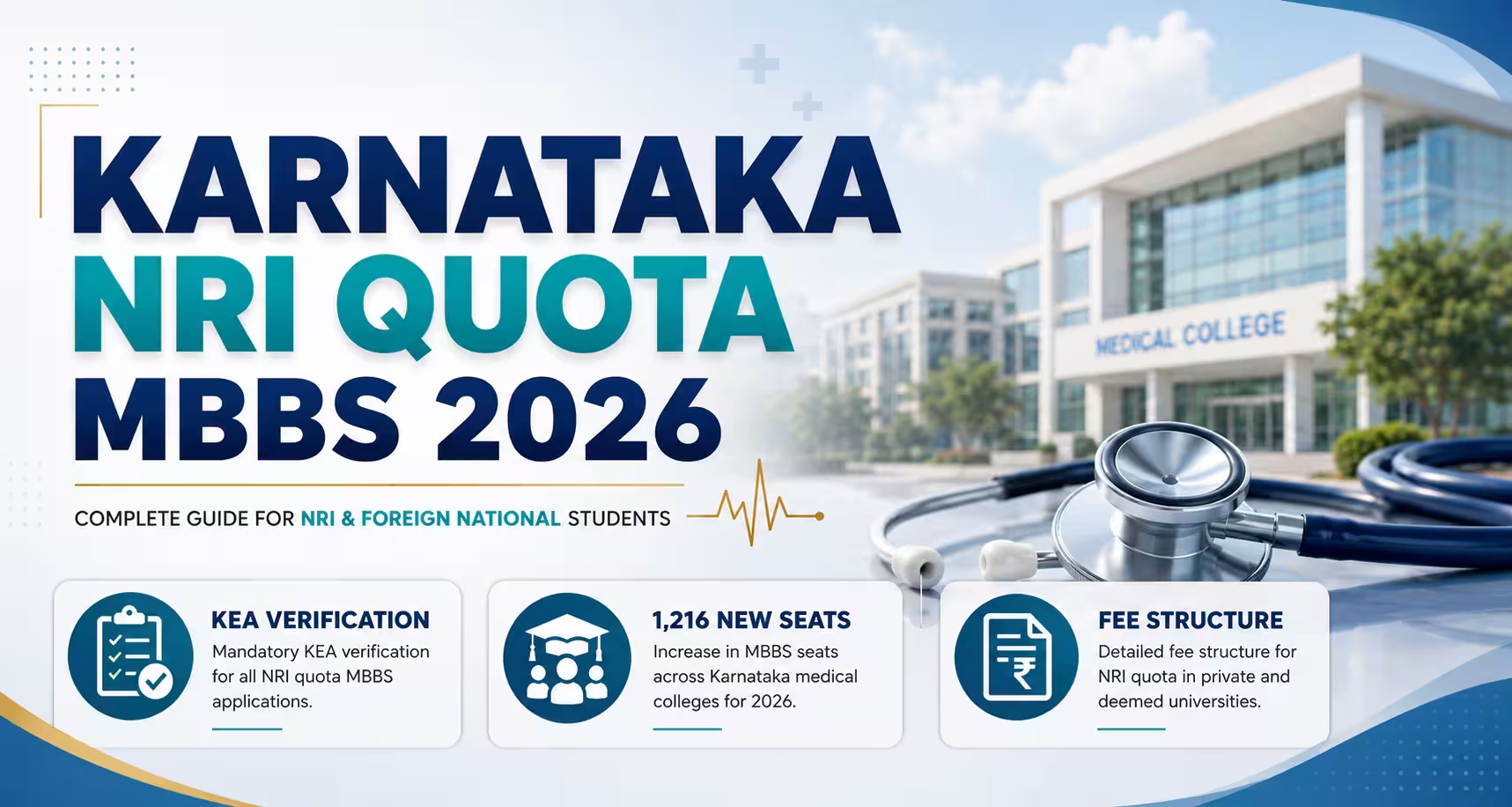
The total medical pool in Karnataka has officially scaled past previous limits, adding a massive 1,216 new MBBS seats, pushing the state’s overall capacity from 10,559 seats to 11,775 seats. Because India’s medical council policies cap NRI and Management quotas at a fixed 15%, this state-wide expansion automatically triggers a proportional increase of 225 fresh seats exclusively under the NRI quota blocks.
Crucially, the 2026 shift introduces a landmark policy update: for the very first time, the Karnataka government has introduced a 15% NRI quota inside state-run government medical colleges to improve institutional self-reliance and fund infrastructure development. This means candidates can now access premium government college training modules, alongside the traditional seats available within private academies and deemed-to-be universities. All seats are strictly mapped out and filled transparently through the official Karnataka Examinations Authority (KEA) centralized online counselling portal.
To successfully claim a seat within the expanded 15% bracket, applicants must closely align with the statutory definitions regulated by Indian judicial and medical counseling bodies. Domicile rules do not restrict these seats; Karnataka operates under an “Open State” status, allowing qualifying candidates from any region of India, or any international territory, to apply for private NRI quota allocations.
For the 2026 admission cycles, regulatory authorities have significantly tightened payment pipelines under the Foreign Exchange Management Act (FEMA). Tuition fees for NRI quota seats cannot be paid out of local domestic Indian bank accounts. Instead, funds must originate exclusively from the foreign bank account of the registered NRI sponsor via clean international wire transfers, such as the SWIFT network.
Furthermore, the KEA has issued an urgent advisory warning students against fraudulent backdoor entry promises. No private college or third-party agent holds the legal right to allot NRI seats directly. Every single seat must pass through the authorized KEA portal registration and physical document verification pipeline.
The financial layout varies widely depending on the management structure of the medical institution. The introduction of government college NRI seats offers a competitive alternative to traditional private college budgets. The table below outlines the expected annual tuition frameworks for the current academic session:
| College Category | Estimated Annual Tuition Fee | Key Characteristics |
|---|---|---|
| Government Medical Colleges | ₹25,000,000 (approx. ₹25 Lakhs) | Newly introduced for 2026; highly competitive entry marks. |
| Private Medical Colleges | ₹34,000,000 to ₹45,000,000 (₹34 – ₹45 Lakhs) | Varies by institutional ranking and city infrastructure. |
| Deemed Universities | USD $20,000 to $40,000+ | Processed via MCC counseling, offering global infrastructure standard. |
To avoid immediate rejection during the rigorous KEA registration process, candidates must prepare and compile a flawless dossier of corporate and legal documents. These include:
Securing an MBBS seat under the highly regulated NRI quota requires meticulous planning, precise documentation, and strategic timing during the KEA choice-filling windows. For a comprehensive roadmap, deeply analytical insights, and institutional breakdowns, make sure to explore the complete ShikshaMed NRI Quota MBBS Admission 2026 Guide.
Whether you need help compiling relationship affidavits, understanding the exact eligibility criteria across different states, or choosing the best private medical colleges within your financial reach, our team provides expert end-to-end admission counseling. Plan your medical career with absolute precision by visiting ShikshaMed today!