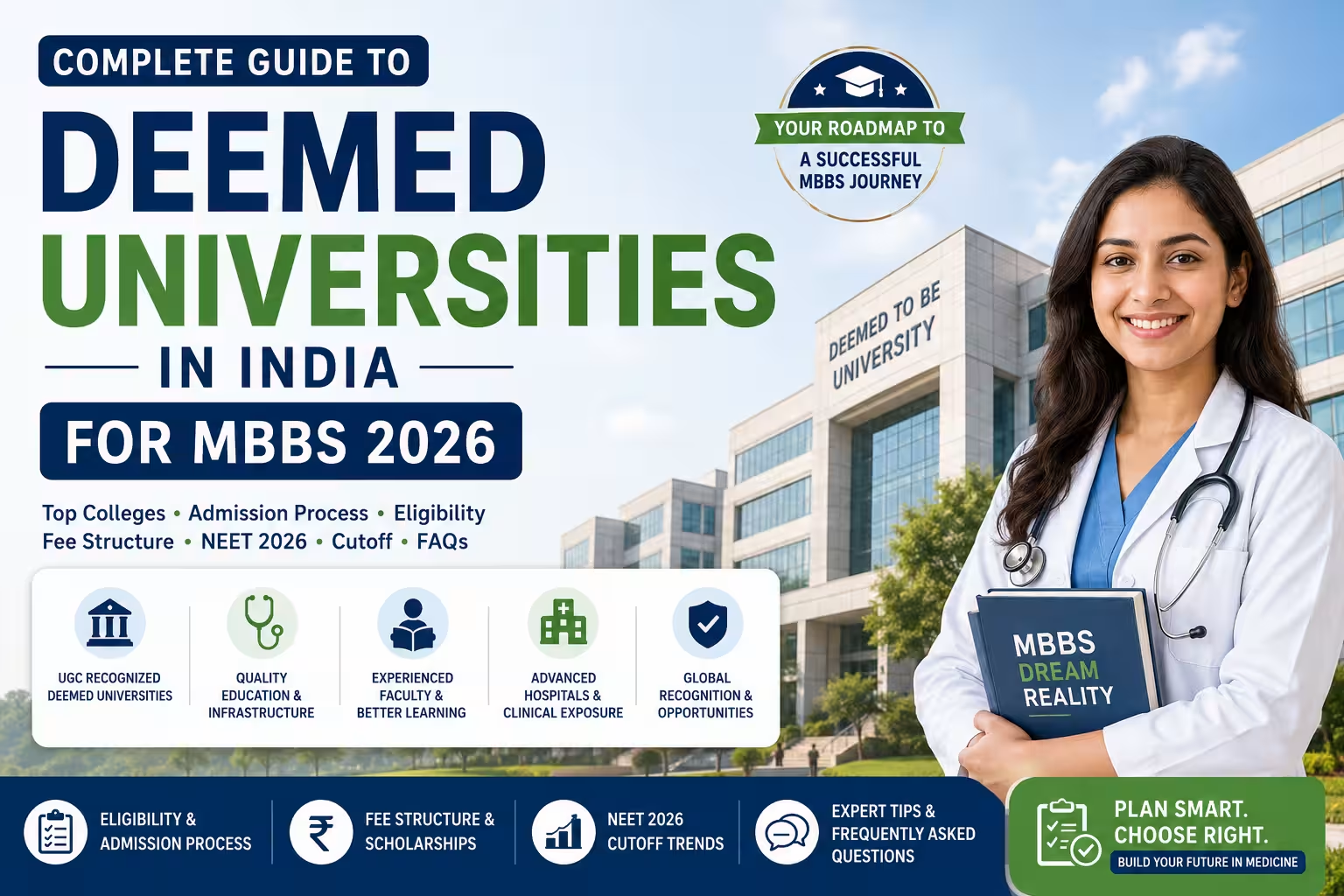
Every year, lakhs of NEET UG aspirants dream of a government medical college seat, but only a small percentage actually get one. If you have a decent NEET score but missed a government seat, Deemed Universities are one of the most reliable and merit-based alternatives available in India. This guide covers everything you need to know about Deemed Universities for MBBS 2026 — fees, admission process, NEET cutoff, top colleges, and how they compare to other options.
A Deemed University is an autonomous institution granted “Deemed-to-be University” status under Section 3 of the UGC Act, 1956. Unlike government and state private colleges, deemed universities are not controlled by any state government. They set their own fee structure, design their own curriculum, conduct their own exams, and award their own degrees — while remaining fully regulated by the National Medical Commission (NMC) for MBBS recognition.
As of 2026, India has close to 59 NMC-recognised deemed medical universities offering MBBS, with more than 11,000 MBBS seats between them.
Fees at deemed universities are considerably higher than government colleges, since these institutions are self-financed and autonomous. Based on 2026 data reported across major deemed colleges:
Fees vary widely by location and reputation — colleges in cities like Chennai, Pune, and Bengaluru tend to be priced higher than those in smaller towns.
States such as Karnataka, Maharashtra, Tamil Nadu, and Puducherry host the largest concentration of deemed medical colleges in the country.
NEET cutoff scores for deemed universities vary significantly by college, category, and counselling round. In recent years, admission into deemed universities has been possible for candidates scoring anywhere between approximately 113 and 515 marks, with premier colleges naturally requiring much higher scores than others. Cutoffs typically drop by 20–30 marks in later rounds, so students should stay active through Round 1, Round 2, the Mop-Up round, and the Stray Vacancy round rather than losing hope after Round 1.
Reserved category candidates generally see relaxed cutoffs — OBC candidates often need 20–30 marks less, while SC/ST candidates may see cutoffs 50–80 marks lower than general category, subject to seat availability.
Note: if an allotted seat is not joined after Round 2 or Round 3, the security deposit is typically forfeited, so choice filling should be planned carefully in advance.
Government medical colleges remain the most affordable option, but seats are extremely limited compared to demand. Deemed universities are a strong middle path — costlier than government colleges, but far more accessible than the highest NEET ranks required for top government seats, with no domicile barrier. For students whose NEET score doesn’t comfortably fit either option, MBBS abroad in countries like Russia, Georgia, and Kazakhstan is also worth comparing on cost and eligibility. You can read our detailed MBBS Abroad 2026 guide and our Russia vs Georgia comparison to see how the numbers stack up.
If you are also considering dental as an alternative path, our BDS Admission 2026 guide covers fees, colleges, and NEET cutoffs for BDS as well.
How many deemed medical universities are there in India for 2026? There are approximately 59 NMC-recognised deemed medical universities offering MBBS in India.
Is there a domicile requirement for deemed university admission? No, students from any state in India can apply, since admission is done centrally through MCC and not through state counselling.
Is the deemed university MBBS degree valid? Yes, all deemed universities offering MBBS must be approved by the National Medical Commission, making the degree valid for practice in India and eligible for NEET PG and FMGE-equivalent pathways where applicable.
Choosing the right deemed university depends on your NEET score, budget, and location preference — and the counselling window moves fast once it opens. ShikshaMed has guided thousands of students through MCC counselling for deemed universities, government colleges, and MBBS abroad. Learn more about why students trust ShikshaMed, explore our branches across India, or visit our contact page to book a free counselling session today.
Explore more admission guides on our ShikshaMed Website.