India's Most Trusted Medical Admission Advisors

MBBS in India

Introduction

MBBS in India is the first choice for thousands of students who dream of wearing a white coat and serving humanity. Known as one of the most respected and noble professions, becoming a doctor takes passion, dedication, and hard work. Every year, lakhs of students appear for NEET to grab a seat in India’s top medical colleges—thanks to the country’s strong education system, experienced faculty, and advanced medical infrastructure.

With over 600 medical colleges, including top government institutes like AIIMS and other reputed private universities, India offers a solid platform for quality medical education. The MBBS course here spans 5.5 years, including one year of compulsory internship that gives hands-on hospital experience. Whether you’re a student from India or abroad, studying MBBS in India means stepping into a journey of learning, service, and endless opportunities.

MBBS in India

Pursuing MBBS in India is one of the most popular and trending choices for NEET aspirants, offering top medical colleges in India, globally recognized degrees, and affordable MBBS fees in government colleges. Admission is strictly based on NEET UG 2026, followed by MCC counselling, AIQ quota (15%), and State quota (85%). Students actively search for MBBS admission in India 2026, lowest MBBS fees, and best private medical colleges, making proper guidance essential.

The MBBS course duration in India is 5.5 years, including 4.5 years of academic study and 1-year internship. Students study core subjects like Anatomy, Physiology, Biochemistry, and Clinical Medicine with strong hospital exposure. Many students look for MBBS without donation, low budget MBBS colleges, and high patient flow hospitals to ensure practical learning and better career opportunities.

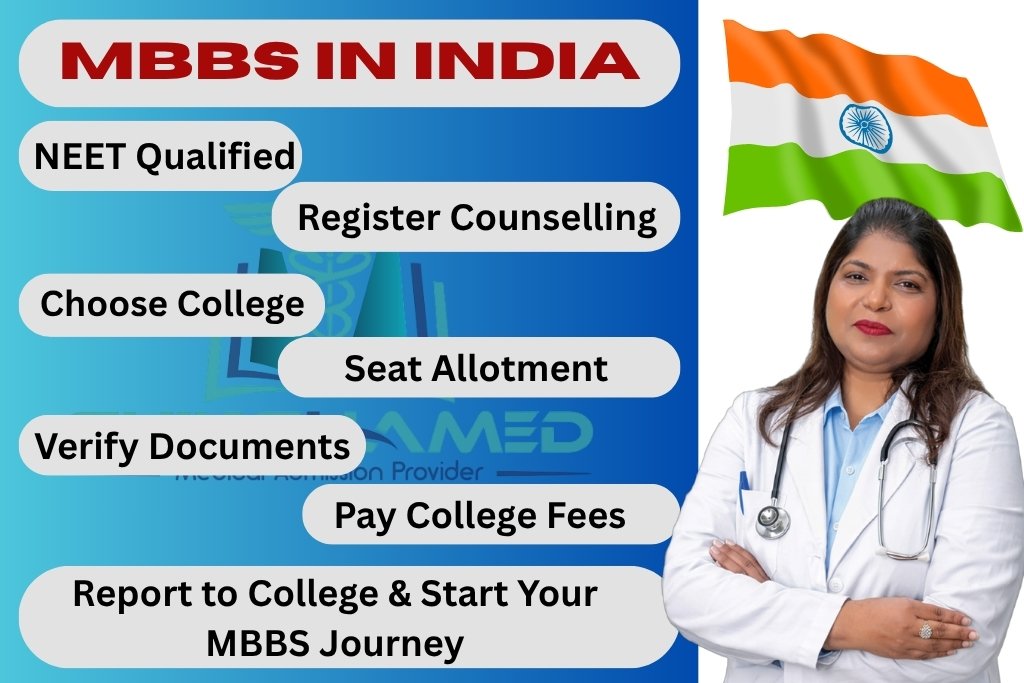
To apply for MBBS admission in India, students must complete 10+2 with PCB and qualify NEET with the required cutoff. The MBBS counselling process includes registration, choice filling, seat allotment, document verification, and admission confirmation. Keywords like NEET counselling 2026, MBBS cutoff India, and medical college predictor are highly searched during this phase.

One of the biggest advantages of studying MBBS in India is the opportunity to practice directly after graduation. Government colleges offer lowest MBBS fees in India, while private colleges provide more seat availability. Students often compare government vs private MBBS, management quota MBBS, and direct admission MBBS India options to choose the best path.

At Shikshamed, we provide complete MBBS admission guidance in India, including NEET counselling support, college selection, and documentation assistance. Our expert team helps you secure a seat in the best medical colleges in India with a transparent and stress-free process.

Category Details
Degree Name MBBS (Bachelor of Medicine, Bachelor of Surgery)
Course Type UG  (Bachelor’s Course)
Course Duration 5.5 Years (4.5 Years Academic + 1 Year Internship)
Minimum Age Limit 17 years (on or before 31st December of the admission year)
Eligibility Criteria Must have passed Class 12 (Science stream) with Physics, Chemistry, Biology. Minimum 50% marks in PCB.
Admission Process Based on NEET-UG score. NEET qualification is compulsory.
Popular States for MBBS Delhi NCR, Karnataka, Punjab, Maharashtra, Madhya Pradesh, Uttar Pradesh, Rajasthan
Fee Range ₹5,000 to ₹25 Lakhs per year (varies by college type – Govt./Private)
Governing Body National Medical Commission (NMC)
Types of Medical Colleges Government Colleges, Private Colleges, Central Universities, Deemed Universities

Why Choose MBBS in India?

Thinking about doing MBBS in India? You’re at the right place! If you’re aiming to become a doctor and want to study in India at an affordable cost—without paying any donation—we’re here to guide you through every step of your MBBS journey based on your NEET score.

MBBS admission in India is done through the NEET-UG entrance exam, which is mandatory for all medical aspirants. In 2026, around 26 lakh students registered for NEET, but the total number of MBBS seats is only about 1,29,805 with 63,657 seats in government/semi-government colleges and 66,148 in private/deemed universities.

This shows just how competitive MBBS admission in India is. But with the right support and guidance, you can secure a seat that fits your budget and NEET rank.

Why Study MBBS in India?

  • Affordable & High-Quality Education

Government colleges in India offer MBBS at very low fees, and even private colleges provide modern facilities at a reasonable cost compared to studying abroad. That’s why MBBS in India is preferred by many students.

  • Top-Ranked Medical Colleges

India has some of the best medical institutes like AIIMS, JIPMER, and MAMC, known for their excellent academics and training. These colleges offer a strong foundation with both theoretical and practical knowledge.

  • Modern Hospitals & Infrastructure

Indian medical colleges are attached to large hospitals where students get hands-on clinical training. From day one, you’ll be exposed to real-life cases, helping you become a confident and skilled doctor.

  • Globally Recognized Degree

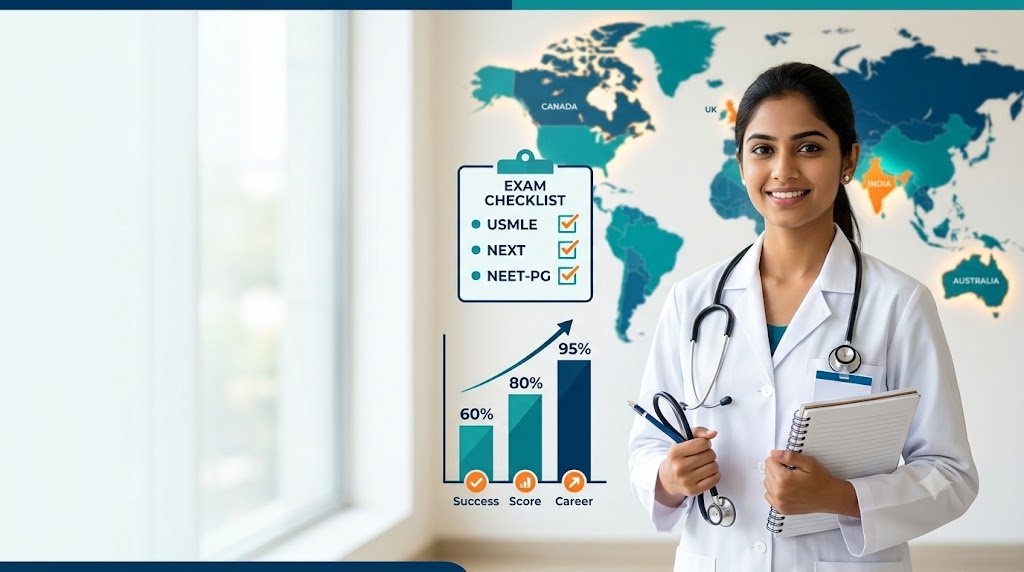
An MBBS degree from India is recognized around the world. You’ll be eligible to appear for international exams like USMLE (USA), PLAB (UK), or FMGE (for practicing in India after studying abroad). This means your career options won’t be limited to India alone.

What After MBBS in India?

  • Higher Studies & Specialization

After MBBS, many students go for MD/MS or super-specialty courses like Cardiology, Neurology, or Oncology to become specialists in their fields.

  • Job Opportunities in India

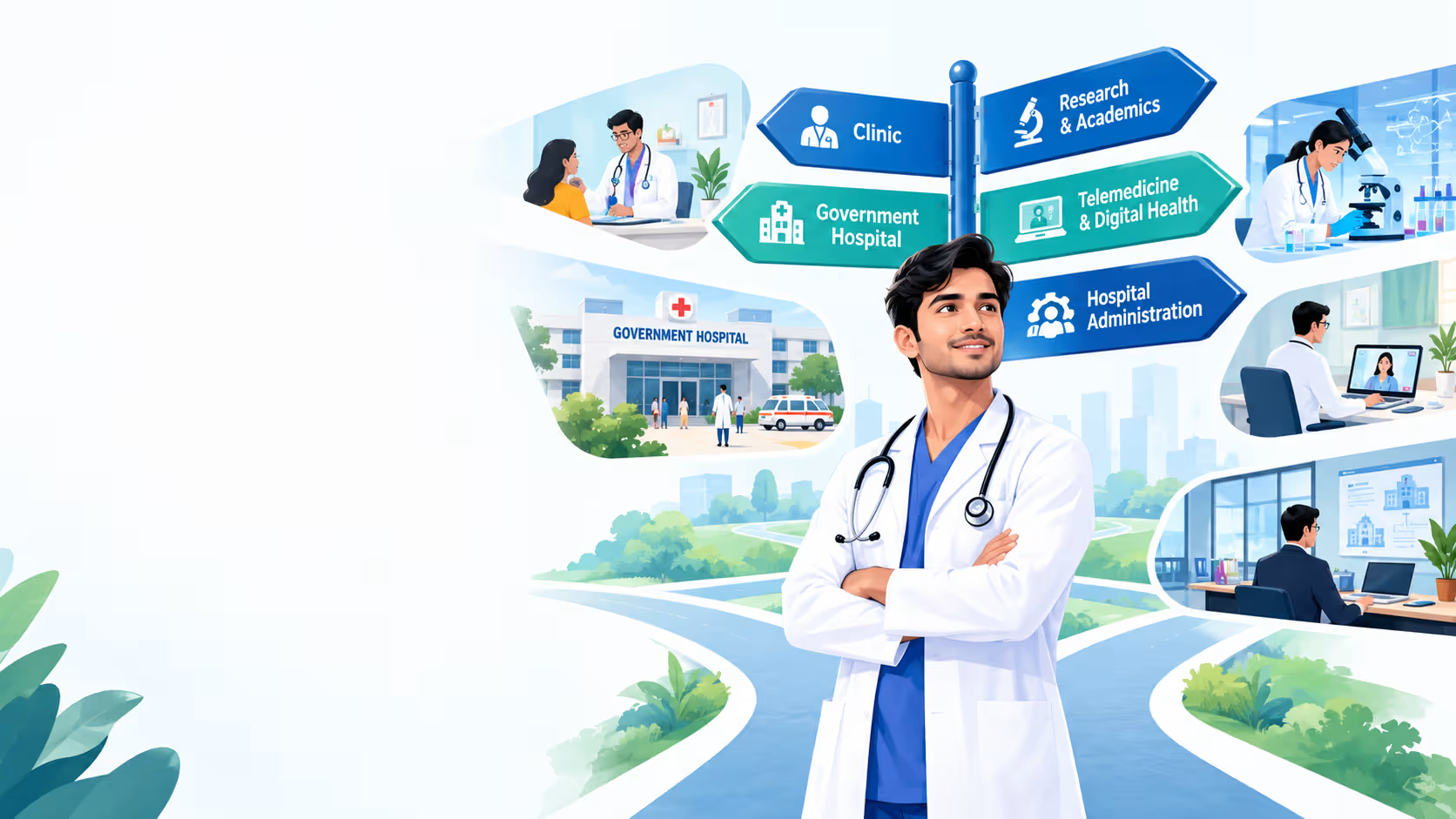
You can work in government hospitals, private clinics, start your own practice, or enter the fields of medical research and teaching. The Indian healthcare industry is expanding, so the demand for doctors is constantly growing.

  • Global Career Scope

Many Indian MBBS graduates choose to work abroad. With the right licensing exams, you can practice medicine in countries like the USA, UK, Canada, Australia, and more—thanks to the strong reputation of Indian medical education.

MBBS Course Structure in India

The MBBS (Bachelor of Medicine and Bachelor of Surgery) course in India is a 5.5-year program that prepares students for a successful career in medicine. This includes 4.5 years of academic learning and 1 year of compulsory internship. The course is designed to give students both theoretical knowledge and hands-on clinical experience.

Here’s a simple breakdown of the MBBS course structure

Phase Category Subjects / Areas of Study
Phase I Pre-Clinical Subjects
  • Anatomy
  • Biochemistry
  • Physiology
Phase II Para-Clinical & Clinical Subjects
  • Community
  • Medicine
  • Forensic Medicine
    Pathology
  • Pharmacology
  • Microbiology
  • Hospital Postings in Wards & OPDs
Phase III Clinical Subjects
  • Community Medicine
  • Obstetrics & Gynaecology
  • Paediatrics
  • General Medicine
  • Psychiatry
  • Dermatology
  • General Surgery
  • Anaesthesiology
  • ENT (Ear, Nose, Throat)
  • Ophthalmology
  • Orthopaedics
  • Continued Clinical Postings in Hospitals

MBBS Subjects with Topics Covered

Subject Main Topics Covered
Anatomy
  • Gross Anatomy (structure of body parts)
  • Microanatomy (tissues under microscope)
  • Embryology & Genetics (development & heredity)
  • Neuroanatomy (nervous system structure)
Biochemistry
  • Cell structure
  • Biomolecules (carbs, proteins, etc.)
  • Enzymes & Hormones
  • Molecular Biology
  • Immunology
  • Metabolism & its control
  • Cancer markers
  • Nutrition & digestion
  • Environmental effects on body chemistry
Physiology
  • Basics of how body works
  • Nerve & muscle function
  • Blood & Circulation
  • Breathing system
  • Heart function
  • Digestive system
  • Reproduction
  • Kidneys & urine formation
  • Brain & nerves
  • Yoga & health
Forensic Medicine & Toxicology
  • Legal aspects in medicine
  • Study of poisons and their effects
Microbiology
  • Study of microbes
  • Bacteria types & tests
  • Viruses & immunity
  • Parasites causing diseases
  • Vaccines & infection control
  • Fungal diseases
  • Sample collection & lab diagnosis
Pathology
  • General disease processes
  • System-wise diseases
  • Practical diagnosis Techniques
Pharmacology
  • Basics of medicines
  • Drugs for brain, heart, stomach, lungs
  • Hormones & chemotherapy
  • Nerve system drugs
  • Miscellaneous essential drugs
Anesthesiology
  • Preparing a patient for surgery
  • Giving IV, inserting airways
  • Us ing monitoring machines
  • Oxygen mask handling
Community Medicine
  • Health education
  • Environment & nutrition
  • Maternal & child care
  • National health programs
  • Health statistics
  • Epidemiology (study of diseases)
  • Geriatrics (elderly care)
  • Counselling
  • Disease prevention
Dermatology & Venereology
  • Skin infections & allergies
  • Disorders like urticaria, psoriasis
  • Sexually transmitted infections (STDs)
  • HIV & skin emergencies
Obstetrics & Gynaecology
  • Pregnancy & childbirth
  • Female reproductive health
  • Family planning
  • Newborn Care
  • Latest developments in OBG
General Medicine
  • Drug therapy
  • Nutritional & metabolic issues
  • ICU care
  • Mental health
  • Poisoning & infections
  • Heart diseases
  • Water & electrolyte balance
Orthopaedics
  • Bone & joint problems
  • Sports injuries
  • Bone tumors
  • Spinal disorders
  • Rehab & physical therapy
  • Pediatric ortho issues
Ophthalmology
  • Eye infections
  • Eyelid & tear duct disorders
  • Conjunctivitis & corneal ulcers
  • Scleritis, eye structure diseases
Pediatrics
  • Child growth & development
  • Childhood diseases
  • Vaccinations
  • Pediatric emergencies
  • Nutrition & genetics
  • Behavior & surgical conditions
  • Newborn care
ENT (Otorhinolaryngology)
  • Diseases of ear, nose, throat
  • Oral cavity disorders
  • Surgical tools & X-rays
  • Basic ENT procedures
Surgery
  • Skin, head & neck surgeries
  • Operations on digestive system
  • Blood vessels, breast, appendix
  • Emergencies like acute abdomen
  • Urinary tract surgery
Psychiatry
  • Mental health & disorders
  • Depression, anxiety, OCD
  • Schizophrenia & bipolar disorder
  • Emotions & memory
  • Personality issues

Recognition of Indian Medical Universities – Explained Simply

Indian medical universities are recognized and trusted by many important global organizations. This means the MBBS degree from India is valid and respected in many countries.

These major organizations approve Indian medical universities:

  • NMC (National Medical Commission) : The top medical education authority in India.
  • WHO (World Health Organization) : A global health organization that lists top medical universities.
  • UNESCO (United Nations Educational, Scientific and Cultural Organization) – Recognizes quality education institutions around the world.

Duration of MBBS in India

The MBBS course in India takes 5.5 years to complete.
Here’s how it’s divided:

  • 5 years : Classroom learning, theory subjects, lab work, and hospital exposure
  • 1 year : Internship, where you work in real hospitals and treat patients under doctor supervision

Eligibility Criteria for MBBS in India (For Indian Students)

If you’re planning to become a doctor and want to study MBBS in India, you must meet some basic eligibility requirements. These rules are set by the National Medical Commission (NMC) and the universities offering MBBS programs.

Here’s a simple breakdown of the key criteria you need to fulfill:

  • Academic Requirements
      • You must have passed Class 12 (10+2) or an equivalent exam from a recognized board.
      • Your subjects must include Physics, Chemistry, and Biology/Biotechnology, along with English as a compulsory subject.
      • Students in the General Category must have at least 50% marks in PCB (Physics, Chemistry, Biology).
      • Reserved category students (SC/ST/OBC) need at least 40% marks in PCB.
  • NEET Exam is Mandatory
      • You must qualify NEET-UG, which is the only entrance exam for MBBS in India.
      • You need to achieve the minimum cutoff percentile:
        • General : 50th percentile
        • SC/ST/OBC : 40th percentile
        • PwD (Persons with Disabilities) : 45th percentile
      • Your NEET score will determine your chances in both government and private medical colleges.
  • Age Criteria
      • You must be at least 17 years old on or before 31st December of the year of admission.
      • The upper age limit is 25 years for general category students and 30 years for reserved category students (as per government rules).
  • Other Important Points
    • Some states may require a domicile certificate if you’re applying for state quota seats.
    • Admissions are done through centralized counseling based on NEET scores.
    • NRI and foreign students must meet additional criteria and may apply through special NRI or management quotas.

Documents Needed for MBBS Admission in India

When you’re applying for MBBS in India, you’ll need to keep the following documents ready:

Basic Documents for Admission

    • 10th Class Original Marksheet
    • 12th Class Original Marksheet
    • NEET Score Card
    • Passport-size Photographs
    • Aadhar Card (or any valid ID proof)
    • Parent’s Bank Statement (for fee verification or financial proof)

Documents Required for MBBS Counselling in India

For counselling and final admission, carry these documents in original along with self-attested photocopies:

  • 10th Marksheet
  • 10th Certificate (as proof of Date of Birth)
  • 12th Marksheet
  • 12th Certificate
  • NEET Admit Card & NEET Result/Rank Letter
  • 8 Passport-size Photos (same photo used in NEET form)
  • A Valid ID Proof (like Aadhar Card, PAN Card, etc.)
  • Caste/Category Certificate (only if applicable)

MBBS Admission Process in India

Getting admission to an MBBS course in India involves a few important steps. Here’s a simple guide to help you understand how it works:

  • Appear for NEET Exam

To get into any medical college in India, you must appear for the NEET (National Eligibility cum Entrance Test). Earlier, exams like AIIMS and JIPMER were separate, but now NEET is the only entrance exam for MBBS across India.

  • Prepare Well

Focus on your NEET preparation with full dedication. A good All India Rank (AIR) increases your chances of getting into top government or private medical colleges.

  • NEET Result & Merit List

After the results are out, a merit list will be prepared based on your NEET score. This list plays a key role in determining which college you may get.

  • Counselling Process

Once you qualify, you’ll need to take part in the NEET counselling. Here, you can choose your preferred colleges and check which ones you are eligible for, based on your rank.

  • College Allotment & Document Submission

If you are allotted a college, you’ll receive an official intimation. You’ll then have to attend counselling at the respective college and submit all required documents.

  • Pay Fees & Begin Your MBBS Journey

After document verification, you will pay the college tuition fees, complete your hostel admission (if needed), and officially start your MBBS studies.

Total Number of MBBS Seats in India – Government & Private

In India, MBBS seats are mainly divided into two categories – Government and Private medical colleges.

  • Government Medical Colleges

Government medical colleges are run by the Central or State Governments and offer MBBS courses at affordable fees. These colleges provide quality education and also work as hospitals, giving students real-time medical experience.

      • To get admission in these colleges, students must qualify NEET-UG, conducted by the National Testing Agency (NTA).
      • The National Medical Commission (NMC) regulates all medical education, professionals, and colleges in India.
      • These colleges offer recognized MBBS degrees accepted across India and abroad.
      • Total Government MBBS Seats in India: Approx. 63,657
      • Total Government Medical Colleges: 454

Government colleges are the top choice for MBBS aspirants due to their reputation, lower fees, and wide clinical exposure.

  • Private Medical Colleges in India

Private medical colleges in India are managed by private organizations or trusts and offer MBBS programs with modern infrastructure, advanced facilities, and flexible admission options, making them a popular choice for MBBS in India 2026 aspirants. These colleges are a great alternative for students who may not secure a government seat but still want to pursue their dream through Private MBBS Colleges India or Management Quota MBBS options.

Admission is also based on NEET-UG, and all private colleges must follow guidelines set by the National Medical Commission. While the MBBS fees in India 2026 for private colleges are higher compared to government institutions, many offer excellent clinical exposure, global-level education, and opportunities for MBBS without high rank through structured quota systems, including Direct MBBS Admission India pathways.
Key Highlights

    • Total Private Medical Colleges: 369
    • Total Private MBBS Seats: 65,998
    • Advanced Infrastructure
    • Options under Management & NRI Quota

Difference Between NMC and MCI

Earlier, Medical Council of India (MCI) was the body that looked after medical education and colleges in India. But in 2019, it was officially replaced by the National Medical Commission (NMC).

Now, NMC is the main authority responsible for setting rules, approving colleges, and regulating medical education across the country. It ensures quality standards for both students and medical professionals.

NEET UG 2026 Seat Matrix: AIQ vs State Quota Explained (Complete Guide)

NEET UG 2026 Seat Matrix by Quota (AIQ, Deemed, Central, State)

Quota % of Seats Counselling Body Who Can Apply
AIQ 15% MCC All India
State 85% State Authority State Domicile Only
Deemed 100% MCC All India
Central 100% MCC All India

Total MBBS Seats in India Through NEET UG 2026

Category Number of Colleges Number of Seats
Total Number of MBBS Colleges in All India 514 1,29,026
Government College 454 63,657
Private College 370 66,148
All India Institute of Medical Science (AIIMS) 20 2,257
Central University 07 1,153
Deemed University 59 12,600
Employees State Insurance Scheme Corporation (ESIC) 20 1,830
Jawaharlal Institute of Postgraduate Medical Education and Research 02 243

State-wise MBBS Colleges & Seats in India

Sr No State Name Govt College Govt Seats Private College Private Seats Total College Total Seats
1 Andaman Nicobar Islands 1 114 0 0 1 114
2 Andhra Pradesh 19 3415 20 3800 39 7215
3 Arunachal Pradesh 1 100 0 0 1 100
4 Assam 16 1975 0 0 16 1975
5 Bihar 13 1645 12 1900 25 3545
6 Chandigarh 1 150 0 0 1 150
7 Chhattisgarh 11 1555 5 950 16 2505
8 Dadra and Nagar Haveli 1 177 0 0 1 177
9 Delhi 9 1296 2 250 11 1546
10 Goa 1 200 0 0 1 200
11 Gujarat 24 4325 19 3300 43 7625
12 Haryana 8 1035 9 1650 17 2685
13 Himachal Pradesh 7 820 1 150 8 970
14 Jammu & Kashmir 11 1525 2 200 13 1725
15 Jharkhand 7 855 3 400 10 1255
16 Karnataka 24 4250 50 9845 74 14095
17 Kerala 14 1855 23 3750 37 5605
18 Madhya Pradesh 21 3000 14 2700 35 5700
19 Maharashtra 43 6075 42 6751 85 12826
20 Manipur 3 375 1 150 4 525
21 Meghalaya 2 100 1 150 3 250
22 Mizoram 1 100 0 0 1 100
23 Nagaland 1 100 0 0 1 100
24 Orissa 15 1925 6 1100 21 3025
25 Pondicherry 2 423 7 1450 9 1873
26 Punjab 6 1000 7 900 13 1900
27 Rajasthan 34 4601 15 2700 49 7301
28 Sikkim 0 0 1 150 1 150
29 Tamil Nadu 39 5450 39 7650 78 13100
30 Telangana 37 4365 29 5150 66 9515
31 Tripura 1 150 2 300 3 450
32 Uttar Pradesh 49 5825 40 7600 89 13425
33 Uttarakhand 6 750 4 700 10 1450
34 West Bengal 26 4126 15 2350 41 6476

Advantages of Studying MBBS in India

Choosing to study MBBS in India is a smart decision for many reasons. Whether you’re aiming for quality education, affordability, or career growth, India has it all. Here’s why MBBS in India is a top choice for aspiring doctors:

  • Affordable Fees & Cost of Living
      • MBBS in India is much more budget-friendly compared to many foreign countries.
      • Government colleges offer very low tuition fees, and private colleges also have options to suit different budgets.
      • The cost of living—food, accommodation, transport—is also quite affordable, especially for Indian students.
  • English-Medium Education
      • Most top medical colleges in India teach MBBS in English.
      • No language barrier—easy to learn complex medical terms and concepts.
      • You also gain a good command of medical English, which helps if you plan to work abroad later.
  • Modern Infrastructure & Practical Training
      • Colleges are well-equipped with the latest medical technology and modern classrooms.
      • You get hands-on experience through training in real hospitals with real patients.
      • The curriculum is up-to-date and matches international standards.
  • Simple & Transparent Admission Process
      • Admission is done through the NEET-UG exam—based purely on merit.
      • No need for other exams like IELTS or TOEFL for Indian students.
      • Clear eligibility rules and step-by-step counseling make the process easy to follow.
  • Globally Recognized Degree
      • MBBS degrees from Indian universities are recognized by NMC, WHO, and many international bodies.
      • You can apply for licensing exams like USMLE, PLAB, and FMGE to work abroad.
      • Indian doctors are respected and in demand worldwide.
  • Safe and Comfortable for Students
      • India is a culturally rich and welcoming country—perfect for students from all backgrounds.
      • You’ll find support systems like student help centers, hostels, and food suited to your tastes.
      • Being in your own country, you’ll stay close to family, friends, and familiar surroundings.
  • More Reasons to Study MBBS in India
    • India has some of the top-ranked medical colleges in the world with the best faculty and training.
    • A large patient population means you’ll learn from a wide range of real medical cases.
    • You’ll get practical training during emergencies, which sharpens your decision-making and clinical skills.
    • If you study in your own country, you stay close to family, friends, and your roots—plus, no cultural or food adjustments.
    • No need for the FMGE/NMC Screening Test after graduation—your MBBS degree is valid for direct practice in India.
    • If you get a government seat, your entire MBBS could cost as little as ₹3–5 lakhs.
    • You’ll also get opportunities to attend medical conferences and expand your network.
    • MBBS from a reputed Indian college gives you an edge when applying for PG courses or part-time roles.
    • The same medical syllabus is followed in all colleges—government or private—so everyone gets the same academic base.

Why Choose ShikshaMed for MBBS in India?

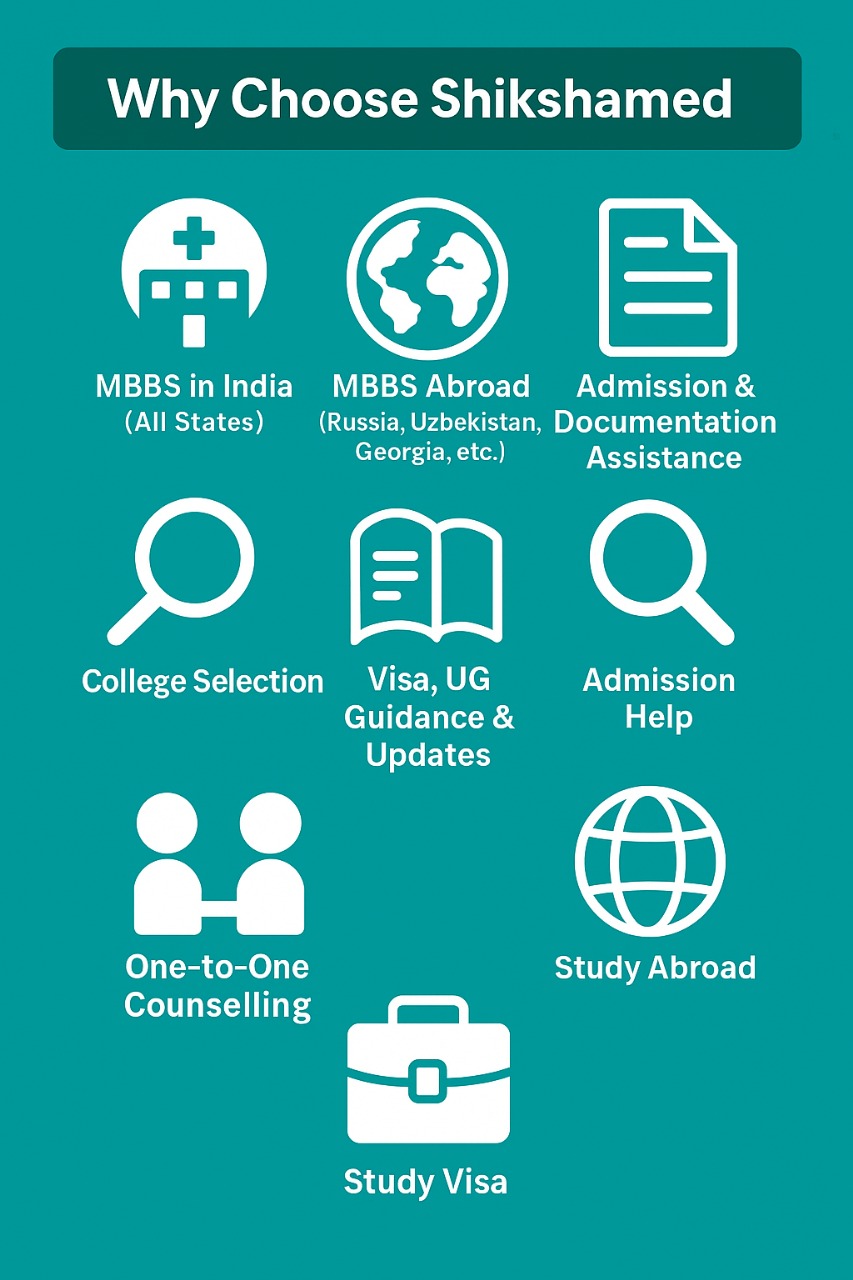
ShikshaMed helps students achieve their dream of becoming doctors by providing simple and complete MBBS admission guidance for both MBBS in India and MBBS abroad. For students preparing for NEET, ShikshaMed offers full support in NEET counselling, including AIQ counselling and state quota admission, so they can get seats in good government or private medical colleges. The team focuses on giving the best options based on rank and budget, making affordable MBBS possible for many students.

For those who want to study MBBS abroad, ShikshaMed provides easy step-by-step help for countries like MBBS in Russia and MBBS in Uzbekistan. They assist with choosing the right university, understanding MBBS fees, completing documents, visa process, and even travel planning. Along with this, students also get medical career guidance, personal support, and help even after admission. These reliable ShikshaMed services make the whole process smooth, clear, and stress-free for students and parents.

How to Apply for MBBS in India

A Simple Step-by-Step Guide

Step 1: Check If You’re Eligible

Before applying for MBBS in India, make sure you meet the following requirements:

  • You must have completed 10+2 with Physics, Chemistry, and Biology (PCB).
  • General category students need at least 50% marks; reserved category students need around 40%.
  • You must clear the NEET (National Eligibility cum Entrance Test)—this is mandatory for all MBBS seats in India.
Step 2: Register for the NEET Exam
  • Go to the official NEET website.
  • Fill out the online form with your personal and academic details.
  • Upload the required documents and pay the exam fee.
  • Once the admit card is released, download and print it.
Step 3: Appear for the NEET Exam
  • Prepare well using NCERT textbooks, sample papers, and mock tests.
  • Make sure you score above the NEET cutoff to qualify for MBBS counselling.
Step 4: Take Part in MBBS Counselling

After NEET results are out, you’ll need to attend counselling for admission:

  • Join MCC (Medical Counselling Committee) for AIQ seats or your state’s counselling process.
  • Register online and choose your preferred colleges.
  • Participate in the seat allotment rounds and lock your seat once offered.

Choosing the Right Medical College

  • Do Your Research
      • Check if the college is approved by NMC (formerly MCI).
      • Look into infrastructure, faculty, and hospital tie-ups.
      • Compare both government and private colleges based on fees and seats.
  • Compare Fees & Scholarships
      • Government colleges are more budget-friendly.
      • Explore scholarship opportunities and financial aid based on merit or need.
  • Location & Campus Facilities Matter
    • Make sure the college has modern labs, libraries, and good clinical training.
    • Also consider the hostel, food, and how far the college is from your home.

Why Get Help from ShikshaMed Consultants?

  • How Can Consultants Help?
      • They guide you through the entire MBBS admission process.
      • Help with NEET counselling, college selection, and document submission.
      • Offer support even after you get admission.
  • What Services Do They Offer?
      • College shortlisting based on your NEET rank and budget.
      • Updates on deadlines, document checks, and admission formalities.
      • Extra help for students who find the process difficult or confusing.
  • Choosing the Right Consultant
    • Always check reviews and their success rate.
    • Make sure they are experienced and have links with top medical colleges.

Conclusion

Pursuing MBBS in India is not just about earning a degree—it’s about stepping into a life dedicated to healing and helping others. With a robust education system, world-class faculty, and hands-on clinical exposure, India offers the perfect environment to shape the doctors of tomorrow. But cracking NEET and securing a seat in a top medical college can be challenging without the right guidance.

That’s where ShikshaMed, one of the best MBBS consultants in Chandigarh and Zirakpur, comes in. With years of experience and a team of expert counsellors, we help you navigate the entire MBBS admission process—from NEET counselling to final seat allotment. Whether you’re aiming for government colleges or reputed private institutions, we simplify your journey.

Looking to explore medical education overseas? We’re also among the top MBBS abroad consultants in Chandigarh and Zirakpur, offering personalized support for students aiming to study MBBS in countries like Russia, Uzbekistan, Kyrgyzstan, Georgia, and more.



Book An Appointment


Recent Blogs

MBBS in Russia 2026 – North Western State Medical University Fee Structure
MBBS in Russia 2026 – North Western State Medical University Fee Structure Overview North Western State Medical University, located in...
BAU Batumi Medical University A Premier Destination for MBBS Aspirants in Georgia
Study MBBS at BAU Batumi Medical University – affordable tuition, English medium, recognized by WHO, NMC. Enroll via Shikshamed.
Leading MBBS Abroad Consultants in Chandigarh
Leading MBBS Abroad Consultants in Chandigarh – Your Gateway to Medical Education in Russia, Kazakhstan & Europe Are you an...
Bukhara Innovative Medical Institute: MBBS in Uzbekistan 2026 | Fees, Admission, NMC Approval
Complete guide to Bukhara Innovative Medical Institute (Bukhara Innovation Tbilisi B2) for MBBS in Uzbekistan 2026. Low fees $2,400/year, NMC...
What to Do After NEET 2026 if Your Rank is Low? Complete Guide | ShikshaMed
Getting a low rank in NEET 2026 can feel devastating. But here’s the truth — thousands of students who got...
NEET Counselling 2026: Complete Guide | Registration, Choice Filling, Documents & Dates
NEET Counselling 2026 Complete Guide – Registration, Choice Filling, Documents & Dates ShikshaMed brings you the most detailed, updated roadmap...
Best MBBS Consultant in Chandigarh 2026 – NEET Guidance & Scholarships
Best MBBS Consultant in Chandigarh 2026 – ShikshaMed Expert Guidance for NEET & Admission Looking for the best MBBS consultant...
Deemed Universities in India 2026 – Complete Guide for MBBS Admission, Fees, Top Colleges & Counseling
Complete guide on Deemed Universities in India for MBBS 2026. Full list of top deemed medical colleges, fees structure, NEET...
Christian Medical College (CMC), Ludhiana – Complete 2026 Guide (ShikshaMed)
Christian Medical College (CMC) Ludhiana is a mission-driven institution offering MBBS admission strictly through NEET-UG merit with no donation policy....
Semi Government Medical Colleges in Punjab: Fees, Hostel Cost & Eligibility
Semi Government Medical Colleges in Punjab showing MBBS fee structure ₹4,67,000 tuition and ₹1.5 lakh hostel cost per year. NEET...