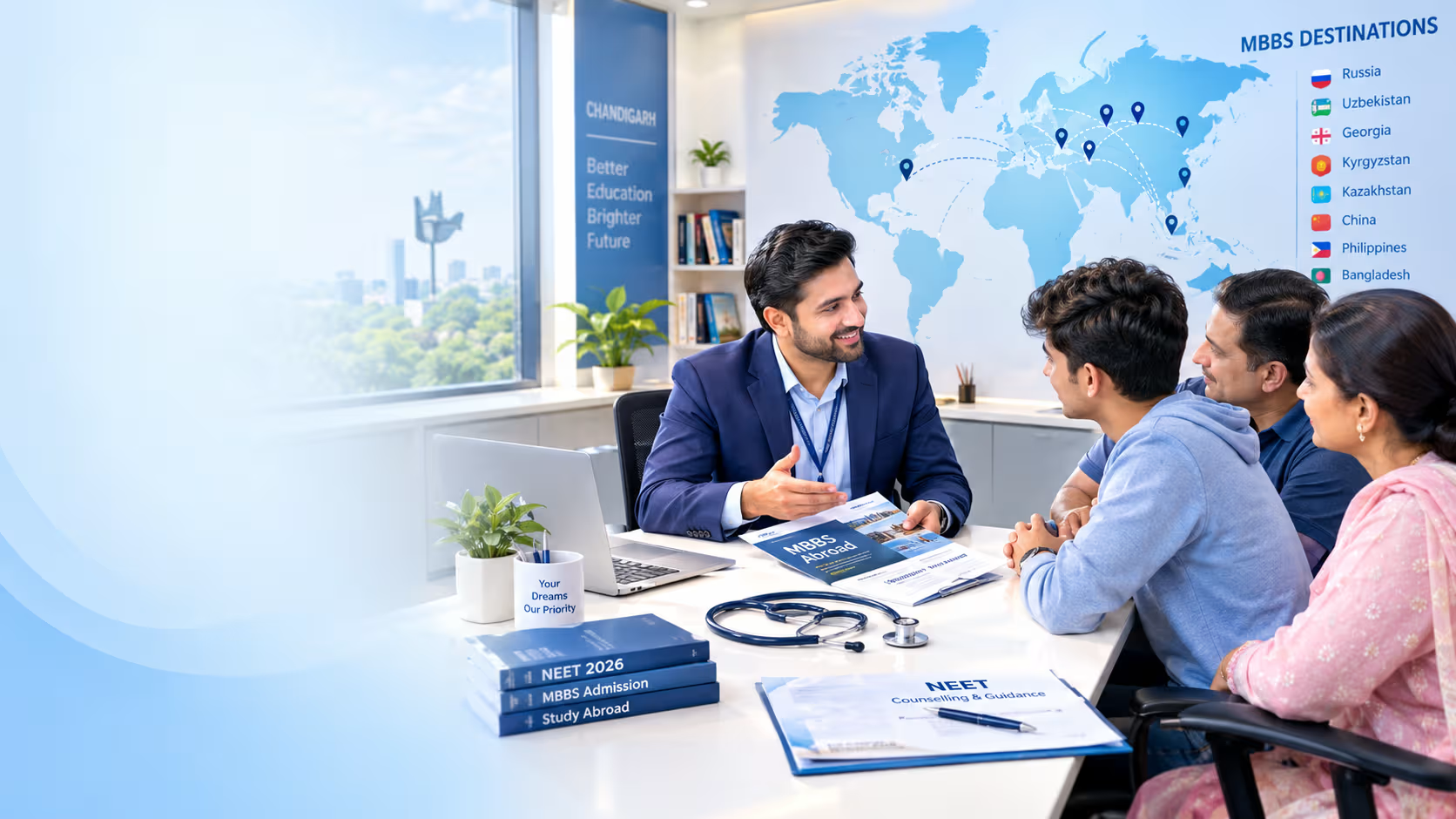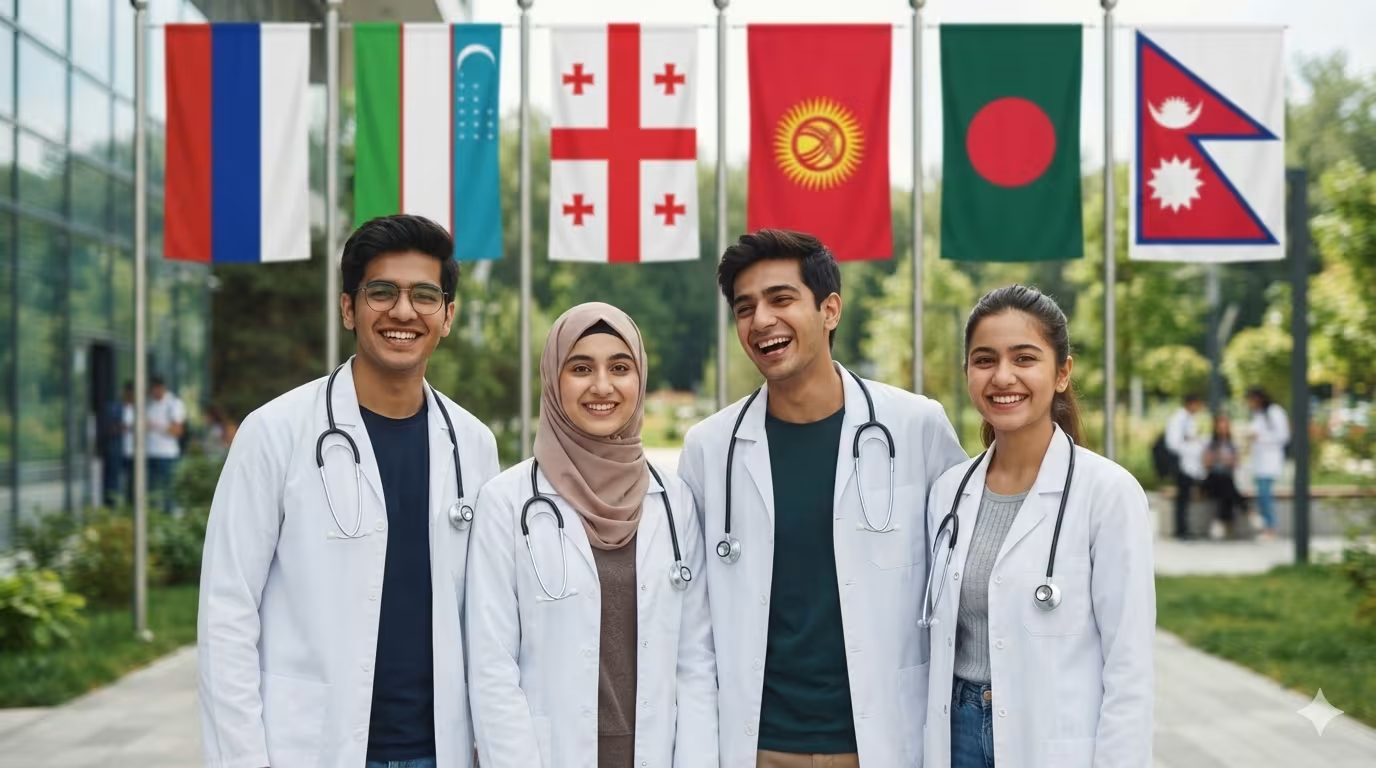
Every year, lakhs of Indian students appear for NEET with one dream — a medical degree that opens the door to a lifetime of service, respect, and financial stability. But with limited MBBS seats in India and skyrocketing fees in private colleges, only a fraction of NEET-qualified aspirants actually secure admission at home. This gap has pushed thousands of students to look beyond Indian borders, and in 2026, two destinations are dominating every conversation among students, parents, and education consultants alike: Georgia and Russia.
If you’re a NEET aspirant or a parent researching options for MBBS abroad, this guide will walk you through exactly why Georgia and Russia have become the go-to choices for Indian medical aspirants in 2026, what makes them different from other study-abroad destinations, and how to make an informed, safe decision. For personalized counselling and verified university options, platforms like Shiksha Med have become a trusted starting point for thousands of Indian families navigating this journey.
Before we dive into why Georgia and Russia are trending, it’s worth understanding the problem they’re solving.
India produces over 24 lakh NEET aspirants annually, but the country has only around one lakh MBBS seats across government and private medical colleges combined. Government seats are fiercely competitive, often requiring a rank in the top few thousand. Private medical colleges, on the other hand, charge anywhere between ₹60 lakhs to ₹1.5 crore for the entire MBBS course — a cost that is simply out of reach for a large section of middle-class Indian families.
This is precisely the gap that MBBS-abroad destinations have filled over the last decade. And among all the countries offering MBBS to international students — Philippines, Bangladesh, Nepal, Kyrgyzstan, Kazakhstan, China — Georgia and Russia have emerged as the clear frontrunners for 2026 admissions. Here’s why.
Georgia is home to several medical universities that are recognized by India’s National Medical Commission (NMC), the World Health Organization’s World Directory of Medical Schools, and other global accrediting bodies such as ECFMG (USA) and GMC (UK). This means Indian students who graduate from a recognized Georgian medical university can appear for the Foreign Medical Graduate Examination (FMGE), now increasingly aligned with the National Exit Test (NExT), and practice medicine in India after clearing it.
One of the biggest advantages Georgia offers is that its top medical universities conduct the entire MBBS curriculum in English from year one. Unlike some other countries where students must first complete a language-preparation year, Georgian universities allow Indian students to begin their medical education immediately, saving both time and money.
Georgia, being a transcontinental country with strong ties to the European Union, follows a European-style medical curriculum, complete with modern laboratories, digital learning tools, and hands-on clinical exposure. Yet, the total MBBS course fee in Georgia typically ranges between ₹20 lakhs to ₹35 lakhs for the full six-year program — a fraction of what private Indian colleges charge, and without the massive capitation fees.
Georgia has consistently ranked as one of the safest countries in the region for international students. Tbilisi, Kutaisi, and Batumi — the three major hubs for medical universities — have a growing Indian student community, Indian grocery stores, restaurants, and cultural associations, making the transition much smoother for first-time international students.
Georgian universities generally admit students directly based on their NEET score and academic records, without requiring additional entrance tests like IELTS or TOEFL for many programs. The student visa process is also relatively simple compared to Western countries, with most applications processed within a few weeks.
Russia has been educating Indian medical students since the Soviet era, and this legacy of trust runs deep. Many senior doctors practicing in India today are themselves graduates of Russian medical universities, which adds a layer of credibility that newer destinations simply haven’t built yet.
Russian medical universities remain among the most budget-friendly options in the world for a full MBBS degree. Total costs, including tuition and living expenses for six years, can range from ₹18 lakhs to ₹30 lakhs, depending on the city and university — making it one of the most cost-effective options for Indian families.
Russian universities such as those in Moscow, St. Petersburg, Kazan, Volgograd, and Voronezh are known for their advanced laboratories, large multi-specialty teaching hospitals, and strong emphasis on research. Many of these universities have decades-old medical faculties with globally cited research output, giving students exposure well beyond textbook learning.
Just like Georgia, the top Russian medical universities are listed in the World Directory of Medical Schools and are approved by the NMC, allowing graduates to appear for the FMGE/NExT exam and practice in India after clearing it.
Russia currently hosts one of the largest populations of Indian medical students abroad. This means better peer support, established Indian student associations, mess facilities with Indian food, and mentorship from seniors — an underrated but crucial factor for students moving abroad for the first time.
| Factor | Georgia | Russia |
|---|---|---|
| Medium of Instruction | English (from Year 1) | English (in most NMC-approved universities) |
| Approximate Total MBBS Cost | ₹20–35 Lakhs | ₹18–30 Lakhs |
| Climate | Moderate, milder winters | Extreme winters in most regions |
| Indian Student Community | Growing steadily | Very large and well-established |
| Visa Process | Simple and fast | Simple, slightly longer processing in peak season |
| Recognition | NMC, WHO, ECFMG | NMC, WHO |
| Clinical Exposure | Strong, European-style | Strong, hospital-integrated training |
Both destinations offer a legitimate, affordable, and internationally recognized pathway to becoming a doctor — the right choice ultimately depends on a student’s budget, climate preference, and long-term career goals (such as practicing in India, Europe, or pursuing USMLE in the US).
With so many consultants and agents promising “guaranteed admission,” it’s critical for students and parents to do their due diligence. Here’s a checklist every aspirant should follow before finalizing a university in Georgia or Russia:
Working with a transparent, experienced counselling platform makes this verification process significantly easier. Services like Shiksha Med specialize in guiding Indian students through NMC-approved university selection, documentation, visa processing, and pre-departure orientation — helping families avoid the common pitfalls of unverified agents.
NEET 2026 has once again seen record-breaking participation, with cutoffs for government seats remaining extremely high and private college fees continuing to rise year after year. For a NEET-qualified student who doesn’t make the cutoff for a government seat and cannot afford a ₹1 crore private seat, MBBS in Georgia or Russia represents a financially sensible, academically sound, and globally recognized alternative — without compromising the dream of becoming a doctor.
Additionally, with India’s shift from FMGE to the National Exit Test (NExT) as the unified licensing exam for both Indian and foreign medical graduates, there is now a more standardized pathway for foreign medical graduates to prove their competency and practice in India, adding further confidence to the MBBS-abroad route.
Beyond academics, students moving to Georgia or Russia in 2026 can expect:
Choosing where to study MBBS abroad is one of the most important decisions a student and their family will make — one that affects not just six years of education, but an entire medical career. Georgia and Russia have earned their spot at the top of the list for Indian medical aspirants in 2026 because they combine three things every family looks for: recognized quality of education, genuine affordability, and a safe, supportive environment for Indian students.
That said, not every university in these countries offers the same standard of education, infrastructure, or NMC compliance. This is why expert guidance matters. Before finalizing your decision, it’s worth consulting a dedicated MBBS-abroad counselling platform that can match your NEET score, budget, and career goals with the right university.
If you’re currently exploring your MBBS-abroad options for 2026, visit Shiksha Med for verified university listings, transparent fee structures, and end-to-end admission support — from application to visa to your first day on campus.
Your journey to becoming a doctor doesn’t have to end at a NEET cutoff. With the right destination and the right guidance, 2026 could be the year you take your first step toward the white coat.
Disclaimer: NMC recognition status, fee structures, and admission criteria are subject to change. Students and parents are advised to verify all details directly with official NMC notifications and university admission offices before making any financial commitments.