For many Indian students, becoming a doctor is a lifelong dream. However, due to limited seats and high fees in private medical colleges, many students explore opportunities abroad. Among the popular destinations for medical education, Romania has emerged as an excellent choice because of its affordable tuition fees, quality education, and globally recognized medical degrees.
MBBS in Romania offers students the opportunity to study in modern universities with advanced infrastructure, experienced faculty, and practical clinical training. The country provides a safe environment, affordable living costs, and English-medium education, making it an attractive option for Indian students.
Romania has become a preferred destination for international medical students because it offers a perfect balance between affordability and quality education. Medical universities in Romania are recognized by international organizations such as the National Medical Commission (NMC), World Health Organization (WHO), World Directory of Medical Schools (WDOMS), FAIMER, and ECFMG.
Some of the major advantages of studying MBBS in Romania include:
| Particulars | Details |
|---|---|
| Course Duration | 6 Years (Including Internship) |
| Medium of Teaching | English |
| Recognition | NMC, WHO, WDOMS, FAIMER, ECFMG, European Union |
| Eligibility | 50% Marks in PCB (40% for Reserved Categories) + NEET |
| NEET Requirement | Mandatory for Indian students |
| IELTS/TOEFL | Not required for admission, but recommended for visa (optional) |
| Intake | September / October |
| Processing Time | 60-90 Days |
| Average Living Cost | EUR 300 – 500 Per Month |
| Capital City | Bucharest |
| Currency | Romanian Leu (RON) / Euro accepted widely |
One of the biggest reasons students choose Romania is the quality of medical education. Universities follow international teaching standards and provide a curriculum that combines theoretical learning with practical clinical exposure.
Students receive hands-on training in hospitals under the guidance of experienced doctors. The universities are equipped with modern laboratories, digital classrooms, simulation centers, libraries, and research facilities that help students gain a strong foundation in medicine. Romanian medical degrees are recognized across the European Union and beyond.
Students who wish to study MBBS in Romania must fulfill the following requirements:
The admission process in Romania is simple and hassle-free.
Step 1: Choose a University
Select an NMC-approved medical university according to your budget and preferences.
Step 2: Submit Application
Fill out the application form and submit academic documents along with NEET scorecard.
Step 3: Appear for University Entrance Test (if required)
Some universities conduct online tests in Biology and Chemistry.
Step 4: Receive Admission Letter
After verification and test clearance, the university issues an admission letter.
Step 5: Pay Initial Fees
Complete the required payment process as instructed by the university.
Step 6: Apply for Student Visa
Submit visa documents and obtain the invitation letter. Visa processing may take 4-8 weeks.
Step 7: Fly to Romania
After visa approval, students can travel and begin their MBBS journey.
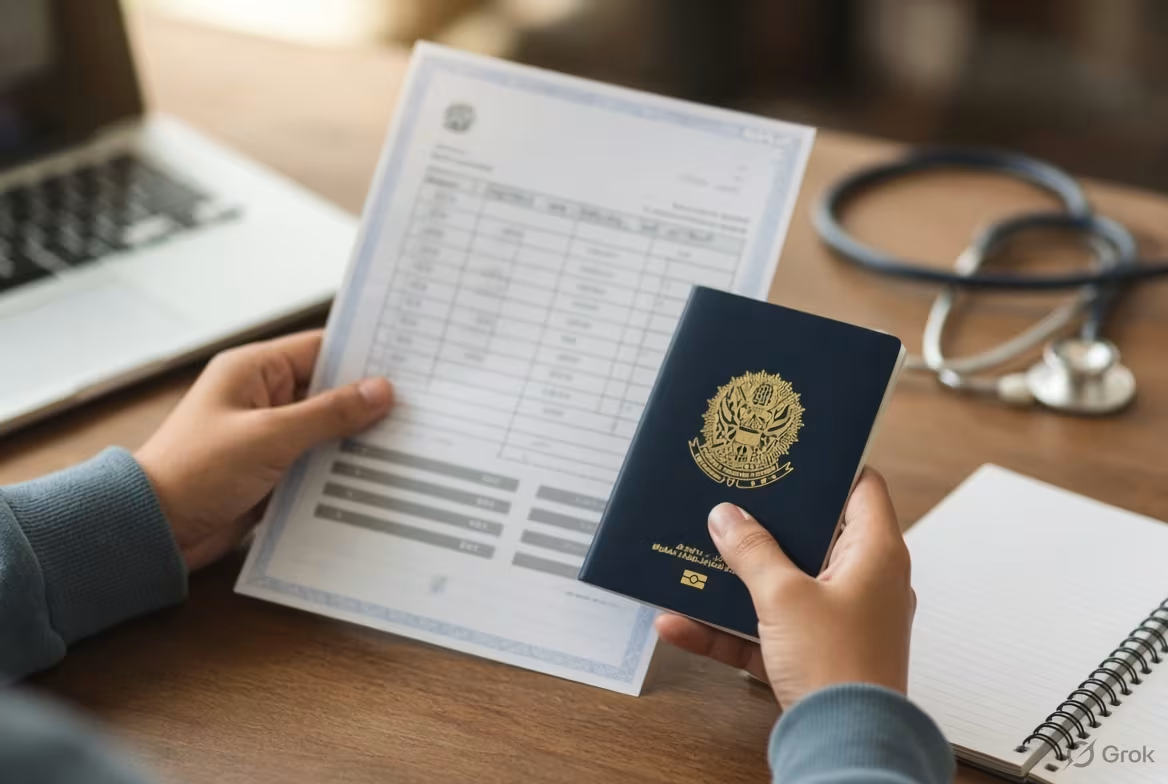
The following documents are generally required:
The MBBS course duration in Romania is six years, including clinical training and internship. The curriculum follows European Credit Transfer System (ECTS).
Pre-Clinical Phase (Years 1-3)
Students study basic medical sciences such as:
Para-Clinical Phase (Years 3-4)
Students learn subjects including:
Clinical Phase (Years 4-6)
Practical hospital training is provided in:
This combination of classroom learning and hospital practice helps students develop strong medical knowledge and clinical skills.
Several universities in Romania are popular among Indian students for their quality education and affordable fees.
Carol Davila University of Medicine and Pharmacy, Bucharest
The most prestigious medical university in Romania, known for excellent clinical exposure and international recognition.
Iuliu Hațieganu University of Medicine and Pharmacy, Cluj-Napoca
A leading university with modern infrastructure and strong research focus.
Grigore T. Popa University of Medicine and Pharmacy, Iași
One of the oldest and most respected medical institutions in Romania.
University of Medicine and Pharmacy of Craiova
Offers quality medical education with affordable fees and good clinical training.
Victor Babeș University of Medicine and Pharmacy, Timișoara
Known for modern teaching methods and international student community.
Ovidius University of Constanta
Affordable fee structure and student-friendly environment.
| University Name | Tuition Fee 1st Year (EUR) | Tuition Fee 2nd-6th Year (EUR/year) | Hostel Fee (EUR/year) |
|---|---|---|---|
| Carol Davila University, Bucharest | €7,200 | €7,200 | €1,500 – €2,000 |
| Iuliu Hațieganu University, Cluj-Napoca | €7,500 | €7,500 | €1,200 – €1,800 |
| Grigore T. Popa University, Iași | €6,500 | €6,500 | €1,000 – €1,500 |
| University of Medicine Craiova | €5,500 | €5,500 | €800 – €1,200 |
| Victor Babeș University, Timișoara | €6,000 | €6,000 | €1,000 – €1,500 |
| Ovidius University, Constanta | €4,800 | €4,800 | €700 – €1,000 |
One of the biggest advantages of studying MBBS in Romania is its affordable cost of living. Compared to many other European countries offering medical education, Romania allows students to maintain a comfortable lifestyle without spending a huge amount of money.
The monthly expenses of a student mainly depend on their lifestyle, accommodation choice, and personal spending habits. On average, international students spend around €300 to €500 per month, covering accommodation, food, transportation, internet, utilities, and other daily needs.
Students should also keep a budget for books, study materials, and academic resources, which may cost approximately ₹20,000 to ₹35,000 per year. Overall, Romania offers a budget-friendly environment that makes medical education more accessible for international students.
| Expense Category | Monthly Cost (EUR) | Yearly Cost (EUR) |
|---|---|---|
| Accommodation (Hostel) | €80 – €150 | €960 – €1,800 |
| Accommodation (Private) | €200 – €350 | €2,400 – €4,200 |
| Food | €100 – €150 | €1,200 – €1,800 |
| Utilities & Internet | €40 – €70 | €480 – €840 |
| Transportation (Student Pass) | €10 – €20 | €120 – €240 |
| Personal Expenses | €50 – €100 | €600 – €1,200 |
Medical universities in Romania provide comfortable and secure hostel facilities for international students. Most hostels are located close to the university campus or have good public transport connectivity.
Students can choose from double-sharing or triple-sharing rooms according to their budget and preferences. Separate hostel arrangements are available for boys and girls, and university campuses maintain a safe, ragging-free environment.
The hostels are designed to provide a home-like atmosphere and are equipped with modern amenities to ensure a comfortable stay throughout the course.
Common Hostel Facilities
With affordable living costs and well-equipped hostel facilities, Romania provides an excellent environment for students to focus on their medical education while enjoying a safe and comfortable lifestyle.
Romania is a popular destination for Indian students who want to study MBBS abroad. The country has several NMC-approved medical universities that offer quality education, affordable fees, and English-medium courses.
Some of the top medical universities in Romania are:
These universities are known for their experienced faculty, modern classrooms, practical training, and internationally recognized medical degrees. Every year, many Indian students choose these universities because they provide quality medical education at a reasonable cost.
Carol Davila University of Medicine and Pharmacy, Bucharest
Carol Davila University is the most prestigious medical university in Romania. It is known for quality education, experienced faculty, and practical medical training. The university provides a friendly learning environment for international students.
| Key Highlights | Details |
|---|---|
| Established | 1857 (as Faculty of Medicine), University status 1869 |
| Location | Bucharest, Romania |
| Medium of Teaching | English, Romanian, French |
| Recognition | NMC, WHO, WDOMS, FAIMER, ECFMG, European Union |
| Best For | Quality Medical Education, Research, Clinical Exposure |
| Campus Facilities | Modern Classrooms, Advanced Labs, Extensive Library, University Hospitals |
| Student Support | International Student Department, Mentorship |
Iuliu Hațieganu University of Medicine and Pharmacy, Cluj-Napoca
Iuliu Hațieganu University is a well-known public university in Romania. It offers modern education facilities and attracts students from different countries because of its quality teaching and practical approach.
| Key Highlights | Details |
|---|---|
| Established | 1919 |
| University Type | Public |
| Medium of Teaching | English, Romanian, French |
| Recognition | NMC, WHO, WDOMS, FAIMER, ECFMG |
| NEET Requirement | Mandatory for Indian Students |
| Best For | International Students, Research, Modern Infrastructure |
| Facilities | Smart Classrooms, Simulation Labs, Digital Library |
Grigore T. Popa University of Medicine and Pharmacy, Iași
The University of Medicine and Pharmacy of Iași is one of Romania’s respected medical institutions. It focuses on providing strong theoretical knowledge along with practical clinical exposure.
| Key Highlights | Details |
|---|---|
| Established | 1879 |
| Location | Iași, Romania |
| Medium of Teaching | English, Romanian |
| Recognition | NMC, WHO, WDOMS, FAIMER |
| Eligibility | 50% Marks in PCB + NEET |
| NEET Requirement | Mandatory |
| Best For | Affordable Medical Education, Strong Academic Reputation |
| Facilities | Modern Labs, Library, Teaching Hospitals, Clinical Training |
University of Medicine and Pharmacy of Craiova
University of Medicine and Pharmacy of Craiova is known for its affordable fee structure and student-friendly learning environment. The university focuses on practical medical training and modern teaching methods.
Victor Babeș University of Medicine and Pharmacy, Timișoara
Victor Babeș University is known for its strong emphasis on research and modern medical education. It offers excellent clinical exposure through its network of teaching hospitals.
| Key Highlights | Details |
|---|---|
| University Type | Public |
| Established | 1945 |
| Medium of Teaching | English, Romanian, German |
| Recognition | NMC, WHO, WDOMS, ECFMG |
| Best For | Research-Oriented Medical Education, International Environment |
| Clinical Training | Available in multiple affiliated hospitals |
| Facilities | Advanced Research Labs, Modern Library, E-Learning Platforms |
Students who are exploring medical education abroad often compare Romania with other leading destinations. Some of the most popular countries for MBBS abroad include:
Each destination offers unique advantages in terms of tuition fees, quality of education, global recognition, and career opportunities. Students should compare universities, accreditation, curriculum, and overall costs before making their final decision.
MBBS in Romania is an excellent option for students looking for affordable and quality medical education in the heart of Europe. With globally recognized universities, English-medium programs, modern infrastructure, and affordable living costs, Romania offers everything a medical aspirant needs to build a successful career.
For Indian students who are unable to secure a government medical seat or want an affordable international medical education within the European Union, Romania provides a reliable and rewarding pathway toward becoming a doctor.