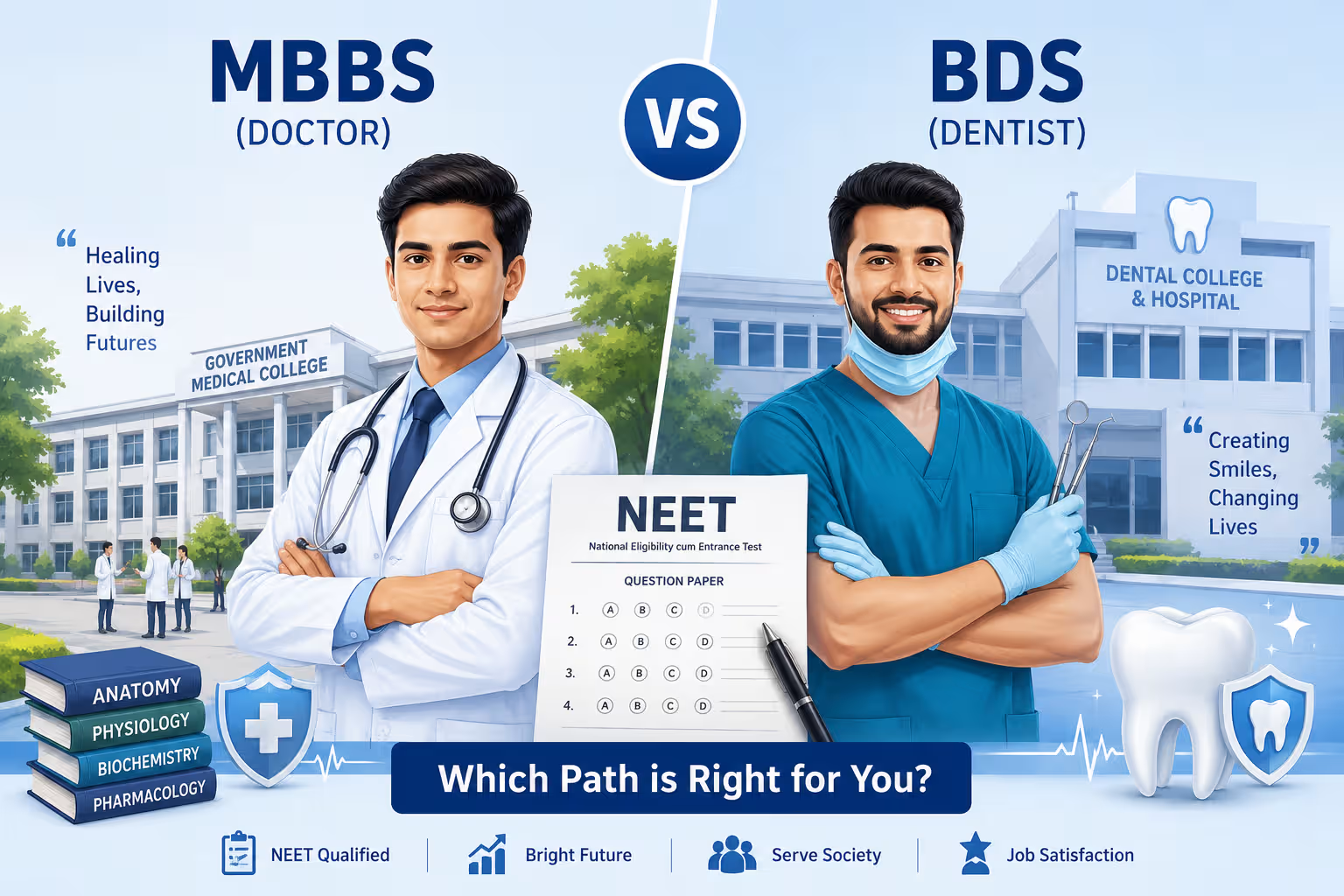
Every year, lakhs of students clear NEET with the hope of becoming a doctor, but the moment counselling begins, a familiar dilemma pops up — should I choose MBBS or BDS? It’s one of the most common questions Indian medical aspirants face, and honestly, there’s no one-size-fits-all answer. Both degrees fall under the broader umbrella of medical science, both require you to clear NEET, and both can lead to a respected, financially stable, and socially valued career. But beyond these similarities, the two fields diverge quite a bit — in terms of what you’ll study, how long it will take, what kind of work you’ll be doing day to day, and even how much competition you’ll face to secure a seat.
For many students, this decision is made under pressure — during counselling, with limited time to think, and often based on incomplete information or advice from people who may not fully understand the long-term implications of either path. That’s exactly why we’ve put together this detailed guide: to help you understand MBBS and BDS not just as two options on a counselling form, but as two genuinely different career journeys, each with its own demands, rewards, and future scope. Whether you’re a NEET topper deciding between top government MBBS seats or someone with a moderate score weighing BDS against a lower-ranked MBBS college, this article will help you think through the decision more clearly.
MBBS (Bachelor of Medicine, Bachelor of Surgery) is a 5.5-year undergraduate program, made up of four and a half years of academic study followed by a compulsory one-year rotatory internship. It is widely regarded as the gateway degree to becoming a general physician, and it equips students with a broad, whole-body understanding of human health — covering everything from anatomy, physiology, and pharmacology in the early years, to clinical subjects like medicine, surgery, obstetrics, gynaecology, pediatrics, and community medicine in the later years.
What makes MBBS particularly attractive to many students is its sheer versatility. An MBBS graduate isn’t limited to one organ system or one type of patient — they’re trained to assess, diagnose, and manage a huge range of health conditions across all age groups. This broad foundation is also what allows MBBS graduates to later specialize in virtually any medical field they choose, whether that’s cardiology, neurology, orthopedics, radiology, or general surgery, by qualifying for NEET PG and pursuing an MD or MS. In many ways, MBBS is the starting point of a much longer, layered career — the undergraduate degree opens the door, but it’s often the postgraduate specialization that truly shapes a doctor’s future practice, income potential, and area of expertise.
Explore MBBS options with Shiksha Med:
BDS (Bachelor of Dental Surgery) is a 5-year undergraduate program consisting of four years of academic coursework followed by a one-year mandatory internship. While it’s a smaller and more focused field compared to MBBS, dentistry is by no means a “lesser” career — it’s a specialized branch of medical science dedicated entirely to oral health, covering everything from general dentistry and oral hygiene to more advanced areas like oral surgery, orthodontics, periodontics, prosthodontics, and pediatric dentistry.
One of the biggest advantages of choosing BDS is the relatively focused nature of the syllabus and the clearer, more predictable career trajectory it offers. Because the scope of dentistry is narrower than general medicine, BDS graduates often gain a very high level of practical, hands-on skill in a shorter period of time compared to their MBBS counterparts. After completing BDS, many graduates choose to pursue MDS (Master of Dental Surgery) to specialize further, while others set up their own dental practice relatively early in their careers — something that tends to be more logistically and financially feasible in dentistry compared to setting up an independent general medicine practice straight after MBBS.
Learn more about BDS with Shiksha Med:
| Factor | MBBS | BDS |
|---|---|---|
| Duration | 5.5 years (incl. internship) | 5 years (incl. internship) |
| Scope | Whole-body medicine | Oral & dental health only |
| NEET Cutoff | Generally higher | Comparatively lower |
| Higher Studies | MD / MS via NEET PG | MDS |
| Career Options | Doctor, surgeon, specialist physician | Dentist, oral surgeon, cosmetic/aesthetic dentistry |
| Private Practice | Possible, but often requires more capital and infrastructure | Comparatively easier and quicker to set up an independent clinic |
| Work-Life Balance | Often demanding, especially during specialization and residency years | Generally more predictable and manageable working hours |
While a table is useful for a quick side-by-side comparison, it’s worth understanding the reasoning behind each of these differences a little more deeply, because the numbers alone don’t tell the full story of what daily life looks like in each profession, or what kind of long-term career satisfaction you might expect.
Choose MBBS if:
Choose BDS if:
It’s also worth remembering that this decision doesn’t have to be made in isolation. Talking to practicing doctors and dentists, understanding the day-to-day realities of both professions, and honestly assessing your own interests, strengths, and risk appetite can make a significant difference in how satisfied you’ll feel with your choice five or ten years down the line.
Choosing between BDS and MBBS isn’t just about personal interest — it involves carefully weighing your NEET score, your budget, the reputation and recognition of the colleges available to you, and your long-term career goals. Because so many factors are involved, and because a wrong or rushed decision can be costly in terms of both time and money, it’s always a good idea to seek expert, personalized guidance before finalizing your choice during counselling. If you’re unsure which path fits you best, Shiksha Med offers free, one-on-one counselling sessions designed to help you understand your realistic options and make a confident, well-informed decision.
At the end of the day, there’s no universally “better” degree between MBBS and BDS — the right choice depends entirely on your personal interests, your NEET score and rank, your family’s financial situation, and the kind of career and lifestyle you envision for yourself in the years ahead. MBBS offers a broader, more expansive medical career with numerous specialization routes and the potential to work across virtually every branch of medicine, but it also demands a longer academic journey and, often, additional years of postgraduate study to truly maximize its potential. BDS, on the other hand, offers a more focused, often faster route to becoming an independent practicing professional, with strong opportunities for early private practice, though within a narrower field of specialization.
Whichever path you’re leaning toward, the most important thing is to make an informed decision rather than a rushed one. Take the time to understand college rankings, fee structures, placement records, and future scope for each option available to you, and don’t hesitate to seek professional counselling if you’re feeling overwhelmed by the choice.
Still not sure which one is right for you? Talk to a Shiksha Med counsellor today and get a personalized recommendation based on your NEET score, budget, and career goals.