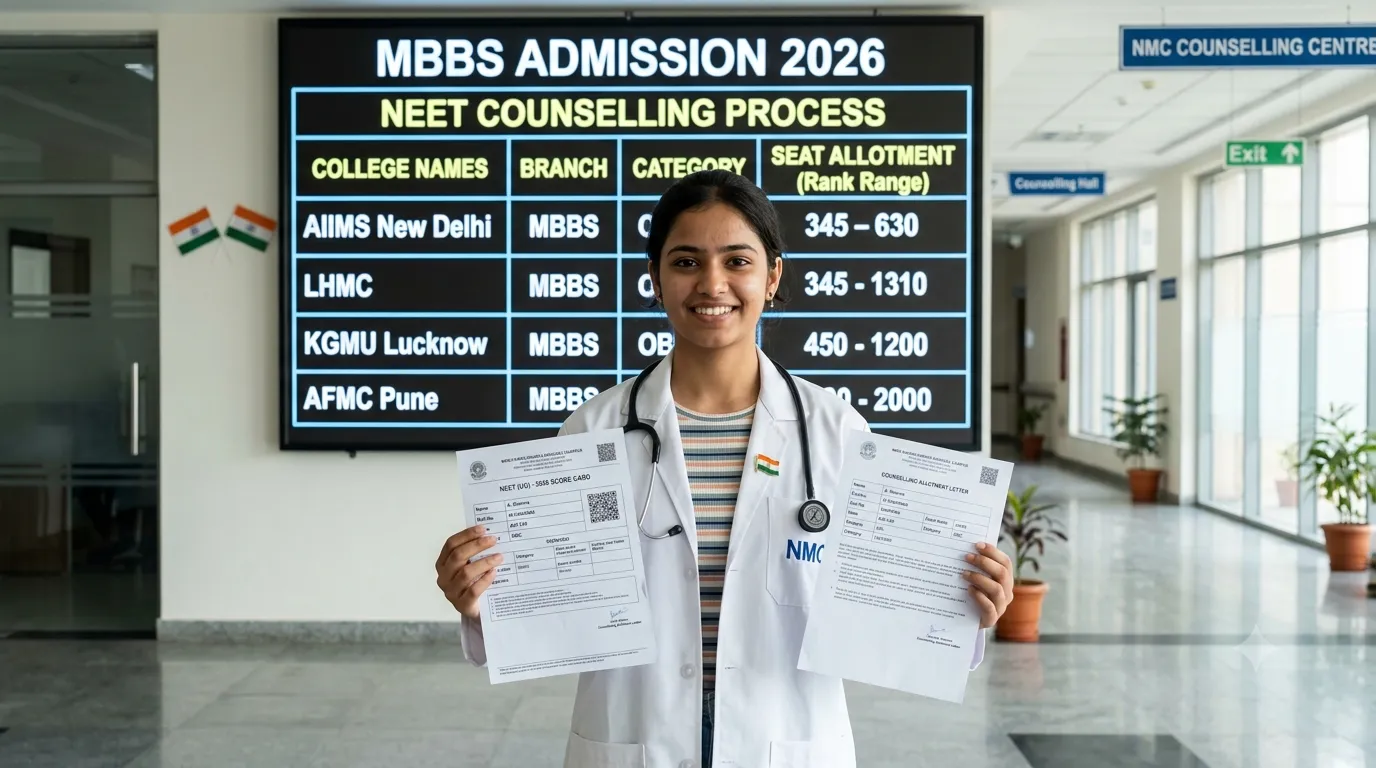
Getting admission to an MBBS course is one of the biggest milestones for every medical aspirant in India. Qualifying the National Eligibility cum Entrance Test (NEET) is the first step, but it is not the final one. After the results are announced, students must go through the counselling and admission process, which often seems confusing due to multiple counselling authorities, different quotas, reservation policies, and college options.
Every year, thousands of students with good NEET scores fail to secure their preferred medical college—not because of their rank, but because they lack proper guidance during counselling. Understanding the admission process can help you make informed decisions and improve your chances of getting the best possible MBBS seat.
This guide explains the complete MBBS admission process in India after NEET in a simple, structured, and easy-to-understand manner.
NEET (National Eligibility cum Entrance Test) is the national-level entrance examination for admission to undergraduate medical courses in India. It serves as the single entrance exam for admission to MBBS, BDS, AYUSH, and several other medical programs offered by government, private, deemed, and central universities.
Without qualifying NEET, students cannot secure admission to an MBBS course in India. The NEET score determines your eligibility for counselling and plays a significant role in the allocation of medical seats.
The journey begins with qualifying NEET. While qualifying the examination is mandatory, your score and All India Rank (AIR) determine the range of colleges and counselling options available to you.
Students with higher scores generally have better chances of securing government medical colleges. However, students with moderate scores can also explore opportunities through private colleges, deemed universities, management quota, and NRI quota, depending on eligibility.
Once the results are declared, carefully review the following details:
These details will help you understand your eligibility and estimate the colleges where you have a realistic chance of admission.
One of the most important aspects of MBBS admission is understanding the different counselling authorities.
The All India Quota covers 15% of government medical college seats across the country. Counselling for these seats is conducted centrally, allowing eligible students from different states to compete for admission.
State counselling covers 85% of seats in government medical colleges within a particular state. Each state conducts its own counselling process and follows specific eligibility criteria, including domicile requirements.
Students seeking admission to deemed universities can participate in the centralized counselling process for these institutions.
Admissions to private medical colleges are generally conducted through state counselling authorities or centralized counselling, depending on the institution and state regulations.
Understanding which counselling processes you are eligible for can significantly increase your chances of securing an MBBS seat.
After counselling notifications are released, eligible students must complete the registration process within the specified deadline.
The registration process generally includes:
Missing the registration deadline means losing the opportunity to participate in that particular counselling round.
Choice filling is one of the most critical stages of MBBS admission.
Students are required to select and prioritize medical colleges according to their preferences. The order in which colleges are arranged directly affects seat allotment.
Before locking your choices, consider factors such as:
A well-planned choice-filling strategy can greatly improve your admission outcome.
Once the counselling authority processes all applications, seats are allotted based on several factors, including:
Students who receive a seat can either accept the allotted college or participate in subsequent counselling rounds, depending on the applicable guidelines.
Candidates who receive a seat must complete document verification before admission is confirmed.
Some of the commonly required documents include:
Students should keep both original documents and photocopies ready to avoid any last-minute inconvenience.
After successful document verification, students must pay the prescribed admission fee within the given timeline.
Once the fee is deposited and all formalities are completed, the admission is officially confirmed.
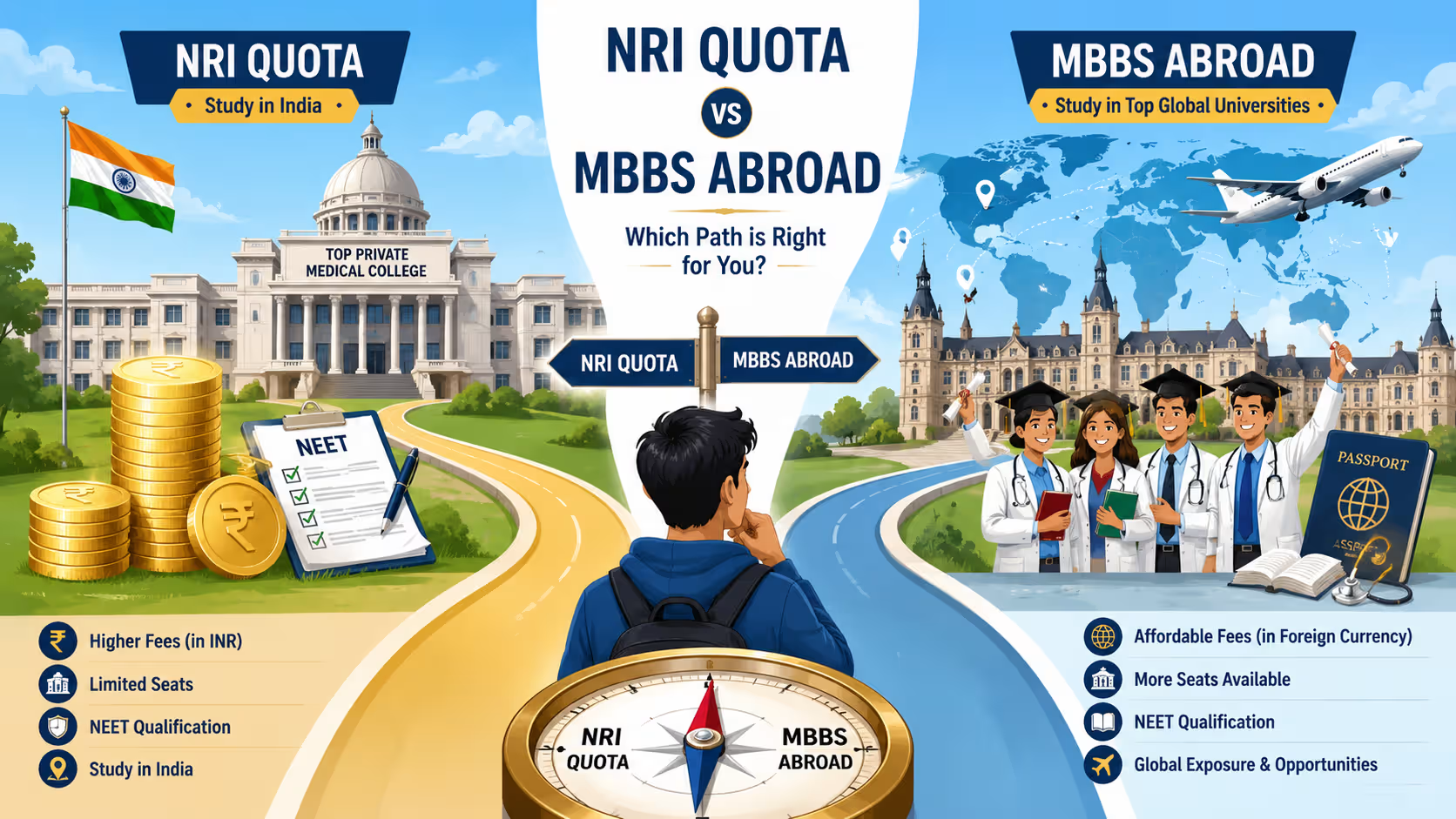
Medical aspirants can secure admission through different categories of seats, including:
Each category has its own admission process, fee structure, and eligibility requirements.
Yes. A common misconception among students is that only candidates with very high NEET scores can pursue MBBS.
In reality, admission opportunities depend on several factors such as category, counselling strategy, state eligibility, seat availability, and college preferences.
Many students successfully secure MBBS seats every year through private medical colleges, deemed universities, management quota, and other eligible admission pathways.
The key is to participate in every counselling process for which you are eligible and make informed choices.
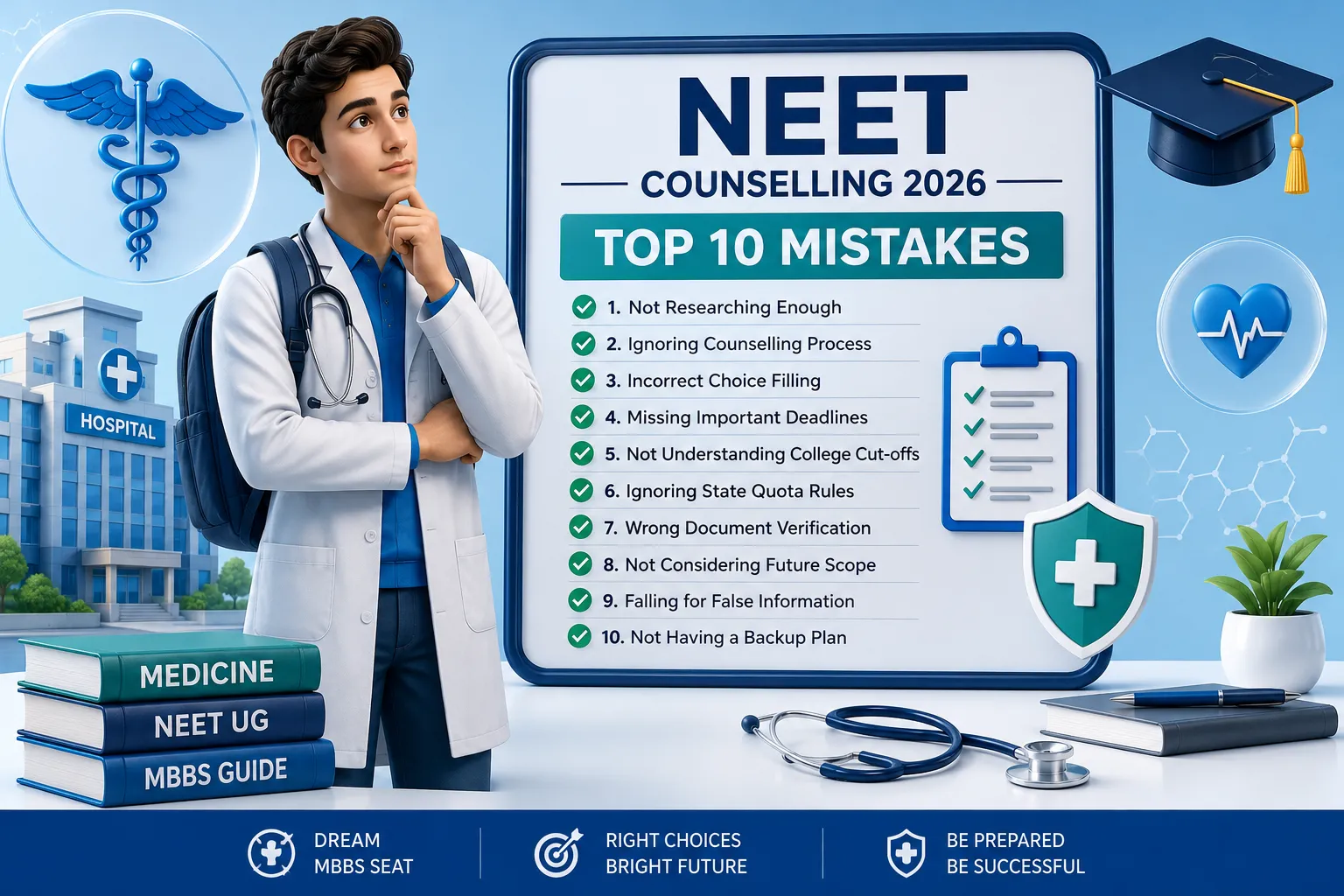
Many deserving students lose valuable admission opportunities because of avoidable errors during counselling.
Being careful throughout the admission process can make a significant difference.
To maximize your chances of admission:
Getting MBBS admission after NEET is not always easy. Students have to understand counselling rules, choose the right colleges, submit documents on time, and complete many important steps. Even a small mistake can reduce the chances of getting a good medical college.
ShikshaMed helps students and parents throughout this journey with the right guidance and support.
Our experienced counsellors explain every step of the admission process in a simple way. We help students choose the best colleges based on their NEET score, rank, budget, and career goals.
At ShikshaMed, we believe every student deserves the right guidance to achieve their dream of becoming a doctor. Our team is committed to making the admission process simple, stress-free, and easy to understand.
If you are confused about counselling or college selection, ShikshaMed is always ready to help you make the right decision.
Securing MBBS admission after NEET requires more than a good score—it demands careful planning, timely action, and a clear understanding of the counselling process. Every stage, from registration and choice filling to document verification and seat allotment, plays a crucial role in your admission journey.
With the right strategy and accurate information, students can make informed decisions and improve their chances of securing admission to a medical college that aligns with their academic goals.
If you are preparing for MBBS admission, stay updated with official counselling notifications, complete every step on time, and make well-informed choices. A systematic approach today can help you take the first step toward a successful medical career.
Is NEET mandatory for MBBS admission in India?
Yes. Qualifying NEET is compulsory for admission to MBBS courses offered by recognized medical colleges in India.
Can I apply for both All India Quota and State Quota counselling?
Yes. Students who meet the eligibility criteria can participate in both counselling processes.
Can I get MBBS admission with a moderate NEET score?
Yes. Depending on your score, category, and eligibility, you may secure admission through private colleges, deemed universities, management quota, or state counselling.
How many rounds of counselling are conducted?
The counselling process generally includes multiple rounds such as Round 1, Round 2, Mop-Up Round, and Stray Vacancy Round, subject to seat availability.